A Deliberate Two-Leader Model at Australia's Biggest Bank
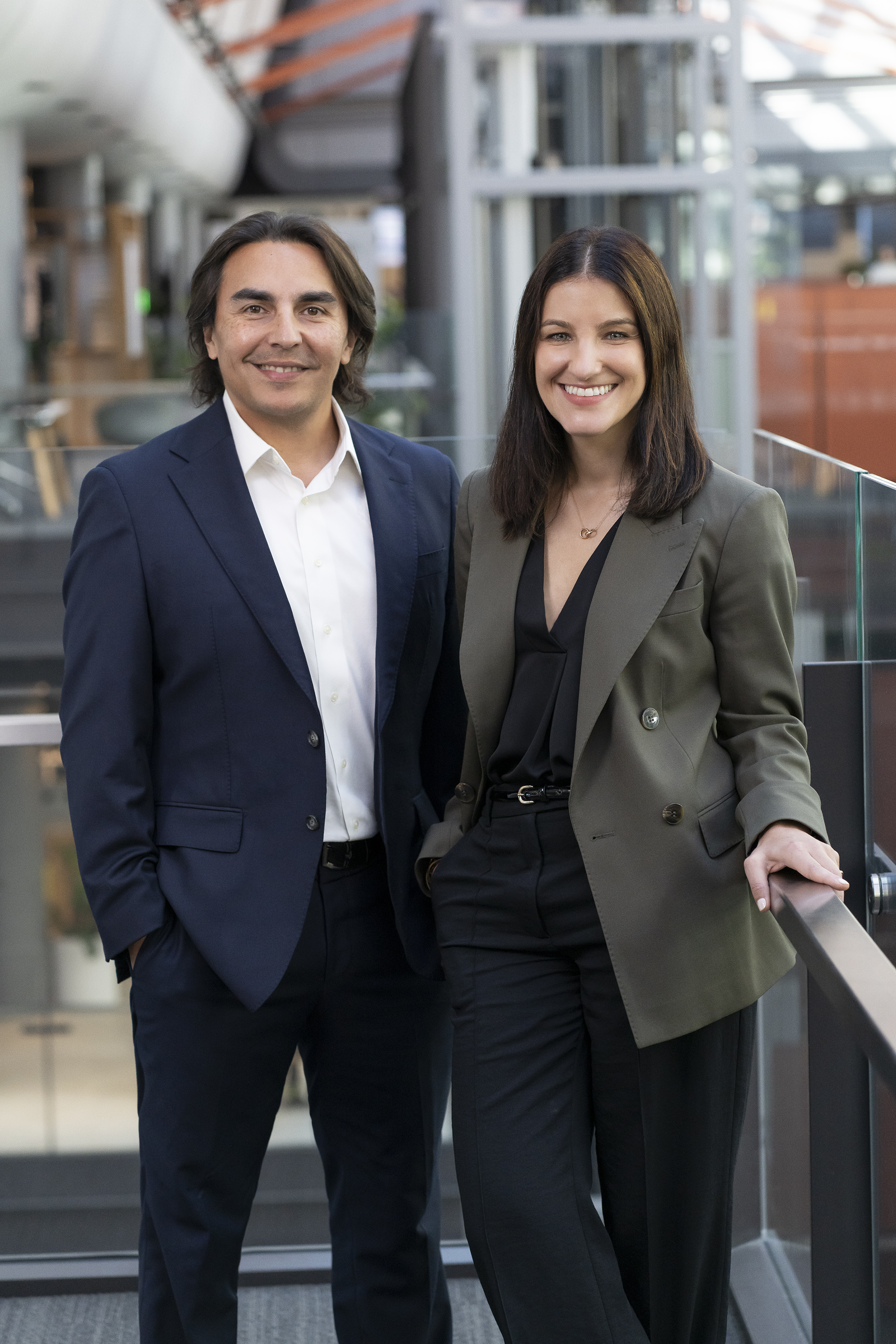
On June 19, 2026, Commonwealth Bank confirmed a leadership structure that many large enterprises have only debated in theory. The bank named Victoria Ledda as Group Chief Information Officer and Rodrigo Castillo as Group Chief Technology Officer, both effective July 1 and subject to regulatory approvals. Rather than crown a single all-powerful technology chief, CBA is institutionalizing two distinct executive roles, each with clear accountability, both sitting on the executive leadership team and reporting directly to chief executive Matt Comyn. For Australia's largest bank, with a technology agenda that touches every customer interaction, the choice is a statement about how it intends to run at scale.
Comyn framed the decision around centrality and confidence rather than org-chart mechanics, saying technology is central to CBA's strategy and to the experiences it provides for customers. He added that the appointments reflect the depth of technology talent within the bank and its continued focus on delivering better, safer and more resilient technology. We take the structural signal seriously. When a bank of this size formalizes two top technology roles instead of consolidating into one, it is making a bet that the work has grown too large and too varied for a single accountable owner, and that clarity comes from division rather than concentration.
From Interim Co-CIOs to a Permanent Split
This is not a hire from outside but a confirmation from within. Both Ledda and Castillo had been serving as interim co-chief information officers since November 2025, a transitional arrangement put in place after the departure of Gavin Munroe, who had jointly held the group executive technology and group CIO responsibilities. Ledda ran business technology on an interim basis while Castillo ran central technology, and the June announcement essentially makes that division permanent under cleaner titles. The bank had effectively been test-driving the two-leader model for half a year before committing to it.
That sequencing is worth noting because it lowers the execution risk that usually accompanies a leadership reshuffle. CBA is not betting on chemistry it has never observed or on a structure it has never run. It watched two executives operate in parallel through a live period and then ratified the arrangement. For a systemically important bank under heavy regulatory oversight, that kind of de-risked succession is exactly the cautious path you would expect, and it explains why the appointments carry the qualifier subject to regulatory approvals. The transition is being treated as a governed event, not a press release.
Dividing Delivery From Platform
The substance of the split is in the mandates. As Group CIO, Ledda will lead business-aligned technology strategy and delivery across the group, the layer where technology meets products, customers and the lines of business. As Group CTO, Castillo will lead the enterprise technology foundations, engineering, security and AI capabilities that support the bank, the layer of platforms, pipelines and controls that everything else runs on. In plain terms, Ledda owns what the business asks technology to deliver, and Castillo owns the engine that makes delivery possible and safe.
We think this delivery-versus-platform division is the most instructive part of the announcement. The two jobs pull in genuinely different directions. Business-aligned delivery rewards speed, responsiveness and proximity to revenue, while platform and security leadership rewards standardization, resilience and the discipline to say no. Folding both into one executive often means one side quietly loses, usually the unglamorous platform work that only becomes visible when it fails. By giving each its own seat at the executive table, CBA is trying to keep the tension productive rather than letting it collapse into whichever priority shouts loudest in a given quarter.
Two Resumes Built in Global Banking
The pairing also reflects a deliberate blend of pedigrees. Ledda joined CBA in 2021 and has held senior roles including executive general manager for institutional banking and markets technology and for retail technology, after 15 years at Goldman Sachs across London, New York and Sydney, where she worked as a managing director leading digital transformations. She holds a computer science degree and sits on boards including CommSec and a Mastercard advisory body. Her profile is that of a technologist fluent in the commercial pressures of front-office banking, which fits the customer-facing delivery mandate she is taking on.
Castillo brings a complementary background weighted toward platform and modernization. He joined CBA in 2023 and previously served as chief information officer and managing director at HSBC, where he led digital transformation and core modernization, with an executive certificate from MIT Sloan and a systems engineering degree behind him. The contrast is intentional. One leader comes from the world of trading floors and digital products, the other from the world of core banking platforms and large-scale modernization. Put together, they cover the full span from customer experience to the engineering substrate, which is precisely the range CBA is trying to manage.
Why This Pattern Is Spreading
CBA is not alone in rethinking the shape of the top technology job. Across large enterprises, the single chief who owns everything from app delivery to data center plumbing is straining under the combined weight of cloud migration, cybersecurity, regulatory resilience and now generative AI. The bank itself nods to this, noting that as digital, data and AI capabilities become more central to customer experience and the future of banking, distinct executive technology roles provide clearer accountability. The CTO mandate here explicitly includes AI capabilities, placing the bank's AI engineering under the platform leader rather than scattering it across business units.
For other CIOs and CTOs watching, the lesson is about deliberate role design rather than title inflation. Splitting the function only works if the seam between the two leaders is drawn cleanly and if both report at the same level to the same executive, which is what CBA has done by seating both on the leadership team under Comyn. Done poorly, two technology chiefs create ambiguity, duplicated teams and turf wars. Done well, as the bank is wagering, it lets delivery move fast while the platform stays disciplined. The half-year interim run suggests CBA has at least mapped the seam before committing to it.
Our Take: Structure as Strategy
We read this less as a personnel story and more as an organizational design decision dressed in two names. The interesting question is not whether Ledda or Castillo is capable, both clearly are, but whether the two-leader structure holds up under the inevitable moments when delivery and platform priorities collide. Those collisions are where the model is tested: a business unit wants a feature shipped now, the platform leader wants the security and resilience work done first, and a CEO has to trust that two empowered executives can resolve it without escalation becoming the default. CBA has built the structure, but the culture around it will decide whether it works.
If it does work, CBA gets the best of both worlds, fast business-aligned delivery sitting on a disciplined, AI-ready platform, with accountability that a regulator can actually trace to a named person. If it does not, the bank will find itself refereeing between two power centers and may eventually reconsolidate. Either way, the experiment is instructive for any large enterprise wrestling with the same overloaded technology chief role. Commonwealth Bank has chosen to divide the job rather than dilute it, and it has done so after a careful trial rather than on a whim. That is the kind of structural bet worth watching play out.