Pulling AI Off the Screen and Into Hardware
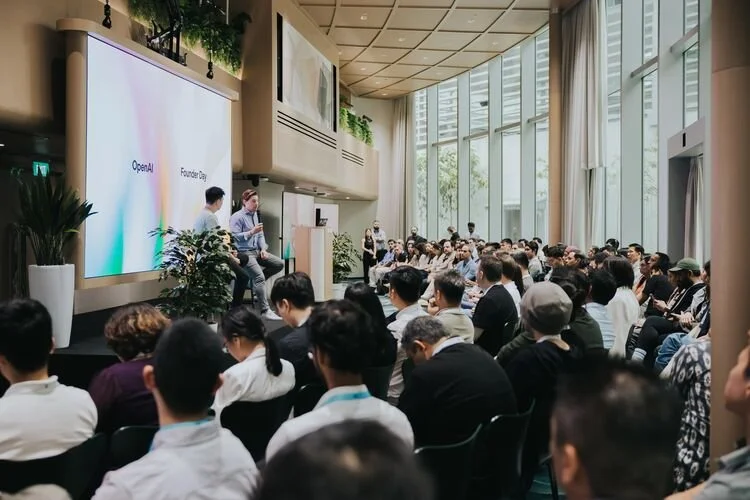
Axiometa and Anthropic have opened registration for a London hackathon centred on embodied AI: systems that can sense, move, respond and interact with the physical world. Running from the evening of July 17 to July 19, 2026, with the developer community Unicorn Mafia supporting, the event asks approved builders to prototype physical devices that put an AI model inside the operating loop rather than behind a chat window. It is a notable signal of where applied AI skilling is heading.
We treat this as an education and workforce story as much as a hardware one. Hackathons have quietly become one of the most effective informal learning channels in technology, compressing weeks of skill building into a weekend of hands on practice. By framing the event around embodied AI, the organizers are training developers on a frontier that classroom curricula have barely reached. For a generation that learned to prompt language models in a browser, building a device that physically acts on those outputs is a genuine step change in skill.
What Builders Will Actually Make
Participants use Axiometa's modular electronics, including Genesis Mini and Genesis One development boards that connect to cameras, sensors, motors, displays, signals and controls. Axiometa Studio lets developers describe a device in natural language and generate firmware, module selections and interfaces. Example projects include hand tracking servo controls, environmental sensors reporting data over Wi-Fi, and voice assistants that listen and respond, alongside smart home integrations and sensor dashboards.
The pedagogy here is worth noting. By letting builders describe a device and auto generating the firmware and module choices, Axiometa lowers the barrier that traditionally keeps software developers out of hardware. That abstraction is the same move that made cloud and no code platforms accessible, and it has clear implications for how embodied AI gets taught. If a developer can go from idea to working prototype in a weekend, the learning curve for physical AI flattens dramatically, and the talent pool widens beyond classically trained electrical engineers.
Anthropic's Role and the Skills Bet
Anthropic's involvement places its Claude models at the centre of an embodied AI learning event, extending the company's developer engagement beyond pure software agents. The organizers have not confirmed whether participants must use particular Anthropic models or products, but the partnership puts frontier model access into the hands of builders experimenting with hardware. For Anthropic, seeding developer fluency in embodied use cases is a long game that could shape which models become default in physical AI systems.
We see a clear strategic logic. Model providers compete not only on benchmarks but on the depth of their developer ecosystems, and hackathons are a cheap, high signal way to build that loyalty. The builders who spend a weekend wiring Claude into a sensor rig leave with both a new skill and a mental default. That is workforce development and market positioning in one motion, and it is a pattern we expect every major model provider to lean into as embodied AI matures.
A Quote That Frames the Pitch
Fatema Al Khalifa, chief executive of Unicorn Mafia, captured the event's thesis bluntly. "For too long, AI has been trapped behind a screen," she said, urging developers to build "beyond the browser." The line is a marketing hook, but it points at a real gap in how AI talent has been cultivated, almost entirely around text and code rather than perception and actuation in the physical world.
We think the framing is correct even if the rhetoric is heavy. The vast majority of AI training, both formal and informal, has produced people fluent in chat interfaces and APIs, not in closing the loop between a model and a motor. As robotics, smart devices and industrial automation absorb generative AI, the shortage of developers who can bridge software and hardware will become acute. Events that deliberately push builders beyond the browser are training for a demand that classroom programmes have been slow to anticipate.
What It Means for the Talent Pipeline
Several practical details remain undisclosed: the exact London venue, participant capacity, selection criteria, prizes and judging. Registration is open but subject to host approval, which suggests a curated rather than open door event. That selectivity will concentrate the learning among already capable builders rather than broadening access, a tradeoff worth watching as embodied AI skilling scales.
For enterprises and educators tracking where AI skills are forming, the takeaway is that the next competitive frontier is physical. The developers who emerge from events like this with embodied AI experience will be scarce and valuable as manufacturing, logistics and consumer hardware races to embed intelligence into devices. We would like to see this model extend beyond invite only weekends into structured curricula, because the demand signal is unmistakable and the supply of qualified builders is thin.