A title in search of a job description
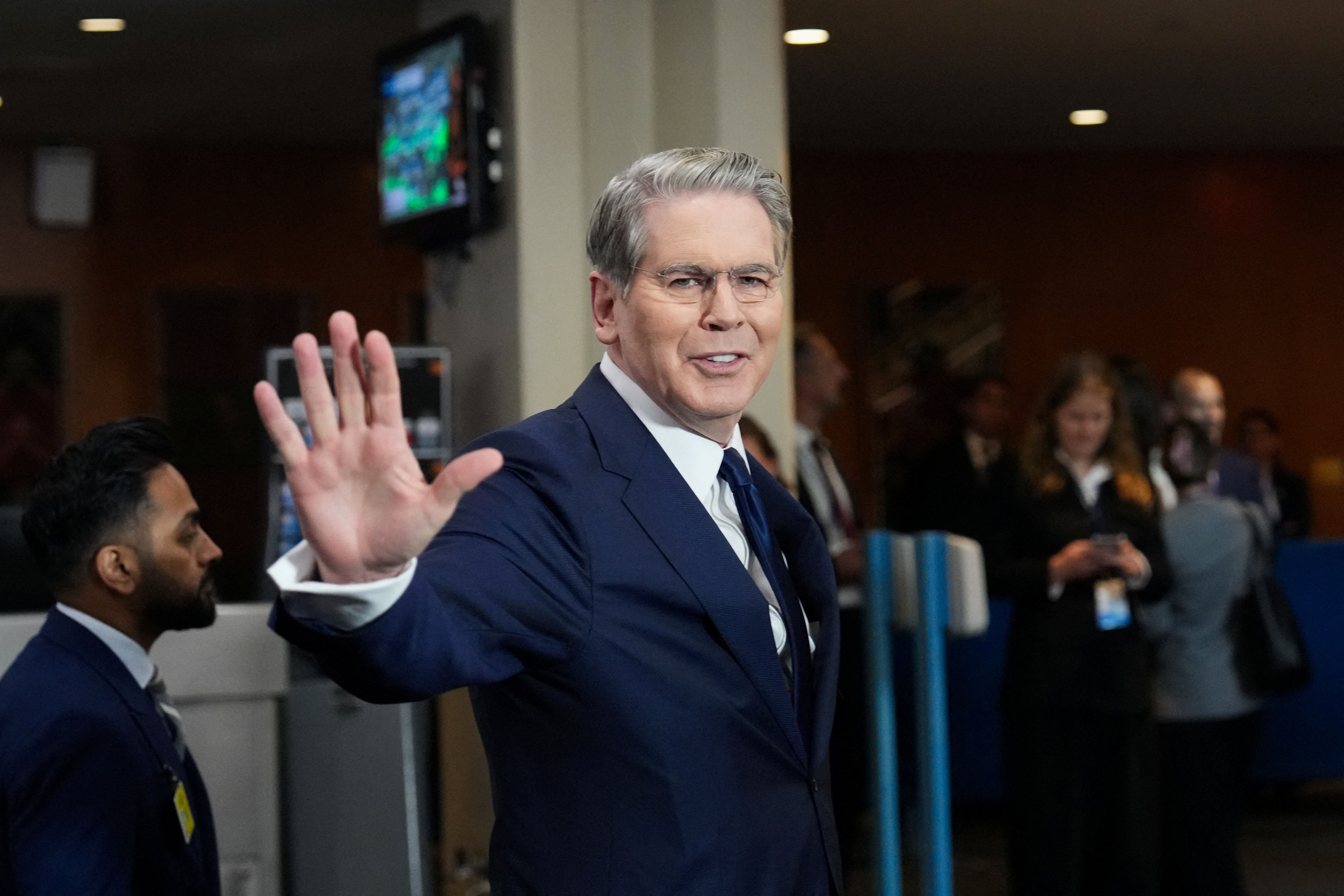
The idea of an AI czar has circulated in Washington for months without a clear statement of what the role would actually control. Bessent's own description, offered to CNBC, was that the position exists to put context, shape, and contours around AI policy questions, language that signals coordination and framing rather than direct regulatory authority. That ambiguity is not necessarily accidental. A role explicitly framed as narrow and advisory is easier to create without a fight over turf with existing agencies that already touch AI policy.
What is notable is that the position is being discussed seriously enough to generate a credible frontrunner months before any formal announcement. Bessent himself has not confirmed he wants the job, and Trump has not announced the position exists in any official capacity, which means this entire conversation is happening through reporting on internal deliberations rather than a public process. Enterprises should treat this as directionally informative rather than as a settled organizational chart.
Why Bessent specifically
Bessent's case for the role rests less on formal AI policy credentials than on the fact that he is already doing pieces of the job informally. He has been directly involved in AI-adjacent diplomacy, including recent discussions with Chinese Vice Premier He Lifeng about establishing a notification mechanism for AI-related national security threats between the two countries. That is precisely the kind of cross-border, cross-agency coordination an AI czar role would presumably formalize.
It also signals something about how the administration is currently thinking about AI risk: less as a domestic technology regulation question and more as a national security and financial stability question, which is Treasury's home turf. If Bessent gets the role, expect the framing of federal AI policy to lean further toward systemic risk and international coordination, and further away from the algorithmic accountability and consumer protection framing that has dominated in other jurisdictions.
The other contenders tell a different story
The other names in the mix, Michael Kratsios at OSTP, Scott Kupor at OPM, and Sean Cairncross as National Cyber Director, represent genuinely different institutional approaches to the same problem. Kratsios would bring a science and technology policy lens, Kupor a workforce and government-operations lens shaped by his a16z background, and Cairncross a cybersecurity-first framing. Each would set a materially different tone for how federal AI policy develops over the next several years.
That breadth signals the administration is still actively weighing several competing frames for federal AI policy at once, including national security, economic competitiveness, cybersecurity, and workforce disruption, each championed by a different candidate's home agency. Enterprises trying to anticipate the direction that policy takes should watch closely which of these institutional homes the eventual role ends up reporting through, since the reporting line will shape the substance of the job considerably more than the specific individual appointed to fill it. A cybersecurity-first appointee, for instance, would likely push toward incident disclosure rules well ahead of labor market questions, while a Treasury-rooted appointee gravitates toward systemic financial risk first.
What this means for the regulatory patchwork
US AI policy currently runs through a genuinely fragmented set of actors: executive orders, agency-specific guidance from bodies like OSTP and NIST, state-level legislation moving at very different speeds across the country, and ad hoc diplomatic conversations like Bessent's own discussions with He Lifeng. A czar role, even a coordination-focused one without direct rulemaking authority, could meaningfully reduce that fragmentation simply by creating one identifiable person that enterprises and their government affairs teams need to track and build a relationship with, rather than several parallel contacts across agencies with overlapping but not identical mandates.
That consolidation cuts both ways for enterprise planning. A single coordinating figure makes federal AI policy more legible and easier to lobby or engage with directly, but it also means that figure's specific priorities and blind spots become disproportionately influential. If the role goes to Bessent, financial system risk and international coordination will likely get more attention than, for example, labor market disruption or algorithmic bias, simply because that is where his institutional experience sits.
What to watch for next
No formal timeline has been given for when Trump might announce the role or its occupant, and the position itself has not been formally created through any executive order or legislative action so far. Enterprises with active federal AI policy engagement should treat the current reporting as an early signal to start building relationships across all four named contenders' institutional homes now, rather than waiting for an announcement and betting everything on a single outcome that reporting has not yet confirmed.
The more consequential detail to watch for, once an announcement happens, is whether the role comes with actual budget and staff or functions purely as a coordination and advisory position layered on top of existing agency authority without new resources attached. That distinction, more than the name on the title, will determine whether this becomes a meaningful new point of leverage in federal AI policy or a largely symbolic addition to an already crowded org chart.
How this compares to other governments' approach
The consolidation instinct behind an AI czar role is not uniquely American. The European Union has built AI oversight into its AI Office under the AI Act, the United Kingdom has an AI Safety Institute with a comparatively narrow technical mandate, and China's approach runs through its Cyberspace Administration alongside industry-specific ministries. What distinguishes the US conversation so far is the explicit framing around national security and financial stability rather than consumer protection or algorithmic transparency, which have dominated the EU and UK approaches respectively.
That framing difference has practical consequences for multinational enterprises trying to build one compliance program that satisfies every jurisdiction at once. A US AI czar rooted in Treasury's institutional priorities is likely to produce guidance that reads very differently from EU AI Act risk classifications or UK safety institute technical benchmarks, even when addressing the same underlying model or deployment. Enterprises operating across all three jurisdictions should expect to keep running parallel compliance tracks rather than finding a single unified standard emerging anytime soon, regardless of who ends up filling the American role.