The Deal Itself
Anthropic signed a six year, 35 billion dollar compute agreement with Lambda, an Nvidia backed GPU cloud provider, for infrastructure being built out in Nueces County, Texas. The deal adds Lambda to the growing list of neocloud providers, alongside CoreWeave, Nebius, and Nscale, that Anthropic is leaning on to secure compute capacity outside of its primary relationships with Amazon and Google, its two largest cloud investors and infrastructure partners. Reuters first reported the arrangement, and it lands in the same month CoreWeave was independently raising billions in convertible debt to fund its own buildout, underscoring how much of the current AI compute market runs through financing structures rather than direct hyperscaler capital.
Anthropic's compute strategy has increasingly meant signing with as many capacity sources as it can secure rather than betting the model roadmap on any single provider. That approach reduces single vendor risk, but it also means Anthropic's infrastructure footprint is becoming a patchwork of hyperscaler capacity, neocloud leases, and financed builds, each with its own delivery timeline, credit structure, and risk profile. Keeping track of which workloads run on which provider, under which contractual protections, is quickly becoming its own operational discipline inside Anthropic, and arguably inside every large AI lab pursuing a similar multi-vendor strategy.
From Bitcoin Rigs to AI Racks
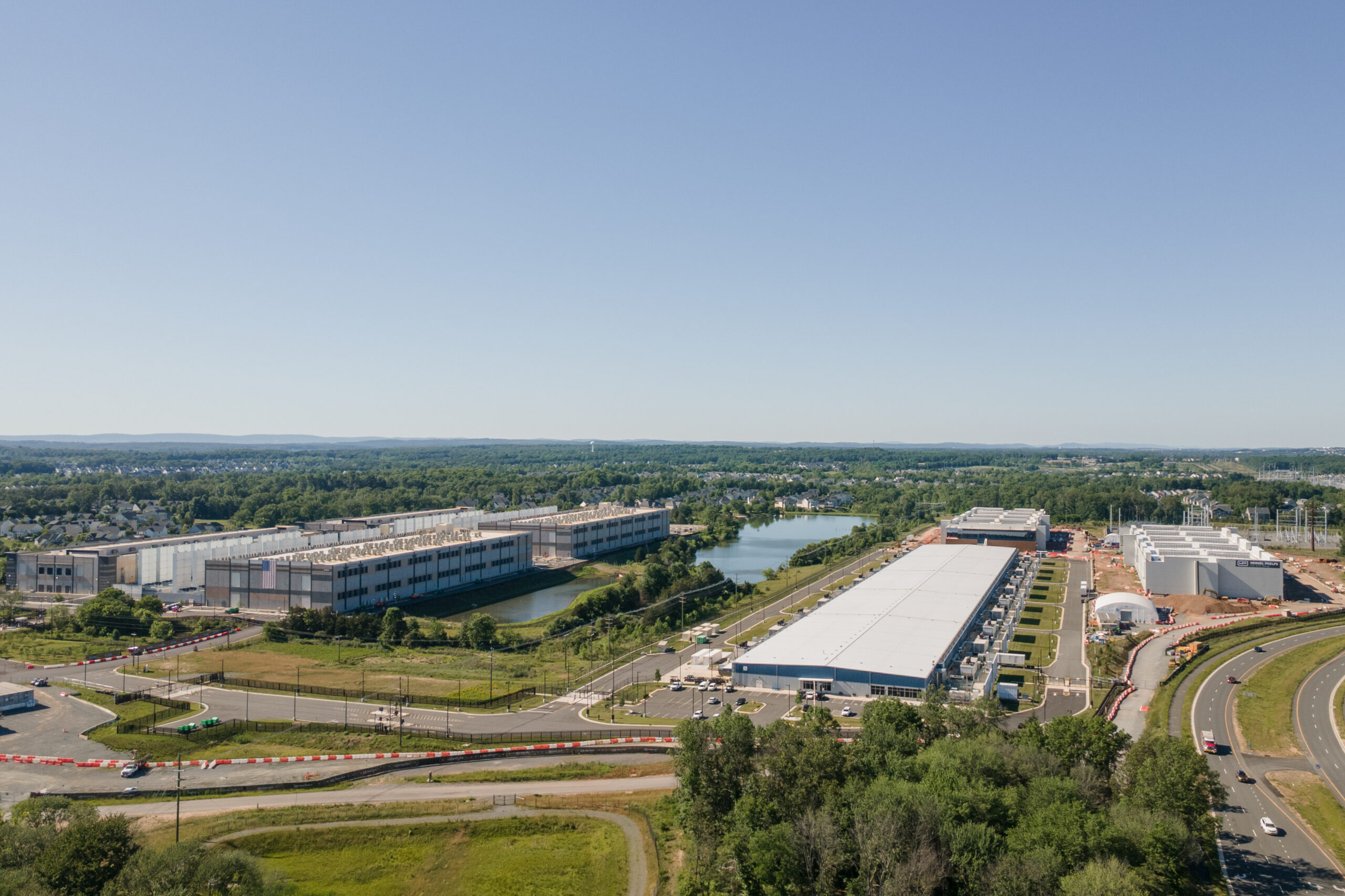
The Texas site behind the Lambda deal has an unusual history. It is being converted by Hut 8, a company that built its business mining Bitcoin, from crypto mining infrastructure into AI data center capacity. That conversion is not an isolated case; it reflects a broader pattern of crypto miners repurposing power dense, already permitted sites for GPU hosting as AI demand for capacity has outpaced new construction, and as Bitcoin mining economics have grown less attractive relative to leasing the same power and land to an AI tenant willing to sign a multi-year, multi-billion dollar contract.
For enterprises, this matters because it changes what new AI data center capacity actually means in practice. A meaningful share of announced capacity now comes from retrofitted sites originally built for a completely different workload, with power infrastructure and cooling systems that may or may not be optimized for dense GPU racks without additional investment. A facility's history as a crypto mine deserves a direct question to any provider claiming a site is ready for high-density AI hardware on a specific date, regardless of how confident the pitch sounds, simply because the retrofit work is real engineering that takes real time.
Reading the Deal Structure
The financial structure of the Lambda deal is worth unpacking because it is typical of how neocloud capacity gets delivered today. Nvidia holds the lease on the Texas facility itself and supplies the GPUs to Lambda, which in turn resells the compute capacity to Anthropic. Nvidia is therefore simultaneously the chip supplier, the landlord, and, through its broader pattern of strategic investments across the neocloud sector, an economic stakeholder in the neocloud that is Anthropic's actual counterparty, a level of vertical involvement that would be unusual in almost any other infrastructure market.
That layering is efficient when everyone in the chain is confident demand will hold, but it also means a single customer's contract, in this case Anthropic's, is supporting Nvidia's facility lease, Lambda's operating business, and Hut 8's conversion economics all at once. If Anthropic's own compute needs change, whether because of a shift in model architecture, a slowdown in usage growth, or a decision to move workloads to a different provider, the effects ripple through every layer of that stack, not just Lambda's balance sheet, in ways that are hard for an outside observer to fully see.
The Bigger Number: 135 Billion Dollars in Contracts
The Lambda deal did not happen in isolation. Anthropic separately signed a 45 billion dollar compute agreement with London based Nscale, and combined with other commitments, Anthropic's disclosed compute related contracts for the year now exceed 135 billion dollars. That figure is being weighed against a reported 65 billion dollar annualized revenue run rate, a gap that is common across the frontier AI labs but still worth sitting with, particularly because much of that contracted compute has not yet been built, let alone delivered, which means the revenue run rate and the contract value are describing two different points on the same timeline rather than two comparable numbers.
Committing to compute contracts that dwarf current revenue is a deliberate bet that demand and revenue will scale to match capacity, not a sign of financial distress on its own. Every major AI lab is making a version of this bet right now. The question for anyone evaluating these labs as long term vendors is how much of that gap is bridged by equity raises, cloud provider financing, and revenue growth, versus how much represents genuine execution risk.
The Chip Supply Line Underneath All of It
Every layer of this deal, Anthropic's contract with Lambda, Lambda's chip supply from Nvidia, and Hut 8's facility conversion, ultimately depends on Nvidia continuing to allocate enough GPUs to keep all of its neocloud partners simultaneously supplied. That concentration is not unique to this deal; it is the defining feature of the current AI infrastructure market, where a single chip vendor sits at the center of nearly every major compute agreement being signed across labs, neoclouds, and hyperscalers alike.
For enterprise buyers, the practical implication is that vendor diversification across cloud providers offers less protection than it used to if every provider ultimately draws from the same constrained chip supply. A genuinely diversified compute strategy in 2026 has to account for chip allocation risk specifically, not just provider risk in the abstract, because a slowdown in Nvidia's ability to supply any one neocloud can ripple into contracts signed with completely different, seemingly unrelated providers up and down the stack.
What It Means for Anthropic's Customers
If your organization runs meaningful workloads on Claude or is evaluating a deeper Anthropic relationship, the Lambda deal is useful context for a vendor risk conversation, not a reason for alarm. Anthropic is diversifying its compute sources aggressively, which is generally a resilience positive, spreading dependence across multiple hyperscalers and neoclouds rather than concentrating risk in a single provider. But each new provider added to that mix also adds a link in a financing chain that ultimately has to be paid for by real, sustained customer usage, and it is worth understanding where your own workloads sit in that chain.
Ask your account team, or have procurement ask theirs, how committed capacity is distributed across hyperscaler owned infrastructure versus neocloud leases like this one, and what service level commitments apply if a neocloud partner in that chain runs into financing trouble. The compute is real and the capacity is being built, but the chain connecting your workload to the physical GPU is getting longer, and every additional link is a place something can slip.