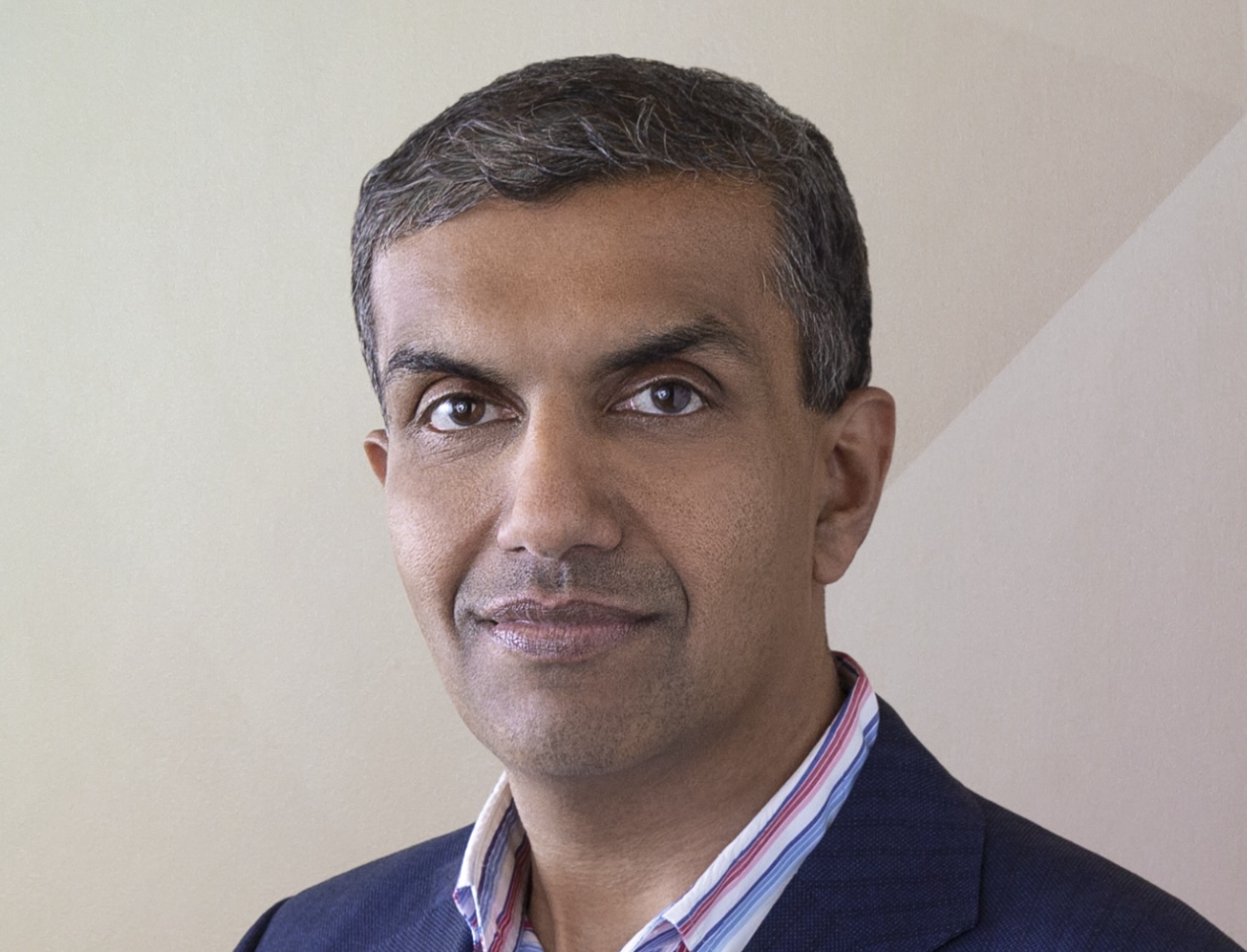
The end of an unusually long run
Shantanu Narayen has run Adobe as president and CEO for 18 years, a tenure long enough that he presided over the company's entire transition from packaged software sold in boxes to the subscription-based Creative Cloud and Experience Cloud businesses that define Adobe today. Eighteen years at the top of a company Adobe's size is rare in enterprise software, where CEO tenures more commonly run five to eight years before a board or activist investor pushes for change.
Narayen is not disappearing. He moves into an executive chair role explicitly framed around supporting a smooth transition and Adobe's ongoing transformation, a structure that keeps his institutional knowledge available to the new CEO without keeping him in the operating seat. His own quote about Chakravarthy, describing him as an experienced transformational leader who leads with values and integrity, reads like the kind of endorsement a departing CEO gives when the succession was genuinely his own choice rather than one forced on him by the board.
Why Chakravarthy, and why now
Chakravarthy joined Adobe in January 2020 as executive vice president and general manager of Digital Experience, and has spent the years since leading development of Adobe CX Enterprise, GenStudio, and Brand Visibility, products squarely aimed at enterprise marketing and customer experience budgets rather than Adobe's more consumer-facing Creative Cloud business. His most recent role leading the Customer Experience Orchestration business and worldwide field operations put him closest to the commercial engine of Adobe's fastest-growing enterprise segment.
Lead independent director Frank Calderoni's statement that the board unanimously determined Chakravarthy is the right leader for Adobe's next chapter of growth is notably specific language for a succession announcement. Boards that are managing a contested or uncertain transition tend to use vaguer, more cautious phrasing. A unanimous determination, stated plainly, suggests the board had a clear internal consensus well before the public announcement, likely built over a multi-year internal succession planning process rather than a rushed decision.
A resume built for the enterprise AI fight ahead
Before Adobe, Chakravarthy spent four years as CEO of Informatica, the data management and integration company, and held earlier roles at Symantec, VeriSign, and McKinsey. That is a background heavy on enterprise data infrastructure and security, which matters directly to where Adobe is trying to compete next: generative AI tools embedded inside enterprise marketing and content workflows, where data governance, brand safety, and integration with a customer's existing systems increasingly determine which vendor wins the budget line, not just raw model quality.
His own statement about being deeply honored to lead Adobe during this pivotal moment is standard incoming-CEO language, but the timing context around it is not trivial. Adobe has faced real competitive pressure from AI-native content and design tools that threaten pieces of Creative Cloud's core value proposition, and enterprise customers are actively asking how Adobe's Firefly and GenStudio products compare with faster-moving startups. Handing the CEO role to the executive who has spent five years building Adobe's enterprise AI and customer experience products, rather than to a Creative Cloud veteran, is itself a strategic signal about where the board wants the company's center of gravity to sit.
An internal succession, which is the less common path lately
Large enterprise software companies have increasingly reached outside for new CEOs when performance or strategic direction is in question, hiring executives with no prior tenure at the company to force a clean break from whatever came before. Adobe's choice to promote from within, elevating an executive who joined only six years ago but has been groomed through two major business unit leadership roles since, suggests the board views Adobe's strategic direction as fundamentally sound and in need of continuity rather than disruption.
That is a meaningfully different signal to investors and enterprise customers than an outside hire would send. Customers with multi-year Adobe Experience Cloud contracts can reasonably expect roadmap continuity rather than the kind of strategic reset that often follows when a board brings in a CEO with no prior relationship to the existing product portfolio or the teams that built it. Sales teams pitching renewals in the coming quarters will lean heavily on that continuity argument, and it is a genuinely stronger pitch than most vendors going through a CEO change get to make.
What every long-tenured CEO's board should take from this
Narayen's 18-year run is the kind of tenure that eventually forces every board to confront succession planning whether it wants to or not, and Adobe's decision to execute the transition proactively, with a named internal successor and a defined executive chair role for the outgoing CEO, is closer to a best-practice template than most large-company transitions manage in practice.
Boards at other long-tenured-CEO companies, and there are more of them in enterprise software than the industry's youthful reputation suggests, should read this less as Adobe-specific news and more as a case study in sequencing: identify an internal successor years in advance, give that person visible ownership of the company's most strategically important growth area, and structure the outgoing CEO's exit so their expertise stays available without blocking the new CEO's authority to actually run the company. The boards that wait until activist pressure forces the question rarely get to choose a sequence this clean.