The hire and the mandate
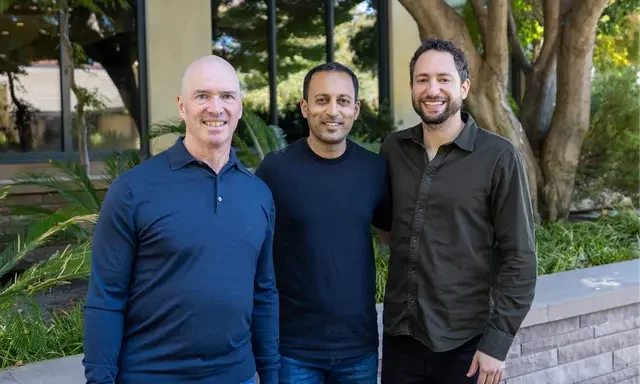
AutoNation announced on October 1 that Ravi Simhambhatla has joined as Chief Technology and AI Officer, a newly elevated title that puts technology, data science, and AI under one executive at the country's largest auto retailer. CEO Mike Manley framed the appointment as one of several steps the company is taking to accelerate growth, language that signals the role was created with a specific commercial outcome in mind rather than as a defensive hire to backfill an open technology seat. Simhambhatla's own comment was characteristically modest for a new executive: he said he looks forward to working with the team to apply technology and AI in practical ways, which is the right instinct in an industry still sorting genuine AI value from vendor noise.
Manley's broader comments are worth sitting with. He said AutoNation's portfolio of brands, infrastructure, and scale would be nearly impossible to replicate today, and that technology, data science, and AI are the levers for building on that base, raising returns on capital, and reaching beyond the company's traditional geographic boundaries. That is a CEO describing his existing scale as the asset and technology as the multiplier, not describing technology as the product. It is a useful distinction for any retail or commerce executive evaluating whether a new AI hire is meant to transform the business model or simply sharpen the one that already works.
A resume built from other industries' hardest lessons
What stands out about Simhambhatla is not any single prior role but the sequence of them. He was vice president of information technology at Tesla during its manufacturing scale-up years, then chief information officer at Virgin America, then chief technology officer at Aer Lingus, then a managing director at Google Cloud, then senior technology leadership at United Airlines, and most recently executive vice president and chief digital and innovation officer at Avis Budget Group, where he led global technology and cybersecurity. More than 30 years of enterprise technology experience, spread across manufacturing, two airlines, a cloud hyperscaler, and a vehicle rental company, arrives now at a car dealership group.
That pattern says something about how large legacy companies are now sourcing technology leadership. AutoNation did not look for someone who had already run technology at a competing dealer group, because that is a shallow pool with largely the same playbook repeated. It looked for someone who has personally lived through supply chain shocks, fleet technology, cybersecurity incidents, and cloud migration at a scale comparable to its own, regardless of sector. Any retailer or commerce company still filtering CTO candidates mainly by direct industry experience should treat this hire as evidence that the better signal is transformation scale, not sector familiarity.
Why auto retail needed this now
Auto retail has been slower than general retail to modernize its technology stack, in part because dealership operations are fragmented across inventory, financing, service, and used-vehicle pricing systems that grew up independently and rarely talk to each other cleanly. Layering AI on top of that fragmentation without first rationalizing the data layer is how most AI pilots in this sector die quietly. A technology and AI officer with Simhambhatla's cloud and data science background is a reasonable answer to that specific problem, assuming AutoNation gives him the mandate and budget to fix data plumbing before chasing AI headlines.
The timing also lines up with margin pressure across auto retail more broadly, where used-vehicle pricing volatility and financing costs have compressed dealer margins for several quarters. A CEO citing returns on capital as the goal for a new technology hire, rather than customer experience or digital engagement, is telling you where the board's attention actually sits. That is a more honest framing than most retail AI announcements offer, and it gives outside observers a concrete benchmark to hold the hire against over the next year.
The geographic ambition hiding in a technology title
Manley's comment about reaching beyond AutoNation's traditional geographic boundaries is easy to miss inside an otherwise standard executive announcement, but it is the most consequential line in the release. A chief technology and AI officer tasked with geographic expansion is not primarily a cost-reduction hire. The implication is that AutoNation sees technology, likely including centralized data infrastructure, standardized dealership operating systems, and AI-driven pricing and inventory tools, as the mechanism that lets it scale into new markets without proportionally scaling physical footprint or headcount the way it historically has.
That is a meaningfully different bet than most retailers are making with their AI investments right now, where the stated goal is almost always efficiency inside the existing footprint. If AutoNation actually pursues geographic expansion on the back of this technology buildout, it becomes one of the more interesting test cases for whether AI and data infrastructure can substitute for physical scale in a business that has historically depended on local market presence, real estate, and service capacity to grow.
What the reader's own roadmap should take from this
If you run technology at a commerce or retail business facing similar margin pressure, the lesson is not to go hire an airline executive. It is to be honest with your board about what role you actually need: a leader who optimizes the current model, or a leader who is explicitly mandated to use technology to change what the business can become. AutoNation's announcement does the second thing cleanly, naming returns on capital and geographic reach as the targets rather than vaguer language about digital transformation. Specificity in the mandate is the part worth copying regardless of whether you copy the hire.
The harder discipline is holding the new hire to that mandate a year from now. Technology and AI officer titles created with grand framing have a way of quietly collapsing into run-the-business IT management once the initial press cycle fades and quarterly pressure returns. Readers evaluating their own newly created technology leadership roles should set the same test for themselves that AutoNation has implicitly set for Simhambhatla: specific, capital-linked outcomes, not general digital ambition, and a clear point at which the board checks whether the geographic and returns story actually materialized.