A venture-funded alternative to the degree
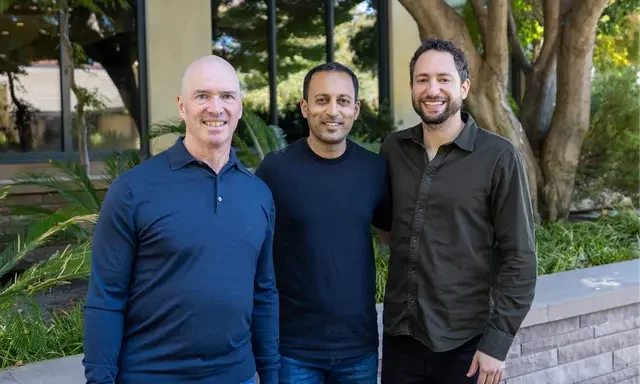
Horowitz Andreessen Academy has raised 42 million dollars, led by Andreessen Horowitz, to build what it describes as an alternative to the traditional university model centered on AI, project-based learning, and direct placement inside technology companies. The Academy is the creation of Gagan Biyani, who co-founded Udemy and, more recently, the cohort-based learning platform Maven. After launching the Academy, Biyani moved from Maven's CEO seat to board chairman, handing the chief executive role to Rishin Banker, a sequencing choice that signals Biyani sees this venture as his primary project rather than a side bet alongside Maven.
Marc Andreessen and Erik Torenberg, a general partner at Andreessen Horowitz, both joined the Academy's board, putting the firm's name and two of its most visible partners directly behind the venture rather than treating it as an arm's-length portfolio investment. For a firm that has spent years publicly arguing universities are failing to prepare students for an AI-driven economy, funding its own alternative is a logical next step, and a much larger commitment of reputational capital than a typical seed check into an edtech startup.
A large check for a pre-revenue campus
The 42 million dollar figure is notable for a single-campus education venture with no disclosed tuition revenue yet. The announcement of the raise gives no breakdown of how the money will be spent, which leaves open whether most of it goes toward facilities and operations in San Francisco, stipends and travel budgets for the founding cohort, or building out the placement and mentorship infrastructure the Academy's pitch depends on. Investors betting that size of check on a pre-revenue education model are underwriting the Academy's brand and network as much as any near-term financial return.
That bet looks less unusual once set against Andreessen Horowitz's broader portfolio strategy of funding infrastructure around its own talent and deal flow. A school that produces graduates pre-sorted by project quality and placed directly into the firm's portfolio companies and strategic partners functions, in effect, as a proprietary talent pipeline the firm partly owns a stake in from the earliest stage, long before a graduate shows up as a hire or a founder anywhere else.
What the first cohort actually looks like
The Academy's first intake is a tuition-free, one-year Founding Class Fellowship aimed at young high school graduates, built around self-directed projects the Academy calls pursuits rather than a standard academic curriculum. Examples given include building a company or a robot, training an AI model, conducting original research, or filmmaking. Students also spend at least three months working full-time inside a partner company through the Academy's hiring network, and each receives a 5,000 dollar travel budget for three to four weeks of independent research and travel abroad.
Coursework sits alongside the pursuits rather than replacing them, with named tracks in AI research and models, AI inference engineering, venture capital, brand development, and health and human performance. Students meet regularly with peers and mentors to review progress, a structure closer to a venture studio's check-in cadence than a university's semester schedule. Biyani has described the goal plainly: the number one priority is helping students learn to build, which he frames as the most important skill of the AI era.
The partner network is the actual product
Ten founding partners anchor the Academy's placement pipeline: Anduril, Anthropic, Coinbase, Google, Meta, NVIDIA, OpenAI, Palantir, Replit, and Stripe. More than 50 hiring partners and over 200 speakers and mentors sit around that core group, with named guest lecturers including Sam Altman, Jensen Huang, Brian Armstrong, and Garry Tan. That roster is the real product being sold to prospective students and their families, direct, warm-introduction access to the exact companies competing hardest for AI talent, well beyond the diploma a traditional university offers.
Torenberg has described the model as connecting technical students directly with researchers at frontier AI labs, a pitch that sidesteps the usual multi-year internship-to-offer pipeline entirely. For companies like Anthropic and OpenAI, who are themselves founding partners and simultaneously racing to hire scarce AI engineering talent, backing an academy that feeds them pre-vetted, project-tested 18 to 22 year olds is less an education philanthropy commitment than a recruiting pipeline built with someone else's venture capital doing the filtering work.
Free now, tuition later
The free first fellowship is explicitly a pilot. The Academy's stated plan, subject to regulatory approval, is a two-year program charging tuition comparable to an elite private university, for a residential San Francisco program serving students aged 16 to 22, built on the same combination of self-directed pursuits, courses, and co-op work placements. That sequencing, free founding cohort first, paid tuition model second, is a familiar venture playbook: use a free, closely watched pilot to generate case studies, press coverage, and placement outcomes, then convert that proof into a priced product once demand and credibility are established.
Regulatory approval is not a formality here. Operating as a degree-granting or credentialing institution at elite-university tuition levels invites accreditation, state licensing, and consumer protection scrutiny that a venture-backed fellowship program can currently avoid simply by not calling itself a degree. Whether the Academy pursues accreditation, builds its own credential, or relies entirely on its placement outcomes and brand name to substitute for one will determine how directly it ends up competing with, rather than alongside, traditional higher education.
Why this matters beyond one San Francisco school
The Academy is a small, single-site bet today, but it is a visible test of a thesis that applies well beyond higher education: that an intensive, project-based, employer-embedded model can substitute for years of classroom credentialing if the employer network behind it is strong enough. Enterprise leaders building internal AI upskilling programs, apprenticeship pipelines, or early-career rotational programs should watch this closely, because the Academy's structure, pursuits plus placement plus mentorship, is a compressed version of what many companies are already trying to build internally for reskilling existing staff.
If the Founding Class Fellowship produces graduates who move directly into roles at Anthropic, Google, or Stripe within a year, expect both a wave of imitators funded by other venture firms and a defensive response from universities trying to replicate the employer-embedded model inside existing degree programs. If it produces a thinner outcome than the roster of founding partners implies, the lesson for enterprise technology leaders will be a familiar one: a strong network of logos on a partnership page is not the same thing as a validated pipeline of hireable talent, and the difference only shows up a cohort or two later.