Two Walmart stories in one week
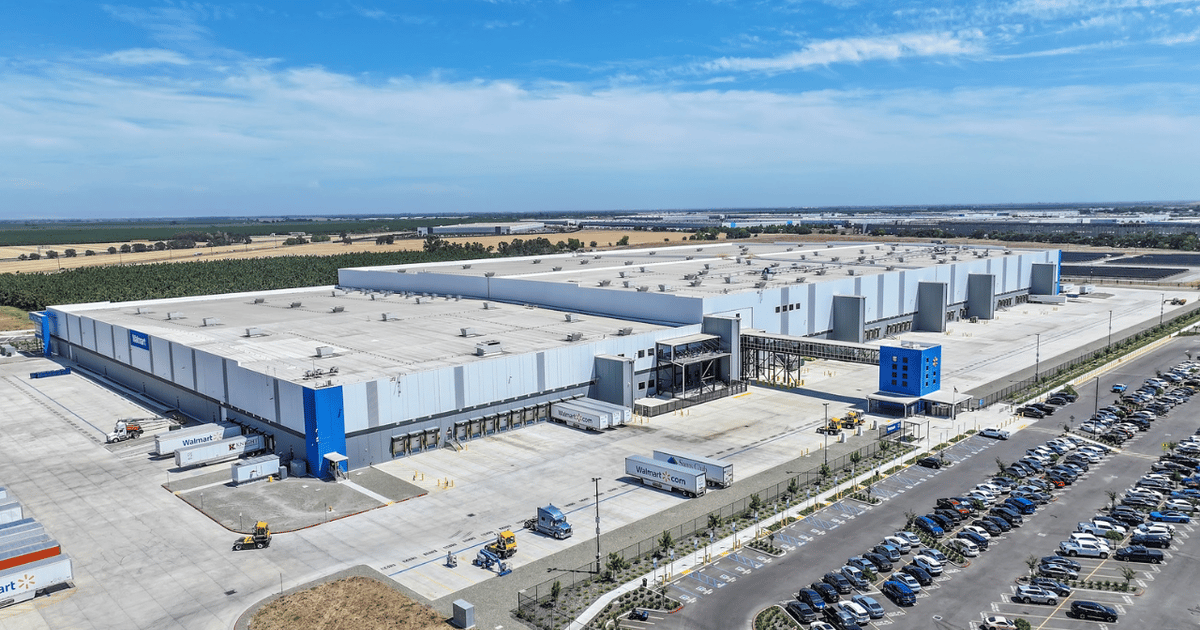
Walmart opened its fifth next generation distribution center this week, a 900,000 square foot facility in Stockton, California built around robotic devices and conveyor systems, with the company promising more than 1,000 new jobs there. That announcement arrived in the same week a Wall Street Journal report, relayed by Supermarket News, described a longer running set of automation problems across Walmart's broader warehouse network, problems the company has apparently been managing for years without fully resolving them, and that a spokesperson declined to address when reporters asked for comment on the record.
Reading both stories together is more useful than reading either alone. Walmart can credibly open a new, highly automated facility while simultaneously carrying real reliability and cost problems in its existing automated footprint. Large companies run multiple automation generations at once, and a flagship opening does not retire the problems sitting in facilities built on earlier systems, some of which have been operating for years before the Stockton center was ever announced. The Journal's reporting is about those earlier systems, not about Stockton specifically, and conflating the two gives Walmart more credit, or more blame, than either story earns on its own.
The failure modes, specifically
The Journal's reporting names concrete, mundane failure points rather than abstract technology risk. Cardboard boxes arriving at a facility are often too large for automated machines to handle, which stalls the equipment they were meant to run through. Wheeled self driving robots that move product within warehouses break down more often than the system was designed to tolerate. Both problems point to a mismatch between automation designed for a controlled test environment and the messier reality of a live, high volume warehouse operation.
A third problem compounds the first two: much of this automation is being retrofitted into buildings constructed in the 1980s and 1990s, originally designed around manual material handling rather than robotics. Retrofitting automation into a building never designed for it is a fundamentally different and harder engineering problem than designing automation into new construction from the start, and Walmart's next generation centers, built new, do not carry that same retrofit burden.
The vendor sprawl problem
Walmart uses a wide range of robotic systems from multiple vendors across different tasks and locations, according to the report, rather than standardizing on a single automation partner across its network. That approach has an obvious appeal: different tasks genuinely call for different equipment, and no single vendor excels at everything from pallet handling to order picking to last mile sortation, so a best of breed sourcing strategy looks reasonable on a procurement spreadsheet before anyone has to maintain the result.
The cost of that approach shows up in maintenance and integration overhead rather than in the purchase price of any individual system. Each additional vendor relationship brings its own maintenance contracts, its own specialized technician requirements, and its own failure patterns that in house engineering teams have to learn separately, often with little transfer of knowledge from one vendor's system to the next. A retailer standardizing on fewer vendors trades some task specific performance for lower integration complexity, and Walmart's experience is a data point in favor of weighting that tradeoff more heavily than the company apparently has so far.
The cost math nobody advertises
The clearest number in the report is the electricity bill. An automated grocery facility can run up to about 800,000 dollars a month in electricity costs, compared with roughly 250,000 dollars previously at the same type of facility before automation, more than three times the prior cost. Specialized engineers needed to maintain automated equipment also cost more than the typical warehouse workers the automation was meant to reduce, which erodes the labor savings side of the business case at the same time the energy bill is eroding the operating margin side.
Put together, this describes an automation program where the operating cost side of the ledger moved in the wrong direction even as the capital investment delivered the throughput improvements it promised. Walmart has put nearly 1 billion dollars into store level e-commerce fulfillment automation since 2016, and still employs more than 140,000 warehouse workers, a headcount figure that has not fallen the way automation business cases typically project when they are first pitched to a board. The capital bill and the labor bill are both still high at the same time, and neither has come down the way the original pitch likely promised.
The Alert Innovation cautionary tale
Walmart's own history with one automation vendor is a useful case study in how long this kind of bet can take to resolve. The company bought automation partner Alert Innovation, rolled its technology out to 20 stores, and found the system too inefficient to scale further. Walmart then sold the business to Symbotic in 2023, effectively admitting the earlier approach had not worked, and is now waiting on a successor system called SymMicro, currently being tested at a single Dallas store with a roughly six month timeline before any wider rollout.
That is a buy, deploy, abandon, sell, and rebuild cycle spanning the better part of a decade on a single automation bet, run by a company with essentially unlimited capital and engineering resources to throw at the problem. If Walmart's scale and balance sheet were not sufficient to shortcut that cycle, smaller retailers evaluating similar automation vendors should assume their own timeline to a working system will be measured in years, not quarters, and should structure contracts and expectations accordingly.
What this means for your automation roadmap
If you are evaluating warehouse or fulfillment automation, Walmart's experience argues for weighting retrofit risk and vendor count as heavily as throughput projections when you build your business case. A system that looks efficient in a vendor demo, in a purpose built facility, can behave very differently once it meets oversized boxes, an older building's column spacing, and a maintenance team learning a new system under live volume pressure rather than the controlled conditions of a sales pitch.
Price your electricity and specialized maintenance labor costs explicitly into any automation proposal, rather than assuming the headcount reduction alone pays for the system. Walmart's reported experience suggests those operating costs can move enough to offset a meaningful share of the labor savings automation is supposed to deliver, and discovering that gap after you have signed a multi year vendor contract is a far more expensive place to learn it than during diligence, when you still have leverage to renegotiate scope, phasing, or price.