A partnership built wider than a single product
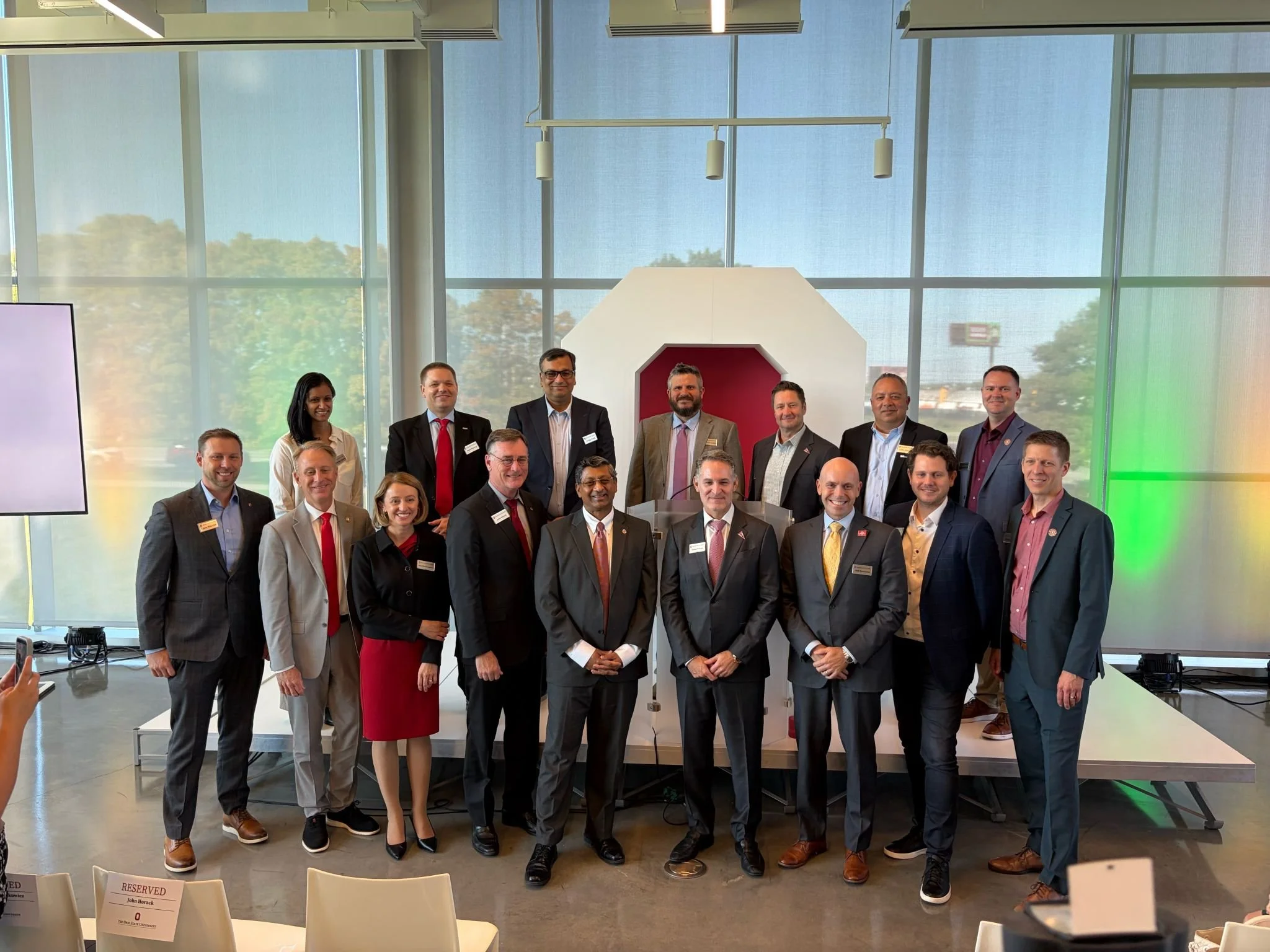
Most university AI announcements are a single procurement decision dressed up as a strategy: a chatbot license, a Copilot rollout, a pilot with a startup. Ohio State's agreement with Google is structured differently. It spans Google Cloud, Google for Education, and Google DeepMind simultaneously, covering research computing, student-facing services, athletics performance, and back office operations under one relationship. Google Public Sector CEO Karen Dahut called it one of the company's largest and most comprehensive education partnerships to date, and the scope backs that framing up: this is an enterprise account structure, not a classroom tool license.
That matters for how other university CIOs and CTOs should read the deal. A single AI tool procurement is a budget line. A relationship that bundles research infrastructure, student services, and operations into one vendor commitment is a platform decision with multi-year lock-in implications. Ohio State President Ravi V. Bellamkonda framed the research side around the university's AI(X) Hub, saying it would accelerate research across the enterprise, language that signals this was negotiated and sold internally as institutional infrastructure, not a departmental pilot.
What researchers actually get access to
The research components are the most concrete part of the announcement. Ohio State researchers gain access to more than 200 AI models and AI optimized supercomputing, alongside specific DeepMind tools: AlphaFold for protein structure prediction, AlphaEvolve, and Google Earth Engine. Google's AI for Science tools are positioned for generating and testing scientific hypotheses, and the university is explicit that the scope runs across biomedical engineering, earth sciences, and the humanities, not just computer science departments chasing a headline.
Ohio State is also among the first group of R1 research universities to get enterprise access to Google's AI research agents through Gemini Enterprise, which puts it ahead of most peer institutions in deployment sequencing. For any research university watching this deal, the signal is that Google is treating a handful of large research institutions as design partners for its science focused AI tooling, which is a different competitive position than being a customer who buys the tool after it ships broadly.
A narrowly scoped concierge, not a general chatbot
The planned 24/7 AI student concierge, built on Google Cloud, is deliberately limited to three functions: academic advising support, registrar processes, and career pathway planning. That is a meaningfully different design decision than the general purpose campus chatbots several universities have already stumbled with, where broad scope invited broad failure modes and bad press when the bot gave confident, wrong answers on financial aid or housing. Scoping the concierge to high volume, well defined administrative tasks is the safer rollout pattern, and it is the one enterprise AI deployments in other industries have converged on after two years of general chatbot disappointments.
Ohio State is also launching a Google Public Sector student research ambassador program, which the university says is a first for Google Public Sector in higher education. Students will work directly alongside Google teams rather than only consuming Google products, which blurs the line between customer and talent pipeline. For a company competing with Microsoft and OpenAI for the next generation of AI engineering talent, recruiting ambassadors inside a flagship public research university is as much a hiring strategy as an education partnership.
Athletics as the proof of concept nobody expected
The most unusual piece of the deal is Project SCARLET, an AI powered human performance platform built with Ohio State Athletics and the university's Human Performance Collaborative. It applies predictive models, computer vision, and analytics across all 36 of the university's varsity sports, focused on training load, recovery, and athlete health rather than game strategy. Athletic departments generate enormous amounts of biometric and performance data with clear, measurable outcomes, which makes them an unusually good testbed for AI tools before they get extended to academic or administrative use cases with murkier success metrics.
That sequencing is worth noting for any enterprise leader structuring their own AI rollout. Starting with a domain that has dense data, fast feedback loops, and a motivated user base, in this case athletes and performance staff who want a competitive edge, lets an organization validate a vendor's AI stack on a contained problem before betting the broader student experience on it. If Project SCARLET produces measurable results, expect Google and Ohio State to use it as the reference case for expanding similar predictive tooling into academic advising and retention.
The execution risk every multi-year platform deal carries
Ohio State CIO Rob Lowden was candid that the partnership is moving from vision and agreement into execution and impact over the coming year, extending into AI, cloud computing, and advanced research. That phrasing is an implicit admission that the announcement itself is the easy part. University IT organizations are not known for fast execution on multi-vendor platform deals, and a partnership this broad touches research computing procurement, FERPA and student data governance, athletics compliance, and faculty change management simultaneously, each with its own stakeholders and timeline.
No financial terms were disclosed, which is standard for public sector technology deals of this size but leaves outside observers unable to judge whether the commitment is proportionate to the access Google is receiving to a major research university's data, students, and brand. Other university leaders watching this deal should ask Google for the same terms Ohio State negotiated rather than accepting a smaller, less customized version marketed as the same partnership.
What this means for the next twelve months
This deal sets a template other large public research universities will likely try to replicate with Google, Microsoft, or Anthropic, and the components worth copying are specific: narrowly scoped student-facing tools instead of general chatbots, a contained high-feedback domain like athletics to prove the stack works, and named enterprise access to frontier research tooling rather than a generic education tier. The components worth scrutinizing are the undisclosed financial terms and the fact that execution, not announcement, is where these deals usually fail.
For CIOs at universities or any large institution negotiating a similar multi-year AI platform relationship, the practical takeaway is to insist on the same structure Ohio State got: scoped pilots with clear success metrics in a data-rich domain, enterprise-tier research access rather than a watered-down product, and a public commitment from the vendor's own leadership that ties their credibility to the rollout succeeding. Dahut and Bellamkonda have now put both companies' names on the outcome. That accountability is worth more than the undisclosed dollar figure.