The announcement and the split it represents
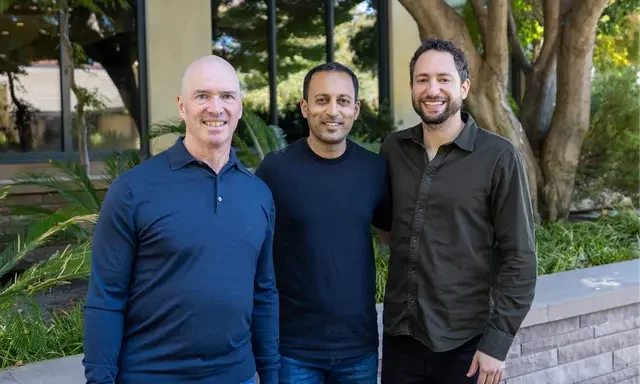
AIMMS, a Netherlands-based mathematical optimization and AI decision-engineering vendor with nearly four decades of history, announced on October 9 that Jonathan Wood will become Chief Executive Officer and Soumya Basu will become Chief Product and Technology Officer. The two roles were announced together, in the same release, which is itself the notable structural choice: rather than hiring a single leader to run growth and product in tandem, AIMMS's board explicitly separated commercial strategy from product architecture and engineering at the top of the organization. Ben Hopper, a partner at GRO, the firm that invested in AIMMS in 2025, described the company as trusted by global enterprises for resilience planning and real-time optimization, framing this leadership change as the start of a new growth phase rather than a turnaround.
Wood's own framing leans into that existing credibility rather than promising reinvention. He said AIMMS has deep technical expertise, an amazing customer base, and decades of evidence that its technology can solve difficult decision-making problems. That is a CEO explicitly choosing not to position the hire as a rescue mission, which matters for how customers and the market should read the change: this looks like a scale-up leadership team installed on top of a working product, not a repair crew sent in to fix something broken.
The quote that actually matters
Basu's statement is the one worth reading twice: enterprises need AI they can trust in production. That single line names the exact problem this entire category of enterprise software vendor is racing to solve, and AIMMS's pitch is unusually specific about how it intends to solve it. The company combines AI with deterministic optimization, business constraints, and domain knowledge, rather than leaning on generative AI alone, and the release states its ambition as becoming the AI decision-engineering platform of choice for process industries. For readers who spend their days evaluating whether an AI vendor's production claims will hold up under real operational load, that combination of deterministic optimization plus AI is a more credible answer than most pure large-language-model pitches currently on the market.
Basu's own background supports that positioning. He spent 25 years across supply chain consulting, operations, and software product leadership, most recently as senior vice president of product management at o9 Solutions, before that leading Chainalytics' global integrated demand and supply planning practice, and spending more than a decade at Cisco in supply chain and customer and partner experience roles before starting his career at i2 Technologies. That is a career built almost entirely inside supply chain planning software, not a generalist technology executive parachuting into a new vertical.
What a GRO-backed leadership reset tells you about the next twelve months
GRO's 2025 investment in AIMMS, followed roughly a year later by a new CEO and a newly created Chief Product and Technology Officer role, follows a pattern enterprise software operators should recognize immediately: private equity ownership changes in this category reliably precede a leadership reset within twelve to eighteen months, and the reset usually arrives bundled rather than staggered. Announcing the CEO and the top technology role on the same day, rather than hiring a CEO first and letting that person pick a CTO later, suggests GRO wanted both seats filled with people it had already vetted together, minimizing the window where strategy and product direction could drift apart during a transition.
Wood's own career pattern reinforces this reading. He has spent more than two decades scaling enterprise technology businesses, most recently at European and U.S. private equity and venture-backed companies including CyberSmart, Jedox, and Transporeon, with earlier stops as General Manager for Infor across India, the Middle East, and Africa and senior roles at SAP. He is, in other words, a repeat operator for exactly this kind of PE-backed enterprise software growth phase, which is a different hiring profile than a founder-era CEO and should change how customers and competitors read AIMMS's next moves, expect faster commercial experimentation and tighter margin discipline than the company's prior four decades of steady, patient growth.
Why process industries specifically
AIMMS's stated ambition, becoming the AI decision-engineering platform of choice for process industries, is a narrower target than the usual horizontal enterprise AI pitch, and that narrowness is a strength. Process industries, chemicals, energy, manufacturing, carry hard physical and regulatory constraints that make pure generative AI approaches poorly suited to the decisions that actually matter: production scheduling, resource allocation, and supply network design all have to respect constraints that cannot be hallucinated around. A vendor combining deterministic optimization with AI, led by a product chief whose entire career has been supply chain planning, is making a credible bet that this specific intersection is underserved relative to the attention generative AI has absorbed elsewhere.
For enterprise technology leaders evaluating AI vendors in operationally constrained environments, retail supply chains, logistics networks, manufacturing scheduling, AIMMS's new leadership team is worth tracking less for the company itself and more as a bellwether. If a 40-year-old optimization vendor with fresh PE backing and a product chief this specifically credentialed cannot move deterministic-plus-AI tooling into durable production use over the next year, that is a meaningful signal about how hard the production trust problem Basu named actually is, even for vendors built for exactly this intersection.
The decision this hands back to the reader
If you are evaluating optimization or planning software vendors for your own supply chain, scheduling, or resource allocation problems, AIMMS's leadership change is a reasonable trigger to re-open that evaluation. The technology itself may be unchanged for now, but the commercial terms, roadmap priorities, and support model very likely will shift under a new PE-backed growth mandate. New CEOs installed by private equity owners tend to revisit pricing, packaging, and account prioritization within their first two quarters, and customers who assume continuity because the product itself has not changed are often caught off guard by those shifts.
The structural lesson generalizes past AIMMS specifically. Any board resetting leadership at a PE-backed enterprise software company should treat the CEO and CTO or CPTO hiring decision as a single joint decision, not two sequential ones, precisely because AIMMS's own board apparently reached that conclusion. Splitting commercial and product leadership cleanly, while hiring both people in the same cycle so their mandates are calibrated against each other from day one, is a template worth copying regardless of which specific category of enterprise software you operate in.