A Promotion That Doubles as a Strategy Statement
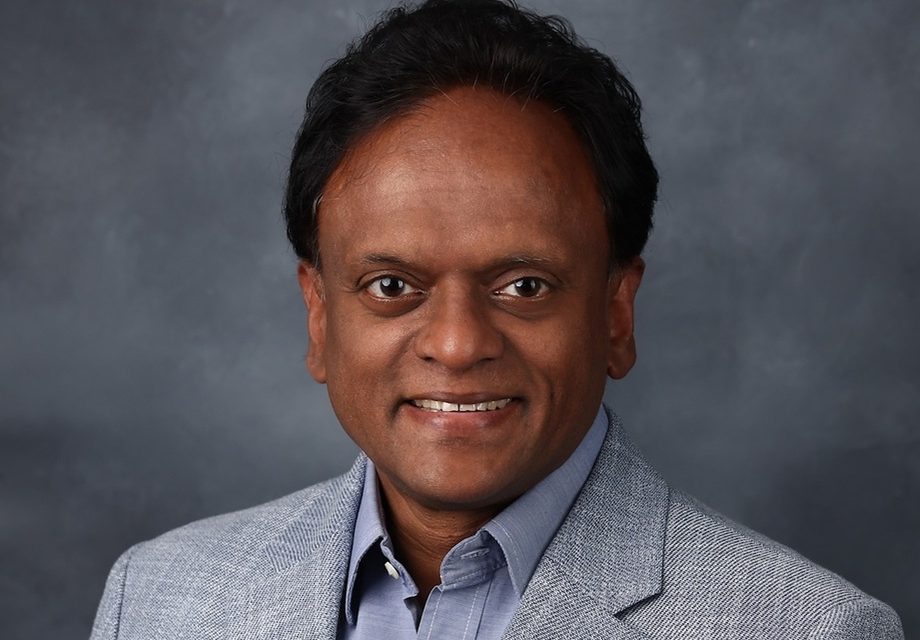
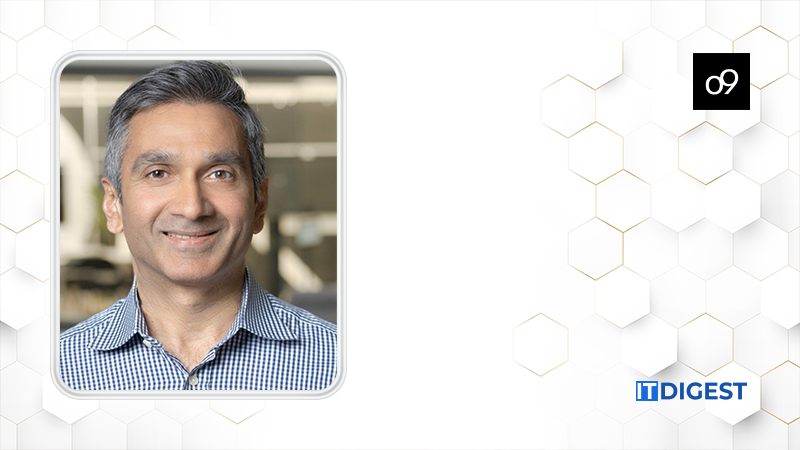
o9 Solutions confirmed on July 2, 2026 that it has promoted Dr. Ashwin Rao to Chief Technology Officer, elevating him to the top technical seat barely eight months after he joined the Dallas-based enterprise planning company. When a firm moves an executive from a newly created role into the CTO chair this quickly, we read it as more than a personnel note. It is a declaration about where the company believes its future value will be created, and about the kind of technologist it wants holding the architectural pen while the rest of the software industry rebuilds itself around agentic AI.
Rao arrived at o9 in November 2025 as Executive Vice President of Next-Gen AI and Technology, a title that signaled ambition more than it described a settled mandate. The promotion answers the ambiguity. o9 is a supply chain and integrated business planning vendor that has grown into a unicorn by selling large enterprises a single decision-making platform, and the CTO it just named is a reinforcement-learning researcher, not a career infrastructure operator. That choice tells us the company intends to compete on decision intelligence rather than on plumbing, and it is willing to bet the roadmap on that distinction.
Who Ashwin Rao Actually Is
Rao is an unusual profile for a planning-software CTO, and that is precisely the point. His career spans Wall Street, industry, and academia: he held executive positions at Goldman Sachs and Morgan Stanley, ran technology and data work at Target, and served at QXO before moving to o9. Alongside all of that, he remains an adjunct professor at Stanford University's Institute for Computational and Mathematical Engineering, where he researches reinforcement learning and teaches graduate-level courses in artificial intelligence. Few enterprise CTOs can claim to have shipped production systems at a global bank and to have written the coursework that trains the next cohort of AI engineers.
We think that blend matters for a company selling to chief supply chain officers and CFOs who are deeply skeptical of AI theater. Rao's financial-services background means he has operated in environments where a model's output moves real money and real risk, and where explainability is not a nice-to-have but a regulatory and commercial necessity. His academic footing means he understands the limits of the current model paradigm as well as its promise. That combination positions him to make the harder argument o9 needs to make, which is that AI can be trusted with consequential planning decisions, not just with drafting text.
The Neuro-Symbolic Thesis Behind APEX
Since joining, Rao has led the development of APEX, o9's Agile, Adaptive, Autonomous Planning and Execution model, which builds on the company's existing Digital Brain platform. The architectural bet underneath APEX is neuro-symbolic AI, an approach that fuses the pattern-recognition strength of neural networks with the structured, rule-aware reasoning of symbolic systems and enterprise knowledge graphs. In a market drowning in generic large-language-model wrappers, that is a deliberately contrarian technical stance, and it is the through-line of Rao's appointment.
Rao framed the ambition directly. "Enterprise decision-making has never been more complex, or more volatile. By combining the power of neuro-symbolic AI with deep industry and enterprise domain knowledge, APEX is systematically transforming how enterprises detect risks and opportunities, plan, decide, execute and learn at scale," he said. "This is the future of enterprise intelligence, and I am thrilled to step into the CTO role at such a pivotal moment for o9." We would flag the operative phrase as "domain knowledge": o9's wager is that its planning graph, not a foundation model alone, is the durable moat, and Rao is the executive tasked with proving it.
Why the Timing Reads as Deliberate
The appointment lands at a moment when enterprise buyers have grown tired of AI pilots that never reach production. Boards funded a wave of experiments in 2024 and 2025, and many are now demanding measurable operational returns rather than another demo. For a planning vendor, that pressure is an opportunity: supply chains remain volatile, tariffs and logistics shocks keep resetting assumptions, and the promise of an autonomous system that can re-plan in near real time is exactly the kind of value executives will pay for if it works. Naming a research-grade CTO now is o9 signaling it is ready to be measured on outcomes.
There is also a competitive read. o9 sits in a crowded field alongside larger incumbents and a swarm of AI-native challengers, all racing to attach the word autonomous to their planning stories. Promoting Rao gives o9 a credible technical spokesperson at a time when differentiation is increasingly about who can defend their AI architecture in front of a skeptical technical buyer. We suspect the company understood that the credibility of its APEX story depended on having a CTO whose name carries weight in AI circles, and it moved quickly to secure that advantage before the narrative hardened.
What the CEO Is Betting On
Co-founder and CEO Chakri Gottemukkala tied the promotion explicitly to business value rather than to raw technical brilliance. "Ashwin is an outstanding technologist because he understands the constraints and opportunities for true business value generation," he said. "His conviction in neuro-symbolic AI, combined with an approach that connects vision to daily practical innovation and execution, will increase o9's value creation potential and speed for our customers." The phrasing is telling: Gottemukkala is not celebrating a researcher, he is celebrating a researcher who ships, and the emphasis on speed suggests o9 feels the clock on its AI positioning.
That framing matters because it defines the yardstick Rao will be held to. A CTO promoted on a promise of value creation and velocity owns the outcomes as well as the architecture, and in a planning company those outcomes are legible: faster cycle times, better forecast accuracy, fewer stockouts and markdowns. We read Gottemukkala's language as an internal alignment mechanism as much as an external endorsement. It tells the engineering organization that elegant AI is not the goal, and it tells customers that o9 intends to translate its neuro-symbolic ambitions into line-item results they can audit.
What We Are Watching Next
The first thing worth watching is whether APEX moves from an articulated model into referenceable, at-scale production deployments under Rao's ownership. It is one thing to describe agile, adaptive, autonomous planning in a press release and another to point to named enterprises running consequential decisions on it. Rao's academic credibility buys o9 attention, but attention converts to renewal revenue only when large customers can say the autonomous loop reduced real cost or risk. The next several quarters of case studies, not the promotion itself, will tell us whether the bet is paying off.
The second is talent and trust. A CTO with Stanford standing and a Wall Street pedigree can recruit AI researchers that a mid-market vendor normally cannot, and o9's ability to win that talent war will shape how far its neuro-symbolic thesis can go. Equally, the industry is watching whether neuro-symbolic approaches genuinely outperform simpler LLM-plus-tools architectures for enterprise planning, or whether the distinction proves academic in practice. Rao's appointment makes o9 one of the clearest test cases for that question, and for enterprise leaders evaluating AI planning vendors, it is a case worth tracking closely.