The Mainframe Gets Smaller
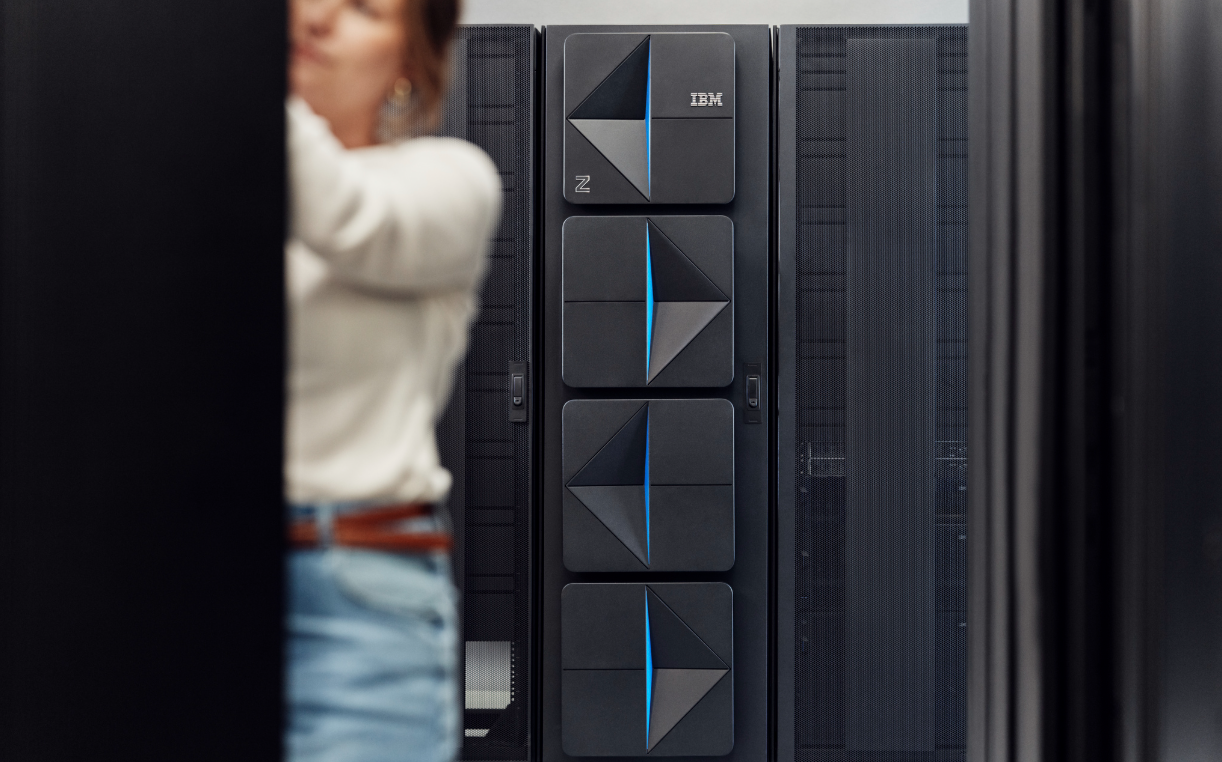
IBM has announced single frame and rack mountable versions of its z17 mainframe, along with more compact LinuxONE 5 server platforms, shrinking a machine long associated with dedicated data center halls into a form factor that slots into a standard 19 inch rack. The goal, in IBM's framing, is to democratise access to the mainframe so that smaller organisations can tap its high performance processing and industrial grade security without committing to a full frame installation. It is a deliberate widening of a market that has spent decades defined by scale and exclusivity.
The compact systems are not toys. They support up to 82 cores and 18 terabytes of memory across two processor drawers, representing roughly a 20 percent increase in core count and a 12 percent increase in memory over the z16 generation. IBM says a LinuxONE Rockhopper 5 delivers up to 23 times the workload performance of similarly sized x86 servers while cutting power consumption by 83 percent. The pitch is more capability in less space at lower energy cost, aimed squarely at the constraints data center operators complain about most.
AI Where the Data Lives
The reason IBM is doing this now is artificial intelligence, specifically the kind that has to run next to sensitive data. The single frame and rack mount systems deliver multi model AI inferencing through the Telum II processor, Red Hat OpenShift AI and the Spyre accelerator, enabling both predictive and generative AI inside the transaction itself. A z17 configured with an integrated accelerator can process up to 2.5 million inference operations per second at 1 millisecond response time using a credit card fraud detection deep learning model, the sort of workload where latency and locality are not negotiable.
That in transaction capability is the crux of the argument. For fraud scoring, credit decisions and other high volume, low latency tasks, shipping data out to a cloud model and waiting for a round trip is both slow and, in many regulated contexts, legally awkward. Running the model on the same machine that processes the transaction removes the round trip and keeps the data inside the security boundary. IBM is betting that a meaningful class of AI workloads will stay on premises for exactly these reasons, and it wants the hardware ready for them.
Why On-Premises Is Back in the Conversation
The timing reflects a shift in enterprise sentiment. Holger Mueller of Constellation Research argued that with the Telum processor and the Spyre accelerator, IBM now has the chip platform to enable on premises AI in a smaller single rack footprint for both mainframe and Linux workloads. He emphasised that executives should prioritise such systems given regulatory compliance demands, data residency requirements and the need to reduce latency through local deployment. Those three pressures have grown sharper as AI spreads into regulated functions.
IBM's own leadership made the case in terms of converging pain. Chief product officer Tina Tarquinio described enterprises of all sizes facing two simultaneous headaches: the need to run sensitive, data intensive AI workloads on premises to meet strict regulatory requirements, and the pressure to reduce energy costs and shrink data center footprints. The compact z17 is engineered as an answer to both at once, a machine dense enough to matter and small enough to fit where a full frame never could.
Democratising a Closed Club
The strategic subtext is market expansion. Mainframes have historically been the preserve of the largest banks, insurers and governments, institutions with the floor space, power and budget to justify a full system. By offering a rack mountable option, IBM is reaching organisations that value mainframe security and reliability but were priced or sized out of the platform. Regional banks, mid market insurers and healthcare providers with strict data handling obligations are the obvious targets, all of them under pressure to add AI without loosening their compliance posture.
This is also a defensive move. As those same organisations weigh cloud native AI stacks, IBM is offering an alternative that keeps the workload inside their own walls with familiar operational guarantees. The compact form factor lowers the barrier to saying yes. Whether it succeeds depends on price and on how convincingly IBM can argue that in transaction AI on a rack mounted z17 beats the convenience of the cloud for the workloads that matter, but the strategy is coherent and the timing is shrewd.
The Software Question
Hardware is only half the story. A rack mounted z17 is of little use to a mid market bank that lacks the skills to operate a mainframe, and mainframe talent has been scarce and ageing for years. IBM's answer leans on Red Hat OpenShift AI, which brings a familiar Kubernetes based operating model to the platform, letting teams deploy AI workloads with tools they already know rather than mastering decades of mainframe idiom. The bet is that modern software abstractions can lower the operational barrier that has long kept the platform the preserve of specialists.
Whether that bet holds is the open question. Abstractions help, but running mission critical systems on any platform demands expertise that does not appear overnight. IBM will need a credible skills and partner story to make the compact z17 genuinely accessible to the smaller organisations it is courting. The hardware democratises the footprint. The software and the surrounding ecosystem will determine whether it democratises the capability, or whether the machine simply ends up back in the hands of the same institutions that already run mainframes and already have the people to keep them running.
Our Read
We see the compact z17 as a bet that the pendulum between cloud and on premises has swung far enough that a well positioned local option can win real share back. For years the default answer to any new workload was the public cloud. Regulation, data residency law and the latency economics of high volume inference are quietly restoring the case for keeping certain workloads at home, and IBM is building hardware to catch that demand.
The risk is that on premises AI remains a niche, however defensible, in a world that increasingly assumes elastic cloud capacity. But niches in banking, insurance and government are lucrative and durable, and they are exactly where mainframe economics have always made sense. By making the z17 fit a standard rack, IBM is not trying to reverse the cloud. It is trying to own the slice of AI that, for legal and physical reasons, will never fully move there.