SoftBank Enters the US Neocloud Race With SB Neo
On July 2, SoftBank Corp. and SoftBank Group Corp. announced they had established SB Neo, Inc., a Delaware-incorporated venture built to sell rented GPU capacity to American enterprises and hyperscalers. Ownership splits 51/49 between the operating carrier and the group holding company, and commercial services are slated to begin in the fiscal year ending March 2028. The ambition is not modest: SB Neo is meant to sit atop roughly 10 gigawatts of AI data-center capacity that the wider SoftBank empire is assembling, a scale that would place it alongside the largest infrastructure operators on the planet. For a company known lately mostly for its OpenAI checkbook, this is a direct move into the plumbing of the AI economy.
We read this as SoftBank deciding that being a passive financier of the AI build-out is no longer enough. "With the strong demand for AI data centers in the United States and the SoftBank Group making steady progress toward securing 10 gigawatts of power, we are partnering with SoftBank Group Corp. to develop our neocloud business in the United States," said Junichi Miyakawa, president and CEO of SoftBank Corp. Chairman Masayoshi Son framed it in his usual register: "The SoftBank Group will work together to deploy world-class AI infrastructure and drive the AI revolution." The rhetoric is familiar. The vertical integration behind it is what CIOs should note.
The Gigawatt, Not the GPU, Is the Moat
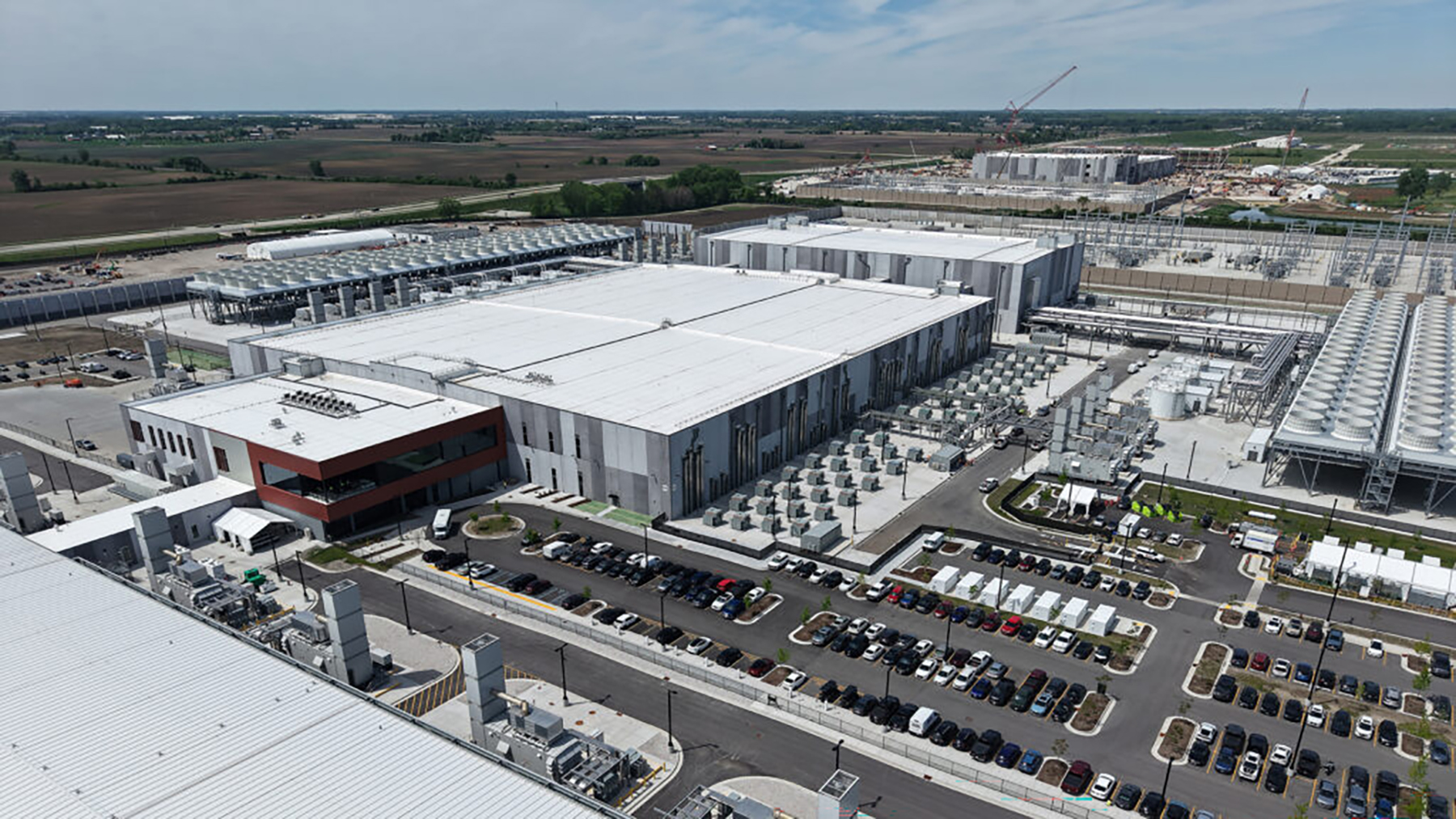
The defining feature of SB Neo is not silicon, it is electricity. Every neocloud rents broadly similar Nvidia hardware, so the differentiator has quietly shifted to who can actually energize the racks. SoftBank's answer is to lean on gas-fired generation and captive development, including SB Energy's campus taking shape on Department of Energy land at the Portsmouth Site in Ohio. By coupling power development to compute leasing, SoftBank is trying to escape the interconnection queues and multi-year grid waits that have become the real bottleneck for AI capacity in 2026.
This is the same logic we have watched Microsoft, Meta, and Amazon pursue through nuclear restarts and behind-the-meter gas, and it is worth stating plainly: in the current market, a signed power contract is a scarcer asset than a GPU allocation. If SB Neo can deliver contracted, dedicated megawatts on a predictable schedule, it has something many better-capitalized rivals cannot promise. The risk is equally plain. Gas-heavy AI infrastructure invites emissions scrutiny and permitting friction, and a 10-gigawatt target by 2030 is an enormous execution bet on projects that mostly do not yet exist.
SoftBank Wants to Own the Software Stack, Too
SB Neo will not just resell raw capacity. It will run on Infrinia AI Cloud OS, SoftBank's own software layer, which has been in beta on a GPU cloud service in Japan since roughly May. Infrinia offers Kubernetes-as-a-Service in a multi-tenant environment and Inference-as-a-Service that exposes large language model inference through APIs. In other words, SoftBank is trying to control the orchestration and the developer-facing surface, not merely the metal underneath. That is a deliberate attempt to look more like a platform and less like a commodity landlord for hire.
For buyers, this cuts both ways. A proprietary control plane can smooth GPU scheduling, multi-tenancy, and inference serving, which are exactly the operational headaches that make raw neocloud contracts painful. It can also become a lock-in vector if workloads get wired to Infrinia-specific abstractions rather than portable, open tooling. We would want to know early how closely Infrinia tracks upstream Kubernetes and standard inference interfaces, because the answer determines whether SB Neo is a convenient supplier or a strategic dependency you cannot easily unwind later.
A Debt-Financed Bet, With OpenAI as Collateral
The financing behind all of this deserves a hard look. SoftBank is reportedly seeking a loan on the order of $10 billion collateralized against its OpenAI stake, the same stake that also makes OpenAI a plausible anchor tenant for SB Neo's future capacity. That circularity is the crux of the strategy: SoftBank invests in the model maker, builds the power and compute the model maker needs, then rents that compute back, potentially to the very company underwriting the collateral. When the flywheel spins, it is elegant. When it stalls, the exposures compound quickly.
CIOs do not usually care about a supplier's cap table, but concentration risk is a procurement issue. A neocloud whose economics lean heavily on one hyperscale-adjacent customer and on leveraged financing is a different counterparty than a diversified public cloud. We are not predicting failure; SoftBank has deep pockets and a long horizon. We are saying that anyone considering SB Neo for production AI workloads should price in the possibility of financial or schedule turbulence and avoid designing single-vendor dependencies around a business that will not sell its first commercial hour until 2027.
The Timing Is No Accident
SB Neo arrives at an unflattering moment for pure-play GPU rental. The launch landed a day after reports that Meta was building its own capacity-resale operation, and against a backdrop of sharp share-price pressure on CoreWeave, the sector's bellwether. McKinsey has described the standalone neocloud model as extremely fragile, a verdict rooted in the reality that rented Nvidia racks are a commodity with thin, competed-away margins. Entering a market just as investors sour on it looks reckless until you notice what SoftBank is actually betting on here.
The wager is that the commodity layer collapses in value while the scarce layers, power and integrated software, appreciate. If that thesis holds, the operators who merely arbitrage GPUs get squeezed, and the ones who own generation and a platform survive. SoftBank is effectively saying the shakeout is the opportunity. We find the logic coherent, though unproven, and note that owning the whole stack is exactly the kind of capital-intensive, everything-at-once strategy that has both made and unmade SoftBank's biggest bets before.
What CIOs Should Do Now
Practically, nothing about SB Neo requires action this quarter, because there is nothing to buy until fiscal 2027. But it belongs on your radar as a potential fourth or fifth option for AI training and inference capacity, particularly if power-constrained regions keep throttling availability at the incumbent clouds. If SoftBank delivers dedicated, gas-backed megawatts on schedule, SB Neo could offer capacity precisely where AWS, Azure, and Google are telling customers to wait. That alone makes it worth a preliminary conversation with your infrastructure team this year.
When SB Neo does open its doors, treat it like any specialized supplier and not like a hyperscaler. Insist on portability from the Infrinia layer, contractual clarity on delivered capacity versus aspirational gigawatts, and exit terms that survive a change in SoftBank's financial weather. The broader signal is the one worth internalizing today: in 2026, the AI cloud map is being redrawn by whoever controls electrons, not just accelerators. SB Neo is the clearest statement yet that energy, not the GPU, has become the industry's real moat.