A Cash Rich Chipmaker Goes to the Bond Market
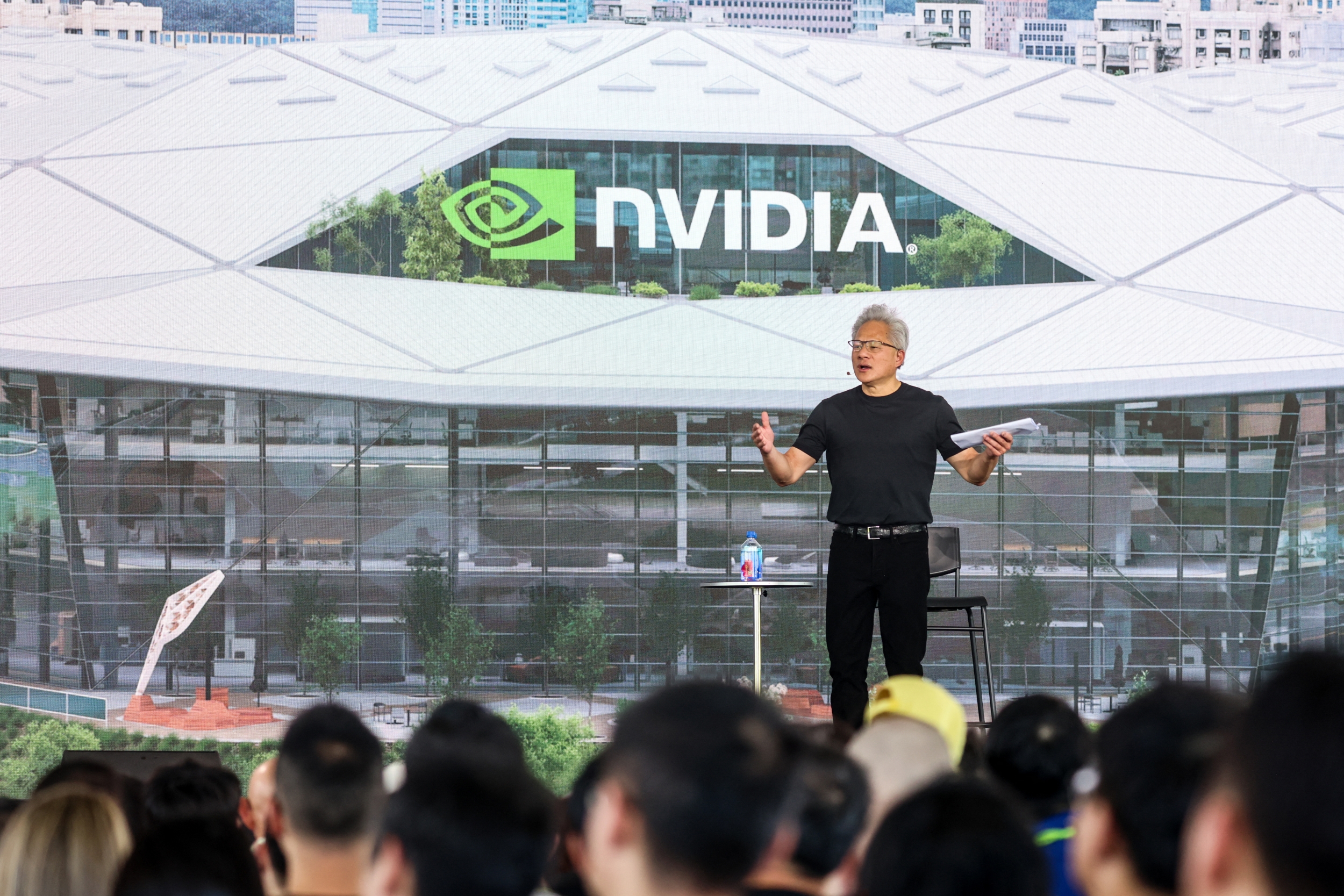
Nvidia priced a $25 billion investment-grade bond offering on June 15 to 16, 2026, its first debt issuance since 2021 and the largest in the company's history. The deal was upsized from an initial $20 billion target after the order book swelled to roughly $85 billion, a level of demand that tells you everything about how investors view the company's trajectory. For a business sitting on one of the deepest cash positions in technology, tapping the credit markets is not about necessity. It is a deliberate financial choice.
We read this move as a statement of intent. The offering spans seven tranches maturing between 2028 and 2056, with yields reaching up to 5.625% on the longest paper. Nvidia's equity valuation now sits near $5.14 trillion, and shares closed up 3.5% at $212.45 on the news. When a company this liquid borrows at scale, it is signaling that the opportunity in front of it is large enough to justify locking in long-dated capital today rather than waiting.
Why Borrow When You Are Drowning in Cash
The obvious question for any CFO watching this deal is simple. Why issue debt when free cash flow is overflowing? The answer lies in the economics of the AI capex supercycle. Building and supplying data center infrastructure at the pace the market demands requires capital deployed on a timeline that does not always match quarterly cash generation. Debt lets Nvidia preserve flexibility, fund refinancing, and pour proceeds into AI infrastructure and data center projects without drawing down the reserves it may need for acquisitions or buybacks.
There is also a tax and capital-structure logic at work. Investment-grade debt at these yields is cheap relative to the returns Nvidia expects on compute infrastructure. For enterprise leaders, the lesson is that even the most profitable firms now treat leverage as a tool for accelerating into a once-in-a-generation demand wave, not as a sign of distress.
The Financialization of Compute
What strikes us most is how this deal marks a deeper shift: compute is becoming a financialized asset class. Data centers, GPUs, and the power contracts that feed them are increasingly underwritten by structured capital, long-dated bonds, and project financing that resembles the playbooks of energy and real estate. Nvidia issuing $25 billion in bonds to fund the buildout is the clearest signal yet that AI infrastructure has matured into something Wall Street can model, rate, and trade.
For CIOs and infrastructure leaders, this matters beyond the headline. As the supply chain for AI compute gets financed through debt markets, the cost and availability of that capital will shape how quickly capacity comes online. When credit tightens, the buildout slows. The financial plumbing behind your future GPU allocations now runs through the same bond desks that price corporate America.
A Vote of Confidence in Durable Demand
The $85 billion order book is itself a forecast. Institutional buyers do not commit to 30-year paper unless they believe the issuer's cash flows will remain robust across the life of the bond. By accepting yields up to 5.625% on the long end, investors are effectively underwriting Nvidia's view that AI demand is not a spike but a durable structural trend. That is a meaningful counterpoint to the recurring bubble chatter.
We are cautious about reading too much into market enthusiasm, since order books can overstate conviction. But the breadth of demand across seven tranches and three decades of maturities suggests the credit market has internalized AI as a long-run growth engine. For enterprises planning multi-year compute strategies, that durability signal is worth weighing alongside the more familiar equity narrative.
What It Means for Enterprise Buyers
For the CTOs and infra leaders who actually consume Nvidia's output, this financing has practical implications. Proceeds earmarked for AI infrastructure and data center projects mean more capacity, more aggressively built, which should ease some of the allocation pain that has defined the past two years. A better-capitalized supplier can invest ahead of demand, smoothing the boom-and-bust cycles that make capacity planning so painful for everyone downstream.
At the same time, concentration risk deserves attention. The more the entire AI economy leans on a single supplier's balance sheet and financing decisions, the more systemic that supplier becomes. We would encourage infrastructure leaders to treat Nvidia's financial health as a planning input, much as they already track its product roadmap, because the two are now tightly coupled.
Our Take
Nvidia raising $25 billion in its largest ever bond sale is less a funding event than a market signal. It confirms that the AI capex supercycle has the staying power to justify long-dated debt, that compute has become a financialized asset class, and that even the richest chipmaker sees value in borrowing to build faster. The financial markets have voted, and they have voted for scale.
The risk, as always, is that conviction outruns reality. If AI monetization disappoints, a heavily financed buildout could turn from accelerant to overhang. For now, though, the message to enterprise leaders is clear: the infrastructure you will rely on is being built on borrowed money, at scale, on the assumption that demand endures. Plan accordingly.