Elice Joins Korea's National AI Compute Push
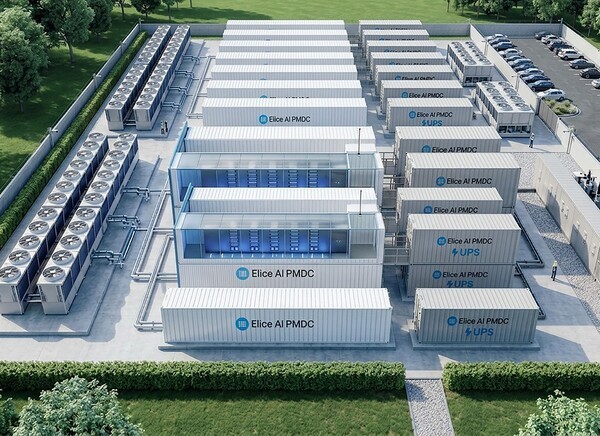
Elice Group announced on June 16 that it has been selected as a supplier for the 2026 National AI Data Center Advancement Project, led by South Korea's Gwangju Artificial Intelligence Industry Cluster Agency, known as AICA. Under the agreement, Elice will provide high-performance GPU cloud capacity through its Elice Cloud platform, giving Korean researchers and developers access to scarce accelerated compute. For a country determined to build sovereign AI capability, securing reliable domestic GPU supply is a strategic priority, not just a procurement line item.
The selection is notable because it routes national AI ambitions through a regional cloud provider rather than a global hyperscaler. AICA has positioned Gwangju as a hub for Korea's AI industry, and tapping a homegrown platform to deliver the underlying compute reinforces that regional strategy. We read this as part of a broader pattern in which governments increasingly want their AI infrastructure built, operated, and controlled within national borders.
H100 and B200 Under the Hood
The technical substance matters here. Elice Cloud is built on Nvidia H100 GPUs alongside the latest B200 accelerators, giving the platform both proven and cutting-edge silicon. For Korean AI developers who have struggled to access top-tier compute, the inclusion of B200 capacity is significant, since the newest generation of accelerators is exactly where global demand is most intense and supply is tightest. Offering it through a national program lowers a real barrier to advanced research.
This mix of H100 and B200 also signals that regional clouds are no longer limited to commodity or older-generation hardware. The gap between what a national provider can offer and what a hyperscaler can offer is narrowing at the silicon level. The differentiator increasingly becomes locality, sovereignty, and program alignment rather than raw access to the latest chips, which reshapes how governments evaluate their infrastructure partners.
A Seven-Month Sprint
The contract runs roughly seven months, from May to December 2026, a deliberately compressed timeline aimed at getting compute into researchers' hands quickly. The stated goal is to reduce the constraints that Korean AI developers face in their research and development environments, where waiting for GPU allocation has become a chronic bottleneck. A short, focused engagement lets AICA measure impact and adjust before committing to longer-term arrangements.
Kim Jae-won, CEO of Elice Group, framed the mission plainly: "Through this project, Elice Group will provide proven GPU cloud infrastructure to reduce constraints in research and development environments." That emphasis on proven infrastructure is telling. In a market crowded with ambitious GPU cloud startups, the ability to deliver reliable capacity on a tight schedule is itself a competitive advantage, and a reassurance to a government program that cannot afford downtime.
Sovereign Compute as Strategy
What is unfolding in Gwangju is a clear example of sovereign AI compute in action. Rather than defaulting to foreign hyperscalers for the infrastructure that will train and serve national AI models, Korea is cultivating domestic providers capable of delivering frontier-grade GPU capacity. This is about more than economics. It reflects a desire for control over data, supply chains, and the strategic assets that increasingly underpin national competitiveness.
We expect this model to spread. As AI becomes central to industrial and security policy, more governments will fund regional GPU clouds and national data center programs that keep capability close to home. The challenge for these initiatives is sustainability: short pilot contracts must eventually mature into durable infrastructure that can compete on cost and reliability without permanent subsidy. Gwangju's project is an early test of whether that path is viable.
What Enterprise Leaders Should Watch
For CIOs and infrastructure leaders operating in or near these markets, the rise of national GPU clouds creates new options and new questions. A program like AICA's can offer compute that is local, compliant with data residency rules, and aligned with regional policy incentives. For enterprises with sovereignty requirements, that combination is increasingly attractive compared with routing sensitive AI workloads through global providers.
The open question is durability and scale. A seven-month program demonstrates intent, but enterprises need multi-year confidence before they migrate critical workloads. We would advise leaders to track how these regional clouds perform on reliability, how their pricing compares once subsidies fade, and whether their B200-class capacity remains current as Nvidia's roadmap advances. Sovereign compute is promising, but it must prove it can endure beyond the pilot phase.
Our Take
Elice's selection for the Gwangju project is a small contract with an outsized signal. It shows a national government deliberately building AI capability through a regional provider running current-generation Nvidia silicon, prioritizing sovereignty and local control over the convenience of a hyperscaler. That is the strategic direction of travel for much of the world's AI infrastructure policy.
The real test comes after December 2026. If this seven-month sprint delivers measurable relief to Korean developers and proves the reliability of domestic GPU cloud, it will strengthen the case for sustained investment in sovereign compute. If it stalls, it will underscore how hard it remains to match hyperscaler scale. Either way, enterprise leaders should treat regional GPU clouds as a category worth watching closely.