Productizing AI Defense
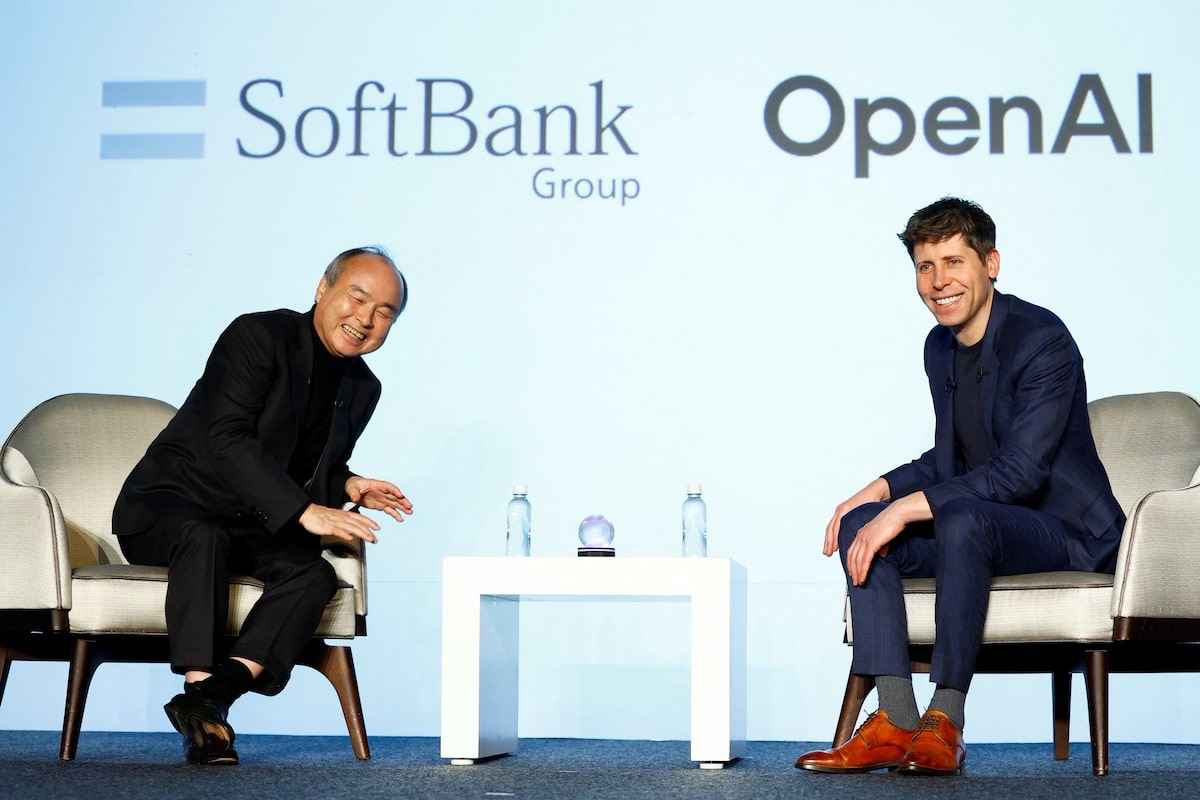
On June 16, SoftBank Group announced Patching as a Service, a cybersecurity solution powered by OpenAI's models and delivered in Japan through SoftBank Corp and the joint entity SB OAI Japan GK. The service performs vulnerability assessments, plans remediations, and advises enterprises on applying fixes before exploits occur. What makes this notable is the packaging: SoftBank is taking frontier AI capability and wrapping it in a concrete, sold-as-a-service security offering rather than leaving it as a general-purpose tool for customers to figure out themselves.
We have argued that the enterprise value of AI will be captured less by raw model access and more by the productized services built on top of it, and this launch is a vivid case in point. The hard problem in vulnerability management has never been knowing that patches exist; it is the labor of assessing exposure, prioritizing, and remediating across complex estates. Turning that labor into an AI-delivered service, with humans in support, is exactly the kind of applied offering that moves AI from demonstration to operational dependency.
Aiming at the Hardest Targets First
SoftBank is not starting with easy customers. The service will first target organizations linked to critical infrastructure and essential public and business services, the operators of airports, power systems, and transportation networks. Reporting indicates the initial outreach focuses on the nation's most important infrastructure providers, the entities whose compromise would cause the most damage. Beginning with the highest-stakes environments is a deliberate, and risky, choice.
Chairman Masayoshi Son framed the urgency in stark national terms, describing AI-powered cyberattacks as a crisis for Japan and invoking imagery of a historic external shock to convey the scale of the threat. "Attempted cyberattacks powered by advanced AI will become widespread. We're determined to defend against them by using state-of-the-art AI," he said. The logic is that if attackers are weaponizing AI to find and exploit weaknesses faster than humans can respond, the only viable defense is AI operating at comparable speed. Critical infrastructure is where that asymmetry is most dangerous, which is why SoftBank is starting there.
The AI-Versus-AI Security Era
This launch crystallizes a shift we have been tracking: cybersecurity is becoming a contest between automated systems on both sides. OpenAI's Sam Altman framed the company's role around accelerating defenders: "AI is transforming cybersecurity, and we're focused on building durable programs that help it accelerate defenders. We're excited to work with SoftBank to deliver the transformational benefits of our cyber models to more organizations in Japan and strengthen the systems all of us rely on." The premise is that defenders need AI simply to keep pace.
We find the framing credible but worth interrogating. If attackers use AI to discover and exploit vulnerabilities at machine speed, then human-paced patching cycles are structurally inadequate, and an AI service that proactively assesses and remediates fills a real gap. The counter-risk is that defensive AI itself becomes a high-value target and a single point of failure. A service that has deep visibility into the vulnerabilities of a nation's critical infrastructure is, in the wrong hands, an extraordinary attack map. The promise is faster defense; the responsibility is protecting the defender.
Scaling From Fifty to a Thousand
The operational plan reveals confidence in demand. The rollout starts with a deployment-and-support team of roughly 50 people, expected to grow to about 1,000 as demand expands across sectors. That projected twentyfold staffing increase is a bet that Patching as a Service will not remain a boutique offering for a handful of infrastructure operators but will broaden into a substantial business line serving enterprises across the Japanese economy.
SoftBank Corp president Junichi Miyakawa grounded the ambition in practical experience: "Leveraging the practical expertise we've acquired through our use of OpenAI's cybersecurity technologies, we'll confront the increasingly sophisticated cyber threats targeting Japan's critical infrastructure." We read the emphasis on internal expertise as important. The most credible AI services are those where the provider has already used the capability on its own operations before selling it. SoftBank is positioning the offering as battle-tested rather than theoretical, and the staffing trajectory signals it expects the market to validate that bet quickly.
A Template Other Markets Will Copy
The deal also sits inside a larger geopolitical and commercial story. SoftBank is one of OpenAI's largest backers, with cumulative committed investment reaching 64.6 billion dollars by the end of 2026, and the launch comes as the United States restricts a rival AI model, positioning OpenAI-based tooling as the available enterprise option in Japan. The intertwining of investment, geopolitics, and product is impossible to ignore here, and it shapes which AI a critical-infrastructure operator can realistically buy.
For enterprise leaders outside Japan, we see Patching as a Service as a preview of a model that will spread. The combination of a frontier lab's models, a national telecom's delivery and trust relationships, and a sharply defined security use case is replicable in many markets. Expect similar partnerships to emerge elsewhere, each adapted to local infrastructure and regulation. The significance is not that SoftBank built a patching service; it is that AI-delivered, proactively-managed security is becoming a category, and the operators of critical systems will increasingly be expected to buy it.