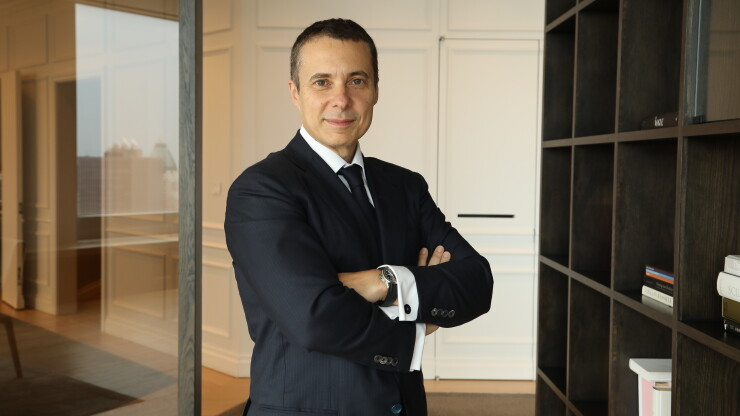
A New Title That Says What the Job Actually Is
When TEGNA announced on June 16 that Kurt Rao would become Executive Vice President and Chief Technology and Digital Products Officer, the most revealing detail was not the promotion itself but the title. TEGNA did not name a CTO and, separately, a chief product officer. It fused the two into a single mandate and made Rao the first leader to hold it, reporting directly to CEO Patrick Paolini. For an organization rooted in over-the-air broadcasting, that structural choice is a statement about where value now lives.
We read this as an admission that, for a modern local-media company, technology and product are no longer adjacent functions that occasionally coordinate. They are the same function. Audience behavior, distribution, monetization, and the underlying engineering stack all move together, and splitting them across two executives invites exactly the friction that slows a transformation. By collapsing the seam, TEGNA is betting that one accountable owner can move faster than two cooperating ones.
From Broadcast Plumbing to Product Strategy
Rao is not a new arrival being parachuted in to disrupt. He joined TEGNA in 2018 as Senior Vice President and Chief Technology Officer, where he led the company's digital transformation, built proprietary AI tooling, and ran broadcast operations and IT. That internal tenure matters. The hardest part of any media modernization is not buying new platforms but rewiring the operational muscle memory of newsrooms and ad-sales teams, and that work rewards leaders who already understand the building.
His earlier career sharpens the point. Before TEGNA he was chief information and technology officer at Time Inc., where he led the publisher's pivot into a digital content platform company, and before that he served as corporate CIO at Time Warner. That is a career spent dragging analog-era media businesses onto digital rails. TEGNA is handing him a larger version of the same problem, now with the added pressure of AI reshaping how local news is produced and distributed.
What the Mandate Actually Covers
In the expanded role, Rao will lead end-to-end strategy and execution for TEGNA's digital products and technology platforms, bringing product management, technology, engineering, and operations under one roof. The goal is to deliver local news consistently across broadcast, streaming, mobile, and connected-television apps. TEGNA operates 64 stations in 51 US markets, alongside hundreds of websites and apps and the Premion connected-TV advertising platform, so the surface area he now owns is sprawling.
Paolini framed the change around audience evolution. "As audience behaviors continue to evolve, innovation must be at the center of everything we do," he said. Rao echoed the operational logic: "New capabilities and technologies are redefining how we deliver local news. By bringing our broadcast, digital, and product teams together, we can adopt these tools quickly and at scale." The phrase to underline is at scale. Pilots are easy in local media; production rollout across 64 stations is where most transformations stall.
The Nexstar Overhang
The appointment lands inside an unusual corporate situation. TEGNA is now a wholly owned subsidiary of Nexstar Media Group, yet it operates independently under a Hold Separate Order issued in April by a federal court while regulatory questions are resolved. That means TEGNA must keep running, investing, and reorganizing its leadership as a standalone entity even as its ownership has formally changed hands.
For technology executives watching from other industries, this is a familiar tension: build for the long term while the corporate parent above you is unsettled. Creating a permanent, elevated C-suite role in the middle of that ambiguity is itself a decision. It tells employees and the market that TEGNA intends to keep modernizing on its own timeline rather than freezing until the ownership picture clears. Whether that independence survives full integration is a question Rao does not control, but the structure he builds now will outlast the uncertainty.
Why CIOs Should Watch the Combined-Role Trend
The merging of technology and product leadership is not unique to media. Across industries we see organizations concluding that a CTO who cannot shape the product, and a product chief who cannot direct engineering, together produce slower decisions and blurred accountability. Naming one executive over both is a governance choice as much as a technical one, and it tends to surface in companies that have decided digital delivery is the business rather than a channel for it.
The risk is concentration. Folding product, technology, engineering, and operations under a single leader creates a powerful decision point and also a single point of failure. It works when the person has both deep technical credibility and genuine product instincts, which is a rare combination. TEGNA is wagering that Rao, after eight years inside the company and two decades modernizing media businesses, is that profile. For other CIOs weighing a similar consolidation, the lesson is that the structure only pays off when the leader can credibly speak both languages.