The First State to Say Stop
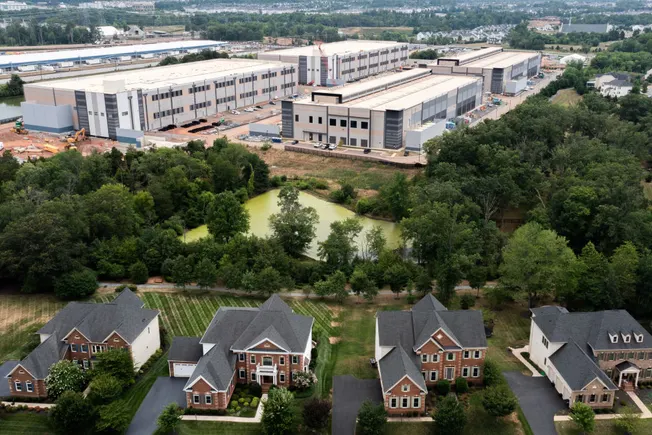
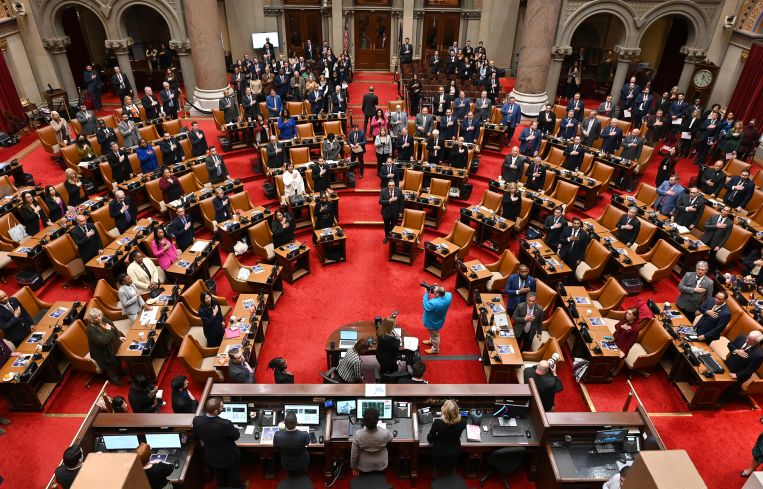
No state has yet enacted a moratorium on artificial intelligence datacenter construction. New York is one governor's signature away from becoming the first. On June 5, 2026, the New York State Legislature passed the Responsible Data Center Development Act, sending it to Governor Kathy Hochul's desk. The bill imposes a one-year pause on permits for new datacenter facilities with a peak power demand of 20 megawatts or more — facilities that, by any reasonable definition, exist primarily to serve the compute hunger of the AI industry.
The political mechanics behind the passage are straightforward. Lawmakers in districts served by New York's aging electricity infrastructure have been receiving constituent complaints about rising utility bills, and they have a politically useful villain: the energy-intensive buildings that house AI training and inference workloads. Democratic State Senator Kristen Gonzalez, a lead sponsor, made the argument directly, noting that 28 datacenter projects are queued on the state's power grid connection waitlist and would demand an additional 9,682 megawatts from infrastructure that was not built to absorb them.
What the Bill Actually Does
The moratorium applies to any new permit for a computing facility with a peak demand at or above 20 megawatts. Below that threshold, projects proceed normally. The bill is explicitly not a permanent ban — it is a one-year pause intended to give the state time to assess grid capacity, study environmental impact, and develop a regulatory framework for future permitting. Supporters frame it as responsible planning; opponents frame it as regulatory risk that will drive investment to other states.
Alongside the moratorium, the legislation establishes renewable energy sourcing requirements for facilities over 5 megawatts of peak demand. The phasing is aggressive by industry standards: one-third of electricity from renewable sources between 2030 and 2034, two-thirds between 2035 and 2039, and 90 percent from 2040 onward. For hyperscalers that have already made public commitments to 100 percent renewable energy, the mandate is not an obstacle. For smaller colocation operators and enterprise-owned facilities, the timeline creates a compliance roadmap that must now factor into investment decisions.
Hochul's Decision and the Political Clock
Governor Hochul has until December to sign or veto the bill, but the effective political deadline is earlier. With November elections approaching, the calculus involves weighing the organised environmental and residential advocates who drove the legislation against the technology industry and economic development interests who argue that datacenters bring high-wage jobs and tax revenue. Hochul has not signalled her position publicly, and the administration has offered only a statement that it will review the legislation carefully.
The governor's track record on energy and technology infrastructure suggests ambivalence. New York has pursued ambitious renewable energy targets under the Climate Leadership and Community Protection Act, and the grid capacity constraint the moratorium bill identifies is real — the state's transmission infrastructure has not kept pace with the growth of electricity demand driven by electrification and AI. At the same time, Hochul has generally been supportive of technology sector investment, and a veto could be framed as protecting jobs and economic competitiveness.
The Broader State-Level Pattern
New York's action does not exist in isolation. Virginia, which hosts the largest concentration of datacenter capacity in the world in its Northern Virginia corridor, revised its permitting guidance this year to challenge the assumption that hyperscale backup generators operate only in emergencies — a change driven by community concerns about emissions as AI-driven load growth has made those generators run far more frequently. Ohio has examined and partially rolled back datacenter tax incentives. Texas has seen public utility commission proceedings specifically examining AI datacenter interconnection queue management.
The pattern across these states reflects a structural tension that the industry has not yet resolved. Datacenters are essential infrastructure for the AI economy, but they impose real costs on local grids and communities that were not part of the original value proposition that won them tax breaks and streamlined permitting a decade ago. States that were early movers in attracting datacenters are now reassessing the terms of the deal.
What Hyperscalers and Enterprise Teams Must Do Now
For hyperscalers with existing New York commitments, the moratorium's one-year window is the relevant planning horizon. AWS, Microsoft, and Google have all announced or are operating significant New York infrastructure; none of those existing facilities are affected by the moratorium, which applies only to new permits. The question is what happens to expansion plans that were in the permitting pipeline before the bill passed. Legal teams will be working through that question in the coming weeks.
For enterprise technology leaders making datacenter placement decisions over the next 12 to 18 months, New York's action is a signal that state-level regulatory risk has become a material factor in infrastructure strategy alongside power cost, latency, and talent availability. The states most likely to see continued permitting activity are those with available renewable generation capacity — the Pacific Northwest, the Southeast, and parts of the Midwest — and those that have proactively streamlined their permitting processes to compete for investment that New York may now be pushing away.
The Energy-AI Equation Has No Easy Solution
Underlying this legislative moment is a physical reality that no moratorium resolves. The AI industry needs power at a scale and on a timeline that existing electricity infrastructure was not designed to support. The International Energy Agency's 2026 projections show global datacenter electricity consumption on a trajectory that strains even optimistic scenarios for renewable generation growth. New York's moratorium buys the state one year to think. It does not change the underlying arithmetic.
We see this as the opening act of a much longer regulatory negotiation between state governments and the AI infrastructure industry. The companies that will navigate it most successfully are those that invest early in demand flexibility, on-site generation, and proactive engagement with grid operators and state regulators — building the relationships and technical capabilities that position them as partners in solving the energy problem rather than contributors to it. The ones that treat regulatory engagement as a legal problem rather than a strategic one will find themselves increasingly constrained.