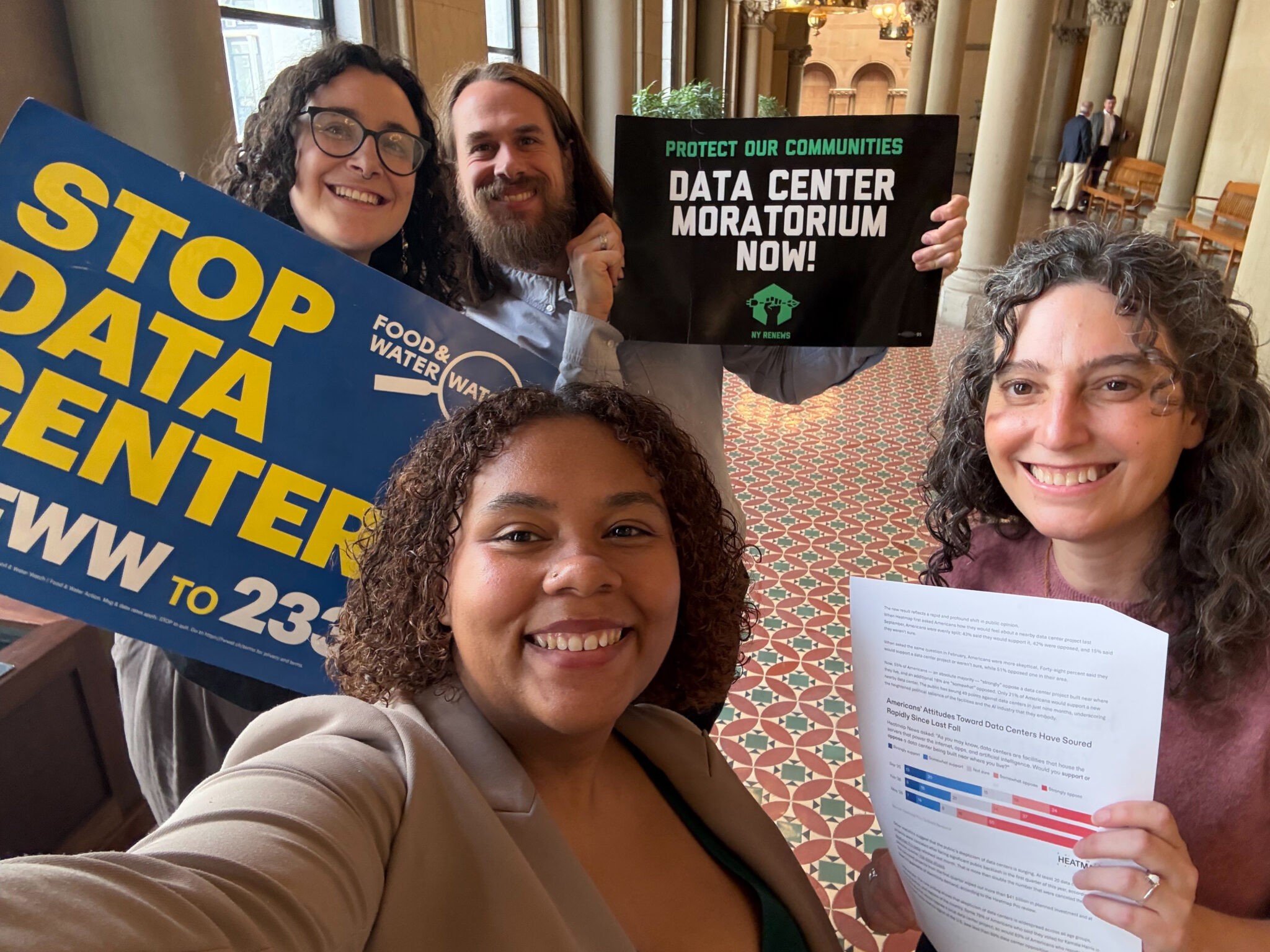
New York Hits Pause on Datacenter Buildout
The New York State Legislature has passed a one-year moratorium on new datacenter construction, becoming the latest state to reconsider the relationship between massive computing infrastructure and local communities. The bill, which now heads to Governor Kathy Hochul's desk, would temporarily halt permitting for new datacenter facilities while the state conducts a comprehensive review of energy consumption, environmental impacts, and grid capacity.
The moratorium reflects growing anxiety across the United States about the explosive growth of datacenter construction driven by AI compute demands. As we noted in our coverage of Ohio's freeze on datacenter sales-tax breaks, states are increasingly questioning whether the economic benefits of datacenters justify the strain they place on power grids, water resources, and local infrastructure.
The Energy Crunch Behind the Decision
New York's power grid is already under significant pressure. The state's aggressive push toward electrification, combined with the retirement of older power plants and the intermittent nature of renewable energy sources, has created a situation where adding large new loads is increasingly difficult. A single large datacenter campus can consume as much electricity as a small city, and multiple such facilities coming online simultaneously could overwhelm regional grid capacity.
Legislators cited concerns that datacenter power consumption could drive up electricity costs for residential and small business customers. When large industrial users connect to the grid, the cost of infrastructure upgrades is often socialized across all ratepayers. New Yorkers have already seen electricity prices rise, and there is limited appetite for further increases to subsidize hyperscale computing.
Environmental and Land Use Issues
Beyond energy consumption, the moratorium addresses environmental and land use concerns. Datacenter construction requires significant water for cooling, generates noise and heat pollution, and often occupies large tracts of land that could otherwise be used for housing, agriculture, or green space. In upstate New York, where much of the new datacenter development is concentrated, communities have raised concerns about industrial sprawl transforming the character of rural areas.
The bill requires the state Department of Environmental Conservation and the New York State Energy Research and Development Authority to conduct a study on the cumulative impacts of datacenter development. The study will examine energy consumption patterns, water usage, carbon emissions, and effects on local communities before any new permits can be issued after the moratorium expires.
Exemptions and Industry Reaction
The moratorium includes exemptions for datacenter projects that already have permits in process and for facilities below a certain size threshold. These exemptions were necessary to secure the votes needed for passage, but they also mean that some construction will continue even during the pause period. Industry groups have argued that the moratorium will hurt New York's ability to attract technology investment, particularly as neighboring states compete for the same AI infrastructure projects.
The New York Tech Alliance and other industry organizations have warned that the moratorium could push datacenter development to Pennsylvania, Ohio, or Virginia, where permitting processes are more streamlined. New York has positioned itself as a hub for AI and technology innovation, and industry advocates argue that limiting datacenter construction undermines that positioning.
A Growing National Trend
New York joins a growing list of states reconsidering their approach to datacenter development. Ohio recently froze datacenter sales-tax breaks after the cost of those incentives hit $1.5 billion. Multiple states are examining the long-term fiscal impacts of datacenter tax incentives, which were designed to attract investment but have sometimes proven more generous than anticipated.
The trend represents a significant shift. For years, states competed aggressively to attract datacenter investment with tax breaks, expedited permitting, and infrastructure subsidies. Now, as the scale of datacenter construction has grown exponentially driven by AI demand, the downsides of that approach are becoming harder to ignore. Communities are asking whether the jobs and tax revenue datacenters bring are worth the environmental and infrastructure costs.
We expect this trend to continue. As AI compute demands push datacenter construction to new heights, the tension between technology infrastructure and community interests will only intensify. Technology leaders should factor regulatory risk into their capacity planning and consider engaging proactively with state and local governments about the terms on which datacenter development proceeds.