Helion Energy closed a 465 million dollar Series G led by Thrive Capital on June 4, valuing the Everett, Washington fusion startup at 15.5 billion dollars. The round brings in Lux Capital, Peak XV Partners, BoxGroup, Alta Park Capital, Bill Ford, and Anti Fund as new investors, while existing backers Lightspeed, SoftBank Vision Fund 2, Mithril Capital, Capricorn Investment Group, and Dustin Moskovitz's Good Ventures followed on. Helion has now raised roughly 1.5 billion dollars in total, putting it among the most heavily capitalized fusion companies on the planet and the clear leader inside the Sam Altman portfolio of long horizon energy bets.
The cash has one job: deliver Orion, Helion's first commercial scale plant, in time to honor the power purchase agreement the company signed with Microsoft in 2023. That deal commits Helion to put fusion electricity on the grid for Microsoft as early as 2028, a deadline that essentially every independent fusion expert considers aggressive to the point of implausibility. Most peers in the sector forecast commercial fusion in the middle of the next decade. CEO David Kirtley framed the company's stance on the announcement: "We don't want to theorize about fusion. We just want to go build it." That is the founder mode answer to a 70 year physics problem.
A Reactor That Skips the Steam Cycle
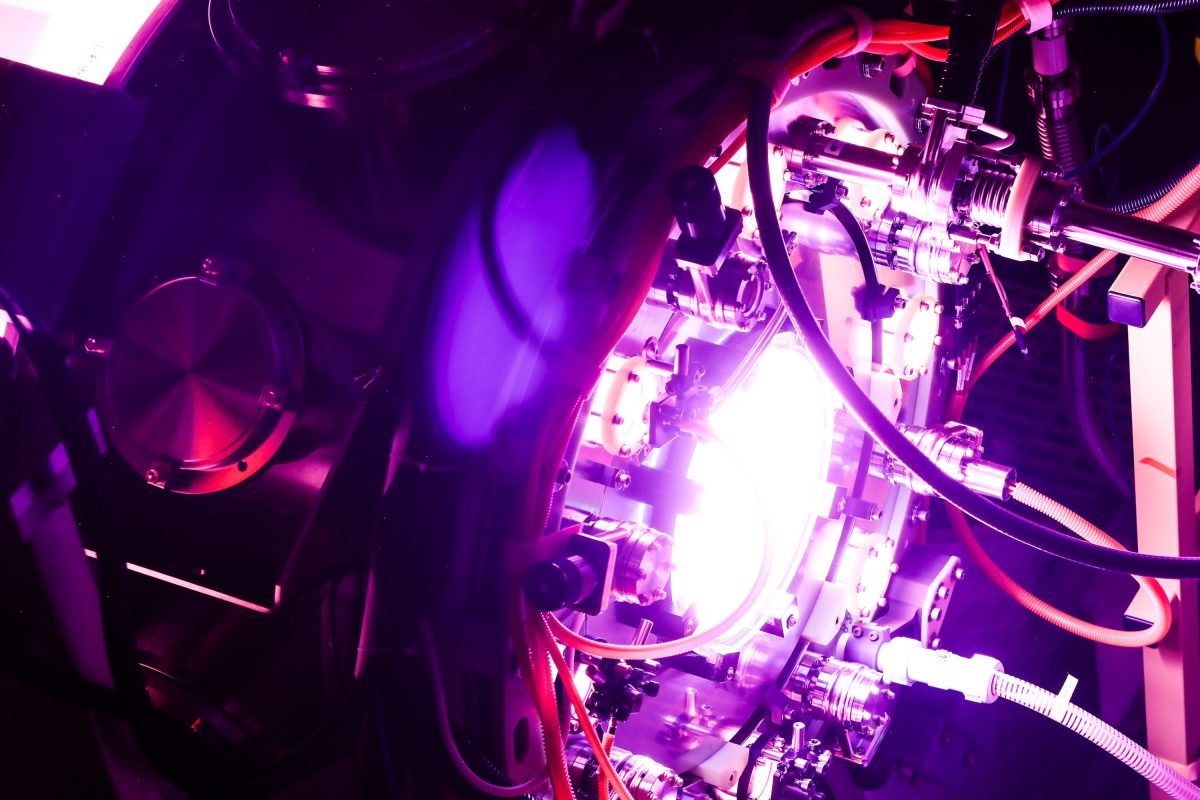
Helion's technology differs from the dominant tokamak and laser inertial confinement approaches. Instead of compressing plasma with magnets or lasers and then capturing heat with steam turbines, Helion uses magnets to compress a deuterium and helium 3 fuel mix. When fusion occurs, the resulting plasma expansion pushes against the magnetic field, and that force is captured directly as inductive electrical current. The company likens the cycle to regenerative braking in an electric vehicle: the same magnets that drive compression become generators on the way out. If it works, the conversion efficiency advantage is real, because the steam cycle drops away entirely and the plant footprint shrinks with it.
The skepticism is equally real. Helion publishes rarely in peer reviewed venues, and physicists outside the company cannot fully evaluate the claimed performance of its Polaris device. MIT Technology Review walked through that gap in detail when Helion first announced the Microsoft deal, and the underlying critique has not been answered in the years since: extraordinary timelines require extraordinary public evidence. Helion's own site keeps the engineering narrative tight, with Orion specs and Polaris milestones described at a marketing level rather than at the resolution a third party physicist would need to grade the claims.
The 2026 Fusion Funding Wave
The investor logic is straightforward even for those of us who do not buy fusion as a near term reality. AI compute demand is growing faster than the grid can accommodate. Hyperscaler power purchase agreements are now multi gigawatt and multi decade. The market for always on, low carbon, dispatchable power at hyperscale is effectively unbounded if anyone can deliver it. Even a 20 percent probability of Helion shipping on a 2030 timeline justifies the math at a 15.5 billion dollar valuation. Fusion has become the highest variance bet on the AI infrastructure stack, and venture math is starting to behave accordingly.
Helion's round sits inside a wave. The sector raised more than 1.2 billion dollars in 2026 alone, including Focused Energy at 240 million dollars, Thea Energy at 100 million dollars, Inertia Energy at 450 million dollars Series A, and Type One Energy at 250 million dollars Series B. Different physics, different fuels, different timelines, all chasing the same hyperscaler demand curve. A few of these companies will fail outright, one or two may eventually build something, and the price discovery on early stage fusion is happening live in private rounds.
How We Are Pricing Fusion Into Hyperscaler Power Decisions
For CTOs and VPs of engineering evaluating cloud region selection, AI power procurement, or PPA risk on long contracts, three operator moves follow from this round. First, the hyperscaler power story is now a multi year strategic input to where we host workloads. Microsoft, Google, AWS, and Meta are each making 10 to 20 year commitments to specific power sources tied to specific regions. The carbon profile of a workload in 2028 will depend on which power deal anchors the region, not on the current year renewable energy certificate match. We are asking our cloud account teams for the long term generation mix tied to the regions where our forecasted growth sits, with delivery dates and counterparties on each megawatt.
Second, long horizon contracts with hyperscalers are beginning to embed power assumptions that may or may not materialize. Microsoft's enterprise agreements with sustainability commitments now lean on deals like Helion, the Three Mile Island restart with Constellation, and Brookfield hydro. If any of those deliveries slip, the customer side sustainability math slips with them, and that flows directly into our own scope 3 reporting. We are writing PPA reliance language into Microsoft and AWS renewals now, requiring transparent reporting on which announced clean power sources are operational by which year, and a service credit mechanism if announced megawatts do not arrive on schedule.
Third, the variance in fusion timelines means we should not bake fusion derived power into any planning scenario earlier than 2032, even for the most optimistic vendors. Helion's 2028 date is a marketing target, not an engineering commitment. Treating it as procurement input would be irresponsible until the company either ships a net energy gain milestone publicly or publishes a credible Polaris dataset physicists can pressure test.
The Skeptic Read That Could Break the 2028 Date
Helion has missed prior milestones, its physics approach remains unverified by outside peer review, and the helium 3 supply chain barely exists at commercial scale. The 2028 deadline is widely treated as a forcing function for Microsoft's procurement narrative rather than a binding engineering commitment, and Microsoft has multiple gas and nuclear off ramps if the fusion megawatts do not show up on time. The signals worth watching over the next 18 months are concrete: whether Helion publishes anything substantive in a peer reviewed venue, whether Microsoft quietly amends the PPA timeline or adds a backup gas turbine to the same site, and whether any rival startup hits a credible net energy gain milestone that resets the sector's expectations. If none of that happens by mid 2027, the 15.5 billion dollar valuation will start looking less like venture conviction and more like the price of admission to the AI power conversation, and the founders who wrote checks at this mark will be the ones answering for it.