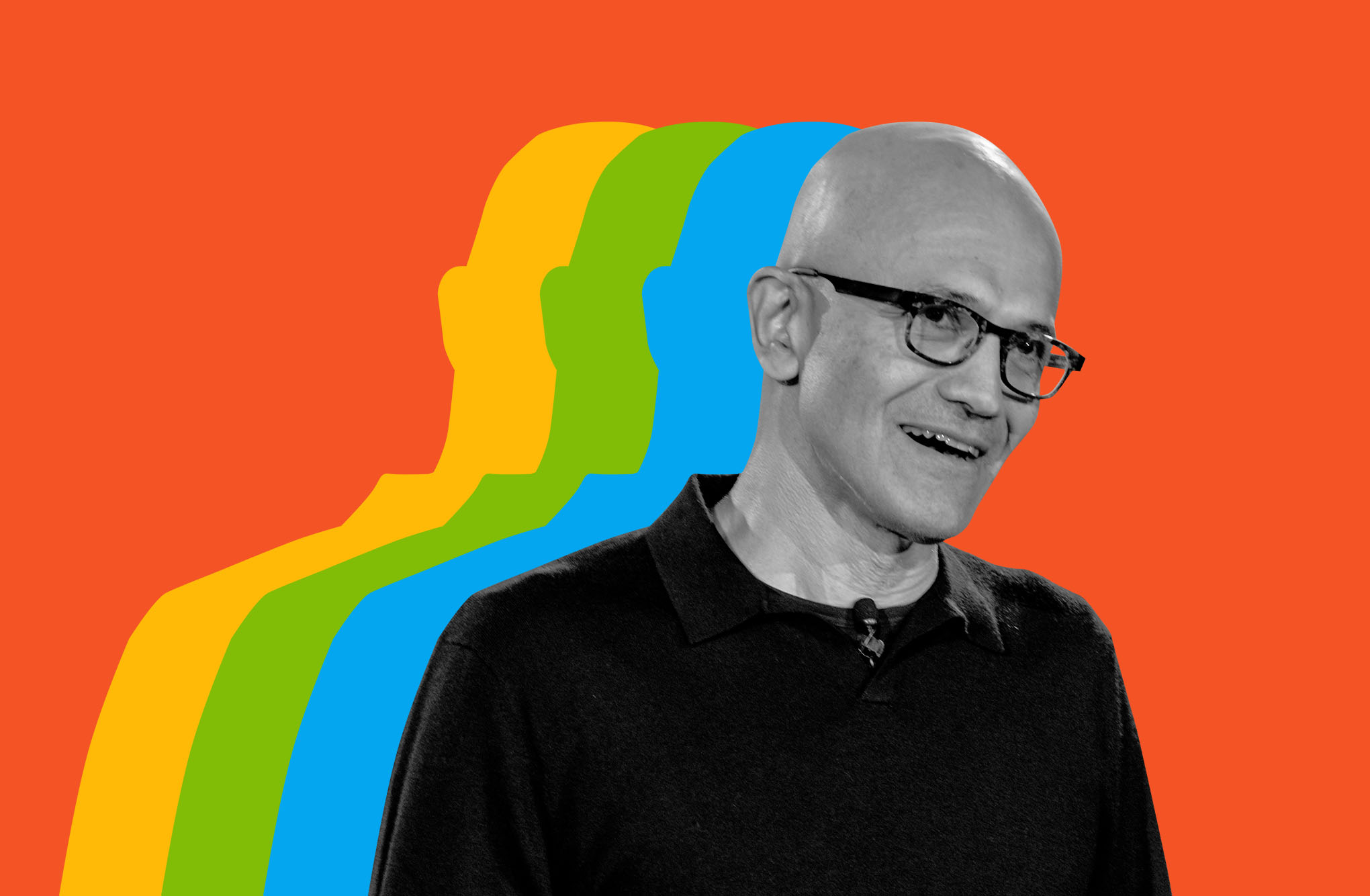
Microsoft used Build 2026 to retire the fiction that its relationship with OpenAI is still a single partnership and instead presented itself as an independent frontier AI company. Mustafa Suleyman, who runs Microsoft AI, told The Verge that the two companies effectively separated in late April 2026 when they renegotiated their contract. The new terms, he said, allow Microsoft to train models at any scale, pursue what he called superintelligence, and do so entirely with its own intellectual property, its own data, and no distillation from OpenAI's models. Microsoft remains OpenAI's primary cloud partner, but the strategic framing has flipped from collaboration to competition.
Suleyman was unusually direct about ambition. He said only three labs currently matter, Google DeepMind, OpenAI, and Anthropic, and that Microsoft is not yet one of them. Becoming the fourth is, in his words, the reason he joined the company. To get there, Microsoft introduced seven new models at Build, with MAI-Thinking-1 as the centerpiece. It is a medium-sized reasoning model trained from scratch and aimed at serious math, code generation, and enterprise deployments. Microsoft positioned it as cheaper than OpenAI equivalents on several tasks, while acknowledging that OpenAI shipped its first reasoning models in fall 2024, leaving Microsoft visibly behind on this category. The other six new models cover image generation, voice, transcription, and coding.
The Suleyman pitch: top-four lab by building everything in house
On the agent layer, Microsoft introduced Autopilots, which Satya Nadella described as autonomous, long-running agents with full enterprise compliance. The first Autopilot, called Scout, is pitched as an always-on personal agent that can read inboxes, join Teams group chats, check calendars, and send daily briefings. Enterprises will be able to build their own Autopilots on the same scaffolding. A live demo from GitHub's Cassidy Williams included approving code through a webcam thumbs-up, a small but pointed signal that Microsoft wants to own the interface for human-in-the-loop developer review, not just the model behind it.
The agent strategy also pulled in OpenClaw, the open-source agent harness whose creator Peter Steinberger now works at OpenAI. Steinberger appeared on stage to announce that OpenClaw can now run inside companies as a plug-in harness on top of Copilot, GitHub Codex, or other coding platforms, with Microsoft committing engineering work to make it run cleanly on Windows. Microsoft paired that with Execution Containers, a Windows-native isolation layer designed to keep agents from deleting files or escaping their sandbox. For regulated industries, that containment story may matter more than any single benchmark.
Seven new in-house models and a cybersecurity agent stack
Security got its own headline product. MDASH combines roughly 100 AI agents into a coordinated team that hunts exploitable bugs across code and infrastructure. Microsoft positioned MDASH directly against Anthropic's Claude Mythos Preview and OpenAI's Daybreak, which means the cybersecurity AI market now has three credible large-vendor entries chasing the same enterprise budget line. For CISOs, the procurement question shifts from whether to buy an AI bug hunter to which vendor's agent swarm to trust with production code.
Nvidia stayed close to the announcements. Jensen Huang appeared by video to confirm that Nvidia's RTX Spark chip powers Microsoft's on-device agent ambitions, including the ability to text a PC from a phone and have it spin up local tools. That extends the Copilot+ PC story into agentic territory and gives Microsoft a hardware narrative to compete with Apple's silicon advantage and Google's Pixel-side AI features.
What CIOs should ask Microsoft in the next QBR
Strategically, Suleyman leaned on a phrase the industry is converging on, humanist superintelligence, and argued that Microsoft can move with more discipline than rivals because it is not chasing a startup valuation or preparing to IPO. He noted that Azure currently offers customers around 11,000 models and that Microsoft has the balance sheet to keep buying access to Anthropic or anyone else when it needs to. The unstated message to enterprise buyers is that Microsoft will continue to resell other labs while building its own, so customers who standardize on Azure are not betting on a single model house.
Skepticism is warranted. Benchmark wins rarely translate cleanly into enterprise adoption, the agent marketplace is already crowded with thin products, and Microsoft is entering it with tools that have not been battle tested at scale. MAI-Thinking-1 will be judged on cost per token and reliability on real workloads, not on stage demos. Scout and the broader Autopilot concept will need to show that they can survive contact with messy enterprise data, identity, and compliance regimes. And the OpenAI relationship, while officially still warm at the infrastructure layer, is now a competitive overhang that procurement teams should price into multi-year commitments.
For technology leaders, the practical implications are concrete. Vendor consolidation conversations that assumed Microsoft and OpenAI were effectively one supplier need to be reopened. Model selection inside Azure is becoming a first-class architectural choice, not a default. Agent governance, including container policies for tools like OpenClaw, should move onto the security roadmap now rather than after the first incident. And anyone running a Copilot rollout should expect a sales motion in the second half of 2026 that pushes MAI models, Autopilots, and MDASH as a bundle, with pricing designed to make the in-house stack the path of least resistance.