BDx Data Centers has confirmed that its Indonesian subsidiary signed power supply agreements with state utility PT Perusahaan Listrik Negara totalling 1.2GW, a commitment the operator describes as the single largest secured by any data center operator in Indonesia. The deal, reported by DCD on 3 June 2026, builds on an earlier 30 MVA power purchase agreement between the same parties and arrives at a moment when Southeast Asian capacity is being rationed by grid constraints in Singapore and infrastructure gaps in Johor. With this allocation in place, Jakarta moves from speculative AI destination to a tier that procurement teams can credibly shortlist for 2027 workloads.
1.2GW spread across three sites, anchored by CGK4
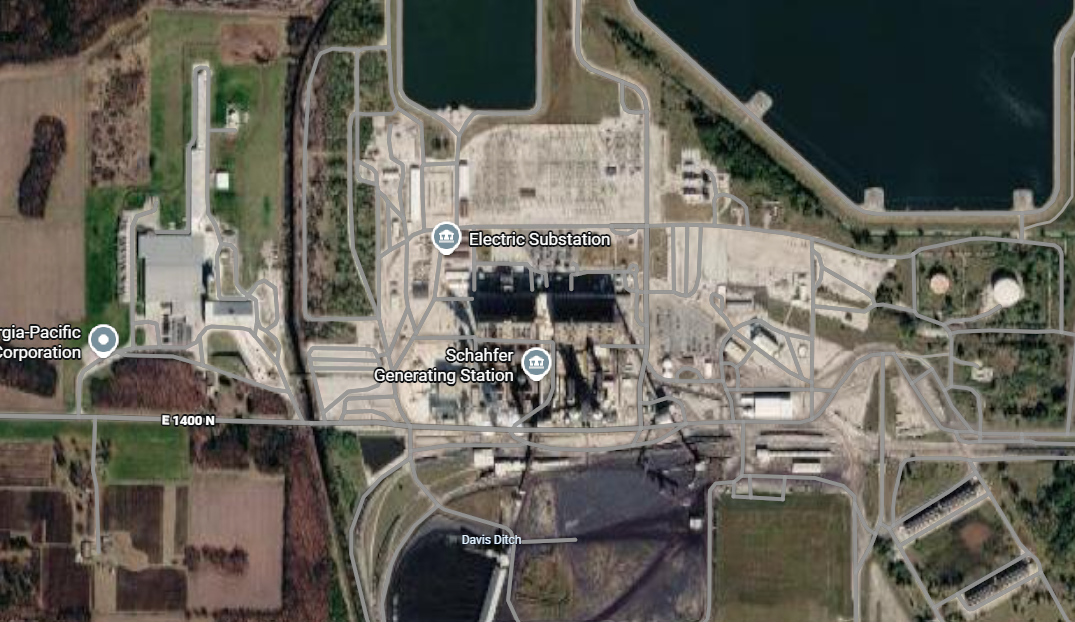
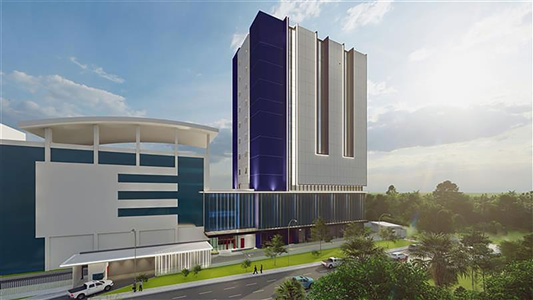
The allocation breaks down across three facilities. The flagship CGK4 AI Campus in Jatiluhur, West Java, designed for 500MW at full build, has been allocated 788 MVA. Phase one of CGK4 was completed in July 2024 with an initial 70MW of capacity across 44,670 square feet of white space, and the site was one of the first in Indonesia to receive Nvidia DGX-Ready certification. CGK3A in Cilandak, South Jakarta, which broke ground in 2023 across 14,125 square metres in the TB Simatupang district, is already energised and will expand to 60 MVA. CGK5 in Suryacipta, located in Karawang east of Jakarta, will receive up to 385 MVA in support of a 100MW buildout whose completion date has not yet been disclosed.
Agus Hartono Wijaya, CEO of BDx Indonesia, framed the agreements as enabling "resilient, AI-ready infrastructure that can meet long-term demand from enterprise, hyperscale, and sovereign workloads." PLN's Director of Retail and Commerce, Adi Priyanto, struck a similar note, committing the utility to "reliable and scalable power infrastructure" for strategic digital industries. The language matters: sovereign workloads are the highest margin segment in the regional market, and PLN's willingness to underwrite gigawatt-scale supply on Indonesian soil is what makes the pitch credible to regulated buyers.
Why DGX-Ready at CGK4 changes the buyer conversation
DGX-Ready certification is not a marketing badge. It requires the facility to demonstrate the cooling, power density, network fabric and operational procedures needed to run Nvidia DGX systems without bespoke engineering. For Indonesian buyers, the certification at CGK4 means that an AI training cluster can be deployed without the multi-quarter design cycle that has slowed comparable projects in the region. Combined with 788 MVA of secured power, CGK4 now offers something that no other Indonesian site can match on paper: a clear runway from contract signature to live training capacity, on Indonesian soil, under PLN supply.
That runway is what banking, fintech and public sector buyers have been asking for. Several Southeast Asian banks have included a training-on-shore, inference-off-shore split in tender language this year, and CGK4's design supports exactly that pattern. Training stays in Jatiluhur under Indonesian residency rules; lower-latency inference can be hosted in Singapore, Tokyo or a hyperscaler edge point of presence. BDx becomes a hybrid anchor rather than a pure colocation provider, and the commercial premium attached to that role is meaningful.
Jakarta enters the Singapore and Johor conversation
Singapore's moratorium on new data centers, only partially relaxed, has capped local growth, and Johor in Malaysia has been the primary beneficiary. Cross-border fibre, lower power costs and proximity to Singapore made Johor the natural overflow market for AI workloads through 2024 and 2025. The BDx-PLN deal shifts that calculus. Jakarta now has secured power at a scale that compares directly with Johor's growth pipeline, and Indonesia's data residency regime makes it the preferred jurisdiction for buyers whose users sit inside the country. AWS, Microsoft and Google have all announced Indonesian cloud regions, but each remains grid-constrained at the hyperscale densities that AI training demands. Independent operators with secured PLN supply are positioned to be the bottleneck-breakers.
There are caveats. PLN has historically managed peak demand through curtailment in industrial corridors, and the contract structures behind the 1.2GW allocation have not been published. Buyers will want clarity on firm versus interruptible supply, renewable energy attribution, and how the utility plans to underwrite the transmission upgrades needed to deliver 788 MVA into Jatiluhur on the announced timeline. The 30 MVA precursor agreement suggests PLN has working experience with structured deals, which is the most encouraging operational signal in the announcement.
FinOps signal: tie power floors to the contract term
Indonesian power costs are competitive by regional standards but volatile, and AI workloads are dominated by energy as a unit cost. Procurement teams committing to BDx capacity should push for fixed-price power floor commitments over the full contract term, with explicit pass-through language for any PLN tariff changes. Without that protection, a five-year colocation contract can swing 15 to 25 per cent on power alone, which erases most of the headline savings versus a Singapore comparable. The CGK4 design density also matters financially: high-density racks reduce floor space costs but raise the cost of cooling failure, so SLA credits should be benchmarked against the higher per-rack revenue exposure.
What we would ask BDx before signing in Q1 2027
Our take on the operator decision is straightforward. We would add BDx Indonesia to the regional capacity panel for 2027 planning alongside the incumbent peers in Jakarta, request a CGK4 site tour in Q1 2027, and quote a 2MW AI inference pilot at a ceiling of roughly USD 6 million per year all-in to test operational maturity before committing to a training cluster. The questions we would put to BDx in the same meeting: firm power guarantee documentation from PLN for the 788 MVA at CGK4, the latency profile to the three largest Indonesian ISPs, peering arrangements with AWS and Microsoft Jakarta regions, and the staffing plan for 24/7 high-density support at Jatiluhur. If those answers hold up by 30 June 2027, we would move a production training workload across in the second half of the year; if firm-power documentation or peering depth slips, we would hold at the inference pilot and revisit at the end of 2027.
The wider read is that Indonesian capacity has moved from a speculative line item to a costed option. Procurement leaders who put BDx on the shortlist before commercial terms tighten in mid-2027 will negotiate from a stronger position than those who wait for the first hyperscaler anchor tenant announcement at CGK4 to force the conversation.