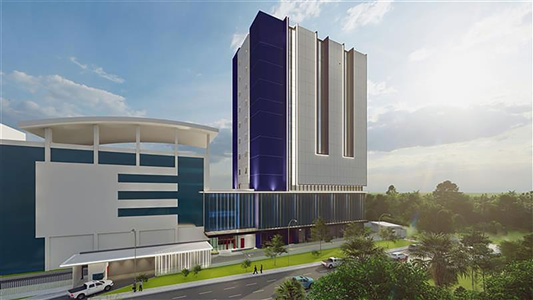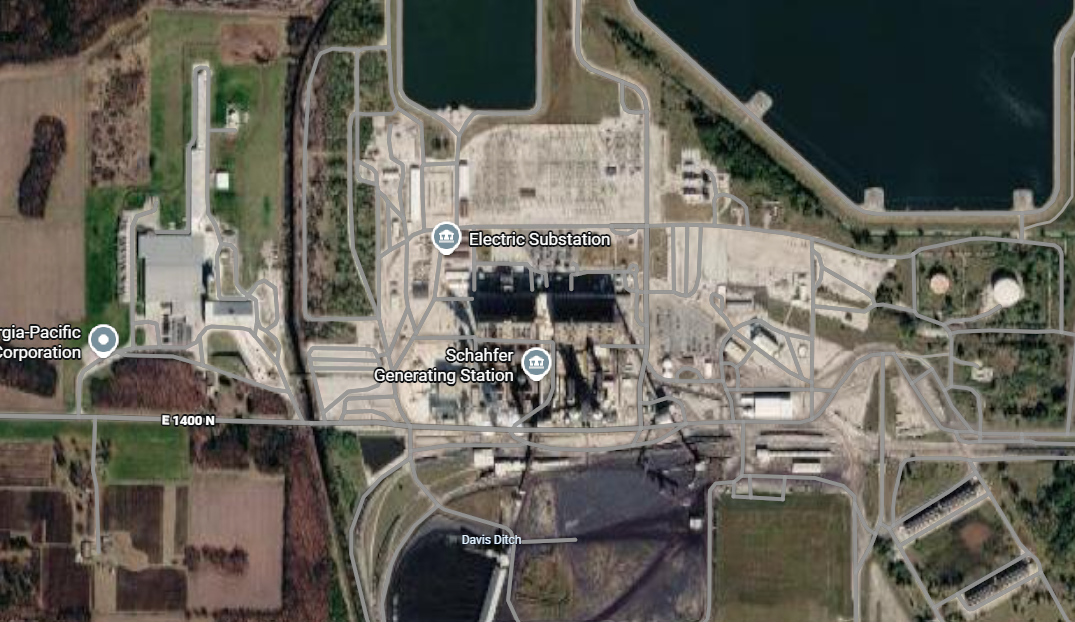
AWS has confirmed a nine-building data center campus in Wheatfield, Indiana, on a 304-acre plot leased from Northern Indiana Public Service Company. The investment is roughly $7 billion, and the site sits about half a mile from NIPSCO's Schahfer Generating Station, an adjacency that meaningfully reduces transmission build-out and shortens interconnection queues. Wheatfield is a town of around 900 people in Jasper County, southwest of Michigan City, and the project will reshape the county's economic base for the next 15 years. The announcement was first reported by DataCenterDynamics on June 3, 2026.
Wheatfield site economics and the NIPSCO adjacency
The Schahfer adjacency is the central piece of the deal. By siting the campus a half-mile from an existing baseload generator, AWS avoids the multi-year wait on new long-haul transmission that has slowed projects in PJM and ERCOT. Jasper County tax revenue is projected to grow from about $1.2 million today to more than $420 million over 15 years, a shift large enough to fund the county school and road budgets several times over.
The nine-building footprint is not yet broken down by phase, but at $7 billion across the campus the per-building capex looks consistent with AWS's recent 100 to 150MW shells in Ohio and Virginia. That implies roughly 1 to 1.4GW of total IT load at full build, sitting inside the broader 2.4GW Northern Indiana commitment AWS announced in November 2025. New Carlisle is already operational, Hobart is in construction, and Wheatfield is the third leg.
The $1.25 billion ratepayer offset and the Nottingham contrast
The headline community concession is the $1.25 billion AWS will pay to offset the energy cost impact on local ratepayers. That is unusually explicit. Most hyperscaler siting deals bury cost-allocation language in confidential tariff filings and let the utility commission referee it later. By putting a dollar figure on the table up front, AWS removes the most common talking point that has killed projects elsewhere, the claim that retail customers will subsidise hyperscaler load through their monthly bill.
The contrast with Nottingham, New Hampshire, is direct. A separate data center proposal there was withdrawn the same week, after community opposition focused on grid cost pass-through and water use. Roger Wehner, AWS President of Economic Development, told DCD the company wants to "go to places where people come in with eyes wide open and we can build a great partnership," and explicitly said AWS would walk away if the partnership did not work. That framing, combined with the $1.25 billion figure, is now the template other hyperscalers will be measured against in Midwest and Mid-Atlantic siting hearings through 2027.
98 percent air cooling and the Bogus Run replenishment play
AWS says the Wheatfield campus will run on natural air cooling roughly 98 percent of the year, falling back to evaporative or mechanical cooling only during peak summer days. For a Midwest site with cold winters and moderate humidity, the claim is technically credible, though it depends on the eventual rack density. High-density GPU pods running 80 to 130kW per rack typically push the air-cooling envelope hard, so the 98 percent figure assumes a mixed workload deployment rather than a pure AI training campus.
Amazon also announced a 425-acre Bogus Run restoration project with the Shirley Heinze Land Trust, scheduled to run 2027 to 2031, that is projected to improve regional water retention by more than 110 million gallons annually. Combined with the two earlier Northwest Indiana projects from October 2025, the regional replenishment pipeline now exceeds 210 million gallons per year, set against a campus whose water draw should be modest given the air-cooling design. The Chennai Adyar River project, at around $1 million for 200 million liters of annual treatment capacity, is the India parallel.
Indiana as the second Northern Virginia
Wheatfield is one piece of a much larger state-level build. Meta is in Jeffersonville, Microsoft is on a 900-acre St. Joe Farm site in Mishawaka, Google has committed $2 billion in Fort Wayne, and regional operators including US Signal, DataBank and Digital Crossroads round out the map. Indiana has cheaper land than Loudoun County, less congested transmission than ERCOT, and a permitting environment that has so far been more predictable than Ohio's or Georgia's. The state is functionally absorbing the overflow demand that Northern Virginia can no longer accommodate on a reasonable timeline.
For commerce and retail platform teams, the practical effect is that US-East-2 and adjacent Midwest availability zones will get materially more headroom from late 2026 through 2028. Capacity rationing on Trainium and high-density GPU SKUs that has been in place since Q4 2025 should ease as Hobart and Wheatfield come online in sequence.
How we would rework US-East-2 reservations before Q4 2026
Operationally, we would treat the Wheatfield announcement as a trigger to renegotiate 24-month capacity reservations rather than rolling 36-month commitments. The reasoning is straightforward. With three Indiana campuses adding capacity through 2028, the forward curve on reserved instance pricing in US-East-2 should soften by 8 to 12 percent over the next 18 months, and locking 36-month terms now overpays for that softening. A 24-month commitment on Trainium2 and m7i families, paired with a 12-month savings plan for the spillover, captures most of the discount without the duration risk.
On the GPU side, we would ask AWS account teams for a written capacity forecast for Hobart and Wheatfield availability zones before any Q3 procurement cycle closes. Teams running regulated retail workloads that have been waitlisted for P5 or Trainium2 reservations since early 2026 should put their renewal asks back on the table with the Wheatfield announcement attached. The uses point is concrete: a published $7 billion build with a stated ratepayer offset is the kind of evidence that moves an account manager's allocation committee.
Mumbai's Ambernath build and the ap-south-1 read
The Mumbai parallel deserves attention for European retail teams that run tenant workloads in ap-south-1. Amazon registered another 10.61 acres in Ambernath on May 26 for around $13 million, on top of adjacent 49-acre and 38.18-acre holdings. The planned campus has been disclosed as six buildings totalling 473MW, inside Amazon's broader $35 billion India commitment and $8.3 billion AWS Asia-Pacific Mumbai region expansion. That pipeline gives more confidence to commit longer-dated capacity contracts for India-resident commerce workloads, particularly for retailers running regional fulfilment platforms out of Mumbai.
The watch item is NIPSCO's integrated resource plan filing, due in Q4 2026. If it shows Schahfer staying online past 2028 to serve the Wheatfield load, the campus economics hold and the broader Indiana capacity story plays out on schedule; if Schahfer is retired early without firm replacement generation, expect AWS to slow the Hobart and Wheatfield ramps and push the capacity relief into 2028, in which case 24-month reservations should be signed before December 31, 2026 rather than waiting for the Q1 pricing reset.