A Heavyweight Hire for a Series A Studio
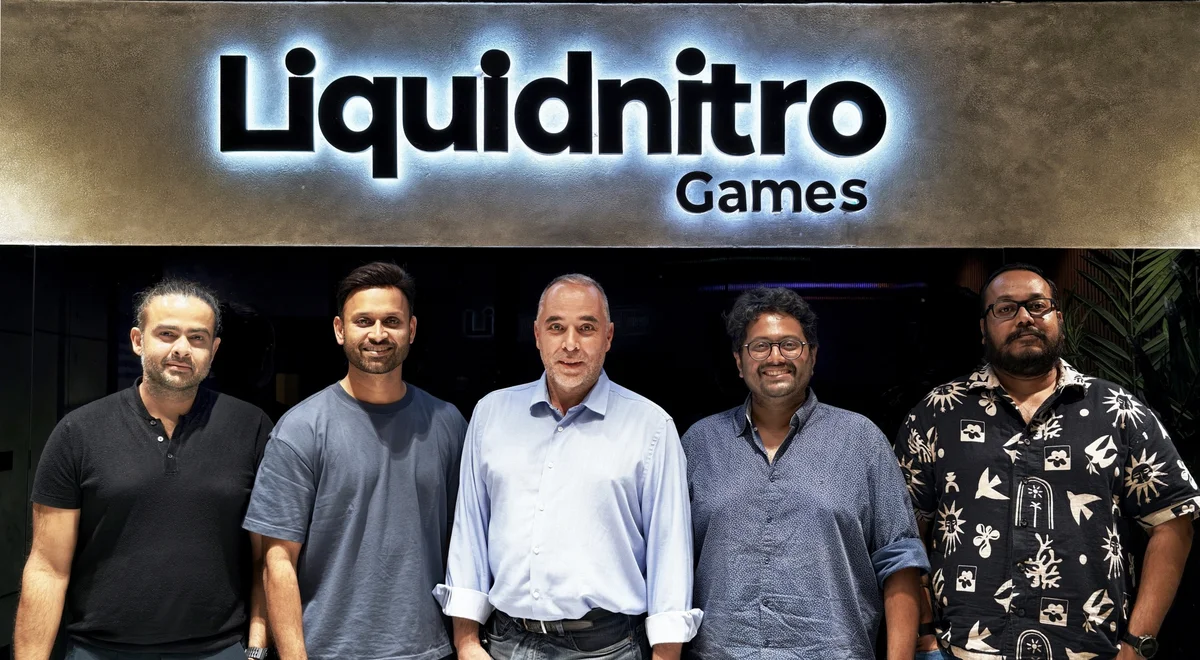
Liquidnitro Games named Cedrick Collomb its chief technology officer on July 22, and the pedigree is what stops you. Collomb was chief technology officer of Tencent Games Global and CTO of EA Mobile, with earlier leadership at AMD, Pearson, Kabam, LucasArts, and Sony Computer Entertainment. That is a mega-cap resume landing at a studio that just raised a $19.1 million Series A. When a leader who has run technology at the largest games companies on earth joins an early-stage business, the interesting question is what problem the founders think they are solving. Liquidnitro's answer is scale, and specifically how to scale game production without scaling cost in lockstep.
The context sharpens the point. Liquidnitro has grown past 140 developers and expects to exceed 200 by year-end, and it is pouring investment into a platform play. Chief executive Sandeep Kowdley said Collomb "will play a pivotal role in leading that strategy and making sure our technology helps teams build better games, unlock greater creativity, and deliver player experiences that resonate." For technology leaders in any content-heavy business, the shape of this hire is recognisable. You bring in someone who has already solved the scaling problem at ten times your size, and you ask them to build the platform before the growth outruns it.
The Agentic AI Bet
The mandate is explicit about method. Collomb is charged with doubling down on Liquidnitro's platform, particularly its Geoplay product, and integrating agentic AI workflows to make game production, live services, and global expansion more predictable and profitable. The phrase agentic AI workflows is the one to underline. This describes AI systems that carry work across steps of the production pipeline, and the goal is production economics that hold up as the studio grows. Collomb said Liquidnitro's AI solutions will "transform the entire game lifecycle," which is a claim about the whole pipeline, one that reaches far beyond a single feature bolted onto a tool.
We would treat that ambition with measured interest. Agentic workflows promise to compress the expensive, repetitive parts of content production, and games are a natural proving ground given how much art, testing, and live operation each title demands. The risk is the same one enterprises hit everywhere. Agents that demo well on a slide behave unpredictably in production, and content quality is unforgiving of errors players notice. Liquidnitro's advantage is a leader who has run live services at scale and knows the difference between a promising prototype and a system a global player base can depend on every day.
Technology as a Multiplier for the Business
Collomb's own framing reveals why he took the role. He said Liquidnitro "is a rare company where leadership genuinely understands that technology is a multiplier for game development." That sentence is a hiring signal aimed at every technologist reading it. Senior leaders join companies where the executive team already believes technology drives the top line, because the alternative is a career spent justifying budget to people who see engineering as overhead. Liquidnitro is positioning itself as a studio that treats its platform as the engine of creative output, and it recruited a CTO who wants that argument settled before he arrives.
For our readers, the transferable lesson sits in that dynamic. The best technology leaders are drawn to mandates where the business case is settled and the work is execution. If you are trying to attract a leader of Collomb's calibre, the pitch is proof that the organisation will let technology shape strategy rather than react to it. Perks and titles come second. Liquidnitro made that proof the centre of its message. Companies that still frame technology as a cost to be managed will keep losing these candidates to the ones that frame it as the multiplier that grows the business.
What the Money Is Buying
The hire arrives on the back of a $19.1 million Series A, part of $24.3 million raised in total, and the studio is spending it on people and platform in parallel. Growing from 140 to more than 200 developers in a single year is the kind of expansion that breaks systems and processes that were fine at smaller scale. Bringing in a platform-minded CTO at this moment is a bet that the infrastructure and the workflows have to be built ahead of the headcount, so the platform is ready before the new hires start tripping over each other.
This is a sequencing decision every scaling business faces. Hire the delivery capacity first and you accelerate, then hit a wall when the tooling cannot keep up. Build the platform first and you delay output, then compound faster once it lands. Liquidnitro is trying to do both at once by pairing aggressive hiring with a CTO whose entire job is to make sure the platform scales alongside the team. Whether that balance holds is the thing to watch. It is also the exact tension our readers manage whenever a growth round arrives with expectations attached.
The Read for Content-Heavy Businesses
Games are a leading indicator here. They are among the most content-intensive, most operationally demanding software products anyone ships, which makes them an early test bed for whether agentic AI genuinely changes production economics. If agents can make game production more predictable and profitable at a studio scaling this fast, the same playbook travels to any business that produces large volumes of content, media, or software under deadline pressure. Liquidnitro hiring a top-tier CTO specifically to lead that effort is a signal worth logging even for readers who will never ship a game.
The takeaway for your own roadmap is about matching leadership to the wager. Liquidnitro decided its future depends on agentic production at scale, so it hired someone who has run technology at the largest studios and can be held to that specific outcome. If you are placing a comparable bet on AI reshaping how your business produces its core output, the leadership question is whether the person you put in charge has operated at the scale you are aiming for. Ambition on a slide is cheap. A leader who has already lived the scale is the harder and more valuable thing to secure.