Equity-free checks change the incentive structure
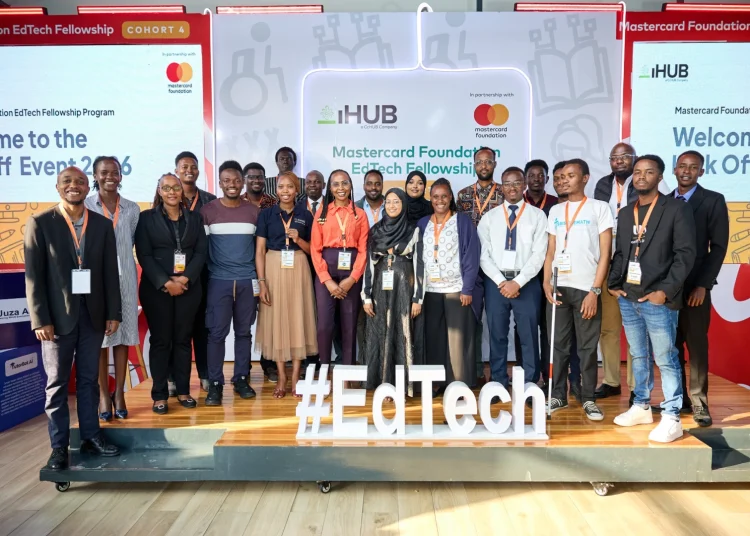
On July 23, 2026, iHUB and the Mastercard Foundation launched Cohort 4 of their EdTech Fellowship in Nairobi, selecting 12 startups each eligible for up to USD 100,000 in equity-free funding plus technical support. The equity-free part is the headline. Capital that takes no ownership stake removes the pressure to optimize for a fast exit and lets founders build for markets that venture math typically ignores. For anyone watching edtech capital flows, this is a deliberate signal about what kind of company the funders want built and on what timeline.
The reason it matters now is that emerging-market edtech has struggled to attract patient money. Traditional venture funding pushes startups toward the highest-paying, most reachable users, which in education means the least underserved ones. Grant-style capital that does not dilute founders inverts that pressure. Wariko Waita, Director of the Center for Innovative Teaching and Learning at the Mastercard Foundation, put the thesis directly: "EdTech does not just digitize education; it redistributes opportunity." The funding structure is built to make that redistribution economically survivable for the companies attempting it.
An 18-month runway signals depth over throughput
Cohort 4 runs on a new 18-month incubation model, longer than prior cohorts. That is a meaningful design change. Short accelerators optimize for volume and demo-day momentum, pushing startups toward metrics that look good in three months. An 18-month runway assumes the hard problems in inclusive education, such as accessibility engineering, offline delivery, and building trust with schools, take real time to solve. The program is choosing to support fewer companies more deeply rather than run more startups through a faster pipeline, and the cohort size of 12 reflects that trade-off.
For operators, the runway length is a tell about product complexity. Building for learners with disabilities or for refugee and rural communities means dealing with intermittent connectivity, low-cost hardware, multiple languages, and content that has to work without a reliable support infrastructure. None of that yields to a 12-week sprint. The extended timeline acknowledges that serving hard markets is an engineering and go-to-market marathon. Any leader evaluating a pilot in a constrained environment should calibrate expectations the same way and resist judging early-stage work in these contexts on a standard quarterly cadence.
The selection mix defines the accessibility mandate
The composition of Cohort 4 is the clearest statement of intent. Of the 12 startups, 6 target learners with disabilities, 4 serve refugees, displaced, and rural communities, and 2 focus on girls and young women, alongside work on education data systems. Half the cohort is building for disability inclusion. That is not a token allocation; it makes accessibility the central design constraint of the program rather than a compliance checkbox bolted on at the end. The funders are selecting for teams whose entire product thesis starts from the learners the market has historically skipped.
Nissi Madu, Managing Partner at iHub, framed the selection logic: "Innovation has the greatest impact when it begins with the learners who have historically been excluded." For product leaders anywhere, this is a preview of where accessibility requirements are heading. When capital explicitly funds disability-first and inclusion-first design, those requirements stop being optional refinements and become the baseline spec. Enterprises that treat accessibility as a late-stage audit are building the opposite way from where mission-aligned funding is pushing the field, and that gap will widen as these products mature and set expectations.
The impact numbers give the model a track record
The program is not starting from zero. Since 2023 it reports supporting 36 startups, reaching more than 700,000 learners, training over 11,000 educators, and building more than 2,100 school partnerships. Those figures matter because they move the fellowship from a well-intentioned experiment to a model with demonstrated distribution. The school-partnership count is especially telling: 2,100 partnerships means the program has cracked the channel problem that kills most edtech, which is getting into classrooms and staying there long enough to be used.
For anyone assessing edtech vendors or partners in these regions, the cumulative track record is the diligence signal. A startup emerging from this pipeline arrives with a validated distribution path and educator-training scaffolding already in place, which de-risks adoption considerably. The educator-training number is the quiet enabler here, because tools that reach 700,000 learners without training the 11,000 educators around them tend to go unused. The program is treating teacher enablement as core infrastructure, and that is the same lesson enterprises relearn every time they deploy software without investing in the humans expected to run it.
Emerging markets are setting the product bar, not following it
It is tempting to read a Nairobi fellowship for underserved learners as a niche philanthropic story. That framing misses the signal. The constraints these startups design around, low-cost devices, unreliable connectivity, multilingual content, and accessibility from the first line of code, are becoming universal product requirements as software reaches the next few billion users. Companies that learn to build well under these constraints often produce more resilient, more inclusive products than those built for ideal conditions and retrofitted later. The innovation direction here runs from the constrained market outward, not the other way around.
The strategic read for a technology leader is to watch this space as an R&D frontier rather than a charity beat. The accessibility engineering, offline-first architecture, and localization patterns proven in these cohorts are directly transferable to any global product roadmap. Founders and enterprises alike should track which of these 12 startups break out over the 18-month cycle, because the ones that scale will have solved distribution, inclusion, and educator adoption in genuinely hard conditions. That is a harder and more durable competency than shipping a polished product to users who already have everything working in their favor.
What this means for your edtech and partnership strategy
For leaders building, buying, or partnering in education technology, Cohort 4 reframes three decisions. On capital, equity-free mission funding is carving out a category of company that venture math would never produce, so the vendor landscape in these markets will include players optimized for reach rather than exit. On product, disability-first and inclusion-first design is moving from differentiator to baseline expectation, which raises the bar for what an acceptable edtech product looks like. On diligence, a validated distribution and educator-training footprint is worth more than a slick demo when you assess a potential partner.
The concrete move is to treat accessibility and localization as baseline requirements in your own roadmap now, before the market forces the issue. Audit whether your education or training products actually work on low-cost hardware and unreliable networks, and whether they train the educators expected to run them. If you are scouting partners or acquisition targets in emerging markets, watch this cohort as a curated pipeline of teams that have already survived the hardest parts of the problem. The funders are betting that opportunity redistributes through better-built software, and the product bar they are setting will not stay confined to Nairobi.