What Block launched
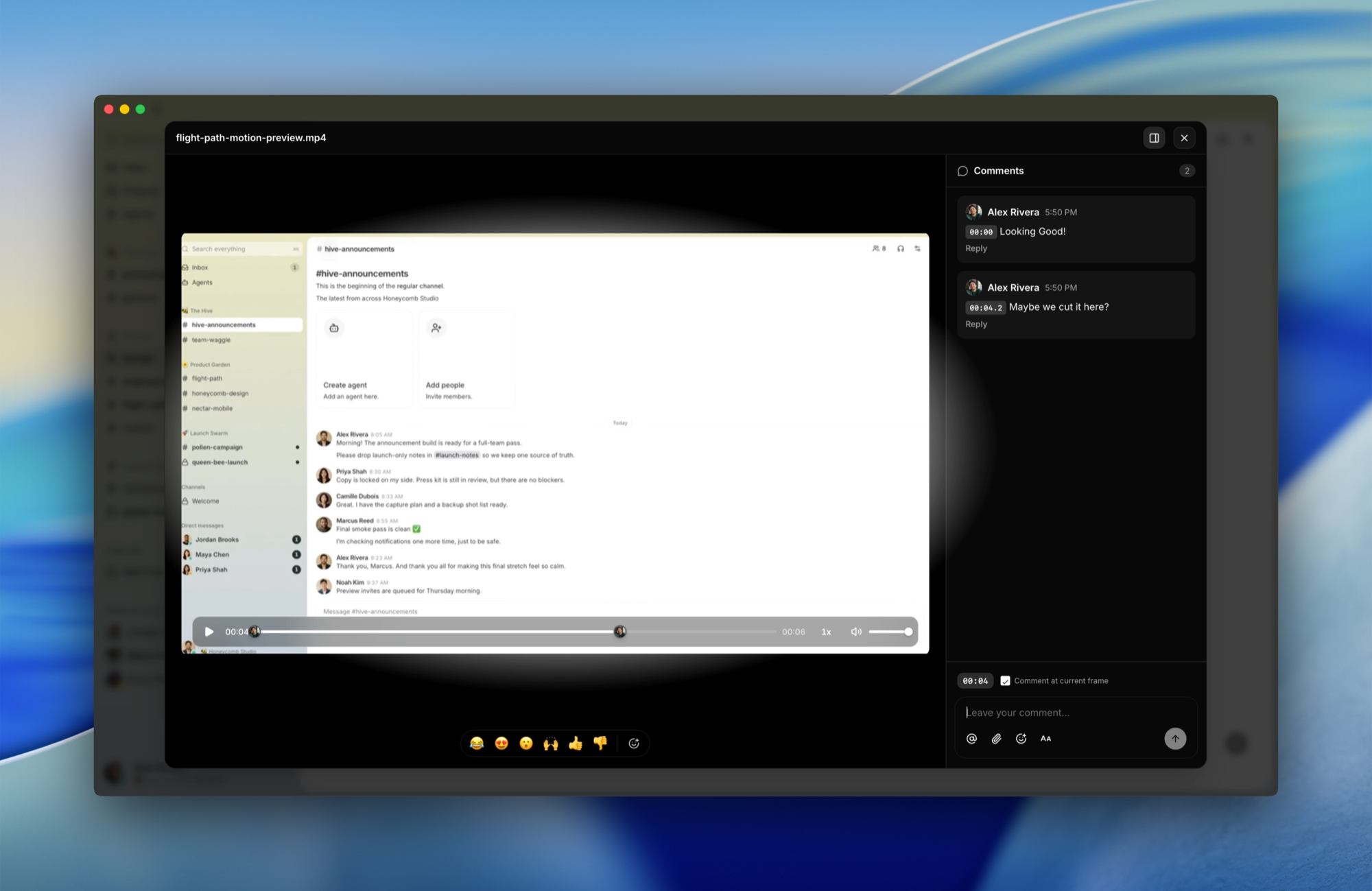
On July 21, 2026, Jack Dorsey's Block launched Buzz, a free and open-source workspace where humans and AI agents share channels, code repositories, and workflows. Released under the Apache 2.0 license and built on the decentralized Nostr protocol, Buzz is positioned as a workspace for a world where software agents are colleagues rather than tools. Bradley Axen, Block's Head of AI Capabilities, framed the bet plainly in comments to SiliconANGLE: every company is going to need a place where humans and agents work together. That is the thesis the product is built to prove.
The framing invites the obvious comparison to Slack and GitHub, and Buzz deliberately spans both. It combines team communication with a built-in software forge, meaning the place where people discuss work is the same place where code lives and where agents act on it. The choice to build on Nostr, a protocol designed for decentralized identity and messaging, is what makes the more interesting parts of the design possible. This is an early-stage release, shipping as version 0.4.22 with desktop apps for macOS, Windows, and Linux.
Agents that carry a verifiable passport
The feature that should catch a CTO's attention is how Buzz handles agent identity. Each agent receives its own cryptographic keypair, and on top of that a second signature ties the agent to its human owner. Together these create what Block describes as a verifiable passport for the agent, and every action it takes carries a signature that can be checked. The result is an audit trail that answers the two questions governance teams always ask: which agent did this, and on whose authority.
This is a genuinely different approach from the norm, where agents typically borrow a shared service account or a human's credentials and leave behind logs that cannot distinguish one actor from another. By giving each agent a distinct, provable identity anchored to a person, Buzz makes agent actions attributable at the cryptographic level rather than the log-parsing level. For any organization worried about accountability when autonomous software modifies code or triggers workflows, that attribution is the missing primitive that most current tooling lacks.
Built for the coding agents teams already use
Buzz does not ask teams to adopt a single proprietary agent. It ships with pre-built harnesses for three coding agents: Block's own Goose framework, OpenAI's Codex, and Anthropic's Claude Code. Those integrations are wired through the open Agent Client Protocol, or ACP, which standardizes how a workspace talks to different agent implementations. The practical effect is that a team can bring the coding agent it already trusts into Buzz rather than betting on one vendor's assistant winning.
That protocol-first stance is consistent with the open-source, Nostr-based foundation and matters for anyone allergic to lock-in. Supporting multiple agent frameworks behind a common protocol means the workspace becomes a neutral substrate rather than a captive channel for one company's model. For engineering leaders, interoperability at this layer is what keeps the platform decision reversible. If a better agent arrives next quarter, the ACP harness pattern is designed to let it plug in without rebuilding the surrounding workflow.
A workspace where agents do real work
The built-in software forge is where the ambition shows. Agents in Buzz can open repositories, submit and review code, run workflows, edit canvases, orchestrate other agents, and even join voice huddles. The design treats an agent as a first-class participant that can carry a task from discussion to committed code without a human manually ferrying context between a chat tool and a separate code host. That end-to-end integration is the operational payoff of unifying communication and the forge in one workspace.
The ability for agents to orchestrate other agents is the most forward-looking and the most sobering piece. It points at multi-agent workflows where one agent delegates to others, and it is precisely this kind of autonomous coordination that makes the identity and audit design load-bearing rather than decorative. A chain of agent actions is only governable if each link is attributable. Buzz's bet is that the signature-per-action foundation is what makes agent orchestration safe enough to allow near real work.
Why the governance layer is the real product
Strip away the Slack-and-GitHub comparison and the durable contribution here is a governance model for agentic software. The blocker keeping coding agents stuck in sandboxes and pilots is rarely capability; it is the inability to prove who did what when an autonomous actor touches a production repository. Buzz's answer, a distinct cryptographic identity per agent bound to a human owner with a full audit trail, is aimed squarely at that blocker. It is the control CTOs have been asking for before they widen agent access.
Whether Buzz specifically wins is a separate question from whether its model spreads. At version 0.4.22 this is early software, and adopting it wholesale as a Slack and GitHub replacement is not a decision most enterprises will make yet. The more likely near-term value is as a reference architecture. The pattern of signed, attributable agent actions is one that platform and security teams can evaluate and demand from whatever tooling they eventually standardize on, whether that is Buzz or something it influences.
What CTOs should take from it
The concrete action is to add agent identity and attribution to the criteria you use when evaluating any agentic development tool. Ask vendors how an agent authenticates, whether its actions are individually attributable, and how the audit trail ties an action back to a responsible human. Buzz has effectively raised the reference standard for what a good answer looks like, and tools that route agent activity through shared accounts should now look inadequate by comparison. This is a checklist item that did not exist a year ago.
It is also worth watching the open-source, protocol-based approach as a strategic signal. Block chose Apache 2.0, Nostr, and the Agent Client Protocol rather than a closed platform, which suggests a belief that the winning layer for human-agent collaboration will be an open one. For teams making long-horizon bets on how agents fit into their engineering organization, aligning with open identity and interoperability standards is the lower-regret path. You can self-host Buzz or use Block's managed instance to evaluate the ideas directly.