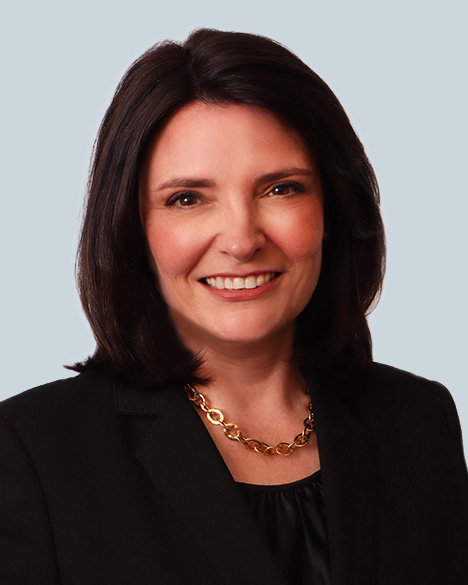
The appointment
Datavault AI, the Nasdaq-listed data-monetization company trading as DVLT, has appointed Frank Deo as Chief Technology Officer of its Acoustic Sciences Division. The move installs a single technical leader over a division assembled from multiple acquisitions, with a clear brief to make the engineering coherent. Deo brings an unusually deep technical resume for a division-level role, including a Technical Emmy Award and 31 issued United States and international patents, alongside senior positions at API Media, Imagine Communications, the measurement firm now known as iSpot, Cadent, Johnson & Johnson, and Comcast. That span across media technology and measurement fits a division built around audio and acoustic science.
Deo described his charge in plain engineering terms, saying the division has real technology and real deployments behind it, and that his job is to make the engineering faster and cleaner. That framing is telling. It signals that the priority is not greenfield invention but consolidation and delivery discipline, taking technology that already exists and works and turning it into something that ships reliably and scales. For a division stitched together from separate companies, that is usually the harder and more valuable problem, because the raw capability is present but the coherence is not.
The consolidation mandate
The core of the role is integration. David Reese, president of the Acoustic Sciences Division, described the goal as turning four strong companies into one platform under a single technical vision. That sentence names the classic post-acquisition challenge directly. Companies acquire capabilities faster than they integrate them, and the result is a portfolio of overlapping technologies, incompatible architectures, and separate teams that were never designed to work together. A CTO brought in specifically to unify that portfolio is being asked to do the unglamorous engineering and organizational work that determines whether an acquisition spree becomes a product or stays a collection of parts.
This pattern is familiar to any technology executive who has lived through a period of acquisition-led growth. Buying four companies is the easy part, financed and announced in a quarter. Making their technologies interoperate, rationalizing duplicated systems, and getting the combined teams to build as one is a multi-year effort that quietly decides whether the deals created value. Datavault AI putting a single accountable CTO over that effort, rather than letting the acquired units drift, is the right structural instinct, and it reflects a recognition that platform coherence does not emerge on its own.
Why the spin-out context matters
The appointment carries added weight because the Acoustic Sciences Division is being evaluated for a potential dividend spin-out into a standalone public company. That prospect changes the CTO role from internal engineering leadership to something closer to preparing a business for independent life. A division that might be spun out needs a technology organization that can stand on its own, with a coherent architecture, a credible product roadmap, and the engineering discipline that public-market investors scrutinize. Deo is, in effect, being asked to make the division whole enough to survive separation.
For technology leaders, the spin-out framing illustrates how much a company's technical coherence affects its strategic options. A division whose technology is well integrated and clearly documented is far easier to spin out, sell, or independently capitalize than one that is a tangle of half-merged acquisitions. The consolidation work Deo is taking on therefore does more than tidy the engineering, it creates the optionality to spin the division out on attractive terms. Clean engineering is a strategic asset precisely because it widens the set of corporate moves available to the parent.
The profile of the hire
The choice of a leader with 31 patents and a Technical Emmy for a consolidation role is worth reading. Deep technical credibility matters when the job is to make architectural decisions across four previously independent codebases and to earn the trust of engineers who came from different companies with different ways of working. A CTO who can engage with the technology at a genuine engineering level, rather than only at the level of roadmaps and headcount, is better positioned to make the hard calls about which systems to keep and which to retire. Datavault AI chief executive Nathaniel Bradley cast the hire in exactly those terms, calling Deo the kind of builder the company wants leading the platform as it grows.
The breadth of Deo's background across media technology, measurement, and large enterprises like Johnson & Johnson and Comcast also fits a division that spans acoustic science and audio technology with commercial deployments. Consolidating acquired companies requires understanding multiple technical domains well enough to see where they can be unified and where they genuinely differ. A leader whose career has crossed those boundaries is more likely to find the real integration opportunities rather than forcing a superficial merger. The hire reflects a bet that domain-spanning technical depth is what this particular consolidation demands.
The broader lesson for tech leaders
Datavault AI is a small-cap company and its Acoustic Sciences Division is a specialized business, but the leadership pattern here generalizes to organizations of any size navigating acquisition-led growth. The recurring truth is that value from acquisitions is realized in integration, and integration requires dedicated technical leadership with a clear mandate and the credibility to make consolidation decisions stick. Companies that acquire without appointing someone accountable for unifying the technology tend to accumulate a portfolio that never becomes a platform, carrying the cost of the deals without the benefit.
For executives overseeing multiple acquisitions, the actionable takeaway is to treat the appointment of an integration-focused technical leader as a core part of the acquisition strategy, not an afterthought once the deals close. The clarity of Deo's mandate, make the engineering faster and cleaner, and turn four companies into one platform, is a model worth copying. We would insist that any acquisition-heavy growth plan name who owns the technical consolidation and give that person the authority to retire redundant systems, because that is where the promised synergies are actually won or lost.
The takeaway
The appointment of Frank Deo as CTO of Datavault AI's Acoustic Sciences Division is a focused response to a common problem: a division built from acquisitions that needs to become a single, coherent platform. The choice of a technically deep leader with a clear consolidation mandate, set against the prospect of a potential spin-out, reflects a sound understanding that engineering coherence is what turns acquired capabilities into a defensible business and preserves strategic options for the parent company.
For technology leaders watching from larger organizations, the lesson is transferable regardless of Datavault AI's size. Integration is where acquisition value lives, dedicated technical leadership is how it gets realized, and clean engineering is what keeps corporate options open. The organizations that internalize this will appoint their integration leaders early and empower them fully, while those that treat consolidation as something that will sort itself out tend to discover, quarters later, that they bought capabilities they never turned into a platform.