The Release and Its Three Agents
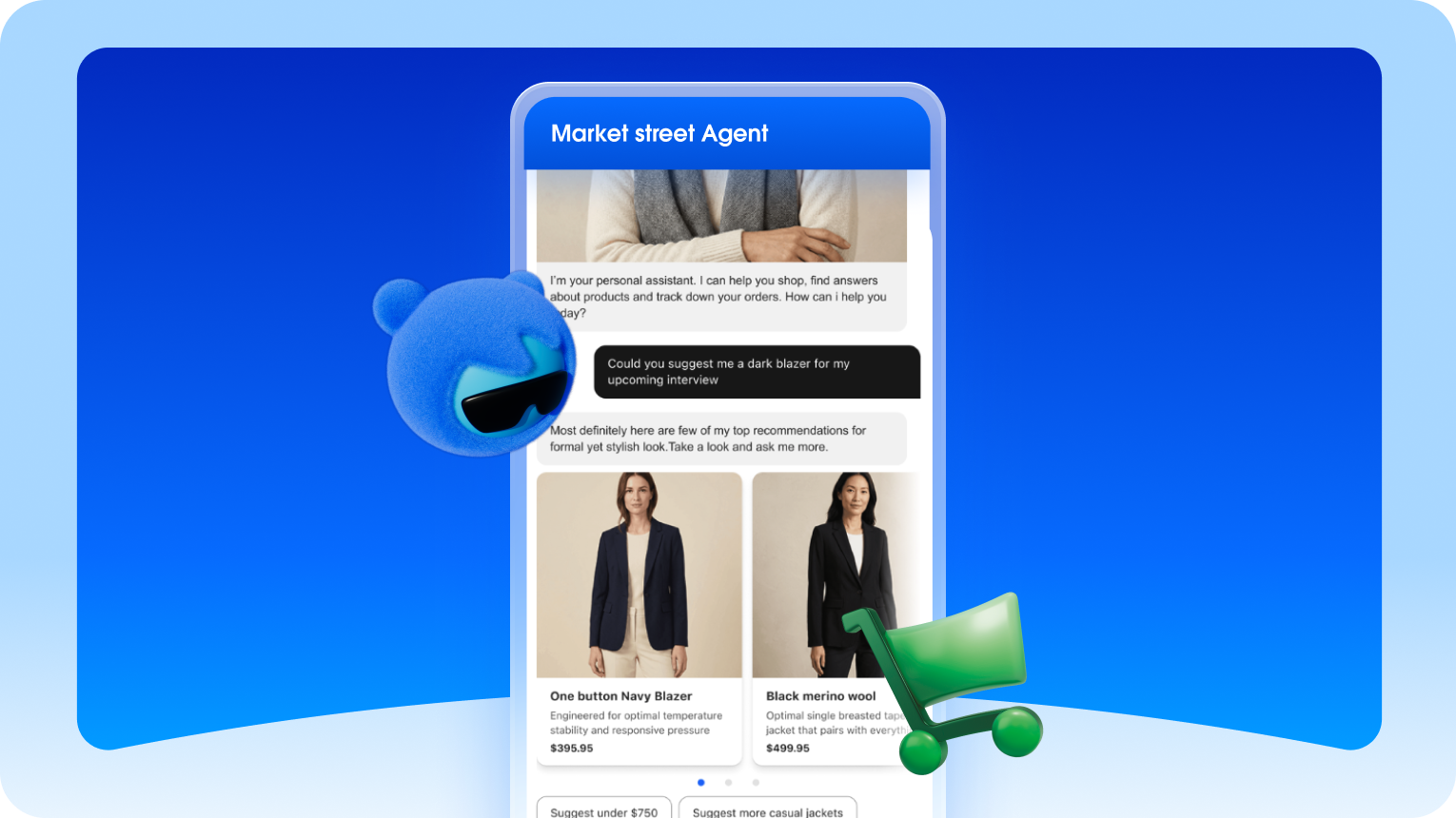
Salesforce has unveiled what it describes as its biggest Agentforce Commerce release yet, making three distinct agents generally available. The Shopper Agent carries the customer conversation from discovery through checkout and into service, speaking in the brand's voice on its own storefront, with real inventory checking and order fulfillment behind it. The Buyer Agent meets business buyers inside WhatsApp and SMS for B2B commerce, complete with contract pricing. The Merchant Agent turns back-office operations into a natural-language exercise, letting merchandising teams organize catalogs, sort products, and respond to trends by describing what they want rather than clicking through admin screens. Together they cover the shopper, the buyer, and the operator.
The framing is deliberate. Rather than positioning a single chatbot, Salesforce is selling a set of role-specific agents that map to the actual jobs in a commerce operation, which is a more credible enterprise pitch than a general assistant. Nitin Mangtani, EVP and GM of Agentforce Commerce, put the urgency plainly, saying the brands that win will have their Shopper Agent live on their own properties for the 2026 shopping season. That is a vendor talking its book, but the underlying claim deserves attention. If conversational and agentic shopping genuinely shifts consumer behavior this year, the retailers who deploy early will be gathering data and refining their agents while competitors are still evaluating.
Commerce Moves Into ChatGPT and Google
The more consequential part of the release is where these agents are headed. Salesforce says ChatGPT integration is set to reach general availability in July, with Google Search including AI Mode and the Gemini app following later this summer. That means a retailer's commerce capabilities could operate on its own storefront and, at the same time, inside the AI assistants where consumers increasingly begin their shopping. For a CTO, this is the strategically loaded move, because it changes where the transaction can originate. When a shopper asks ChatGPT to find and buy a product, the retailer whose agent is wired into that surface has a shot at the sale that the retailer relying solely on its website does not.
This is the shift enterprise commerce leaders have to reckon with. For two decades the storefront was the destination, and search and social were the channels that fed it. Agentic commerce inserts a new intermediary layer, the AI assistant, between the consumer and the retailer, and that layer will increasingly decide which products surface and which transactions complete. Salesforce is offering retailers a way to be present in that layer rather than disintermediated by it. The risk of sitting out is subtle. The storefront survives, yet a growing share of purchase journeys begins in an assistant the retailer has no presence in, with a competitor's agent already there.
The Numbers Salesforce Is Leaning On
Salesforce is backing the release with metrics designed to create urgency. The company says retailers with active shopper agents grew sales 59 percent faster than competitors still on the sidelines, and that AI-referred traffic converts at eight times the rate of social channels. It also points to the 2025 holiday season, where it estimates AI influenced 20 percent of global online sales worth 262 billion dollars. These figures come from a vendor with an obvious interest in the conclusion, and they should be read with that in mind. Correlation between agent adoption and sales growth does not prove the agents caused the growth, since early adopters tend to be sophisticated operators anyway.
That said, the direction is hard to dismiss even if the magnitudes are generous. The eight-times conversion figure for AI-referred traffic is the most interesting, because it points to a qualitative difference in intent. A shopper who arrives via an AI assistant that already understood their need is further down the funnel than one who clicked a social ad out of idle curiosity. If that intent gap is real and durable, it reframes AI-referred traffic as a premium acquisition channel rather than another top-of-funnel source. Retailers should test the claim against their own data rather than taking Salesforce's word, but the hypothesis is plausible enough to warrant a controlled pilot rather than a wait-and-see posture.
What This Means for Retail Technology Leaders
For retail CTOs, agentic commerce is plainly on its way, and the practical question is how to participate without staking the business on an unproven channel. Salesforce is making it straightforward for its existing commerce customers to stand up agents, which lowers the barrier for the large installed base already on its platform. But deploying an agent that represents your brand to customers is a substantial undertaking. It requires governance over what the agent can say and do, accurate integration with inventory and pricing systems, and careful handling of the failure modes, because an agent that quotes a wrong price or promises unavailable stock damages trust faster than no agent at all.
The disciplined approach is to treat this as a controlled rollout with staged expansion. Start with a bounded use case where the agent's actions are well understood and the downside of an error is contained, instrument it heavily, and expand as confidence grows. The retailers who move too fast risk putting an unreliable agent in front of customers, and the ones who move too slowly risk ceding the emerging AI shopping surfaces to competitors. Salesforce's release sharpens that tension by making early deployment easy and by pushing hard on the season-timing message. The right response is neither panic nor dismissal, it is a deliberate pilot with clear guardrails and honest measurement of whether the agents actually move the numbers.
The Bigger Picture
Salesforce's release is one of the clearest signals yet that agentic commerce has moved from concept to product, and that the major platforms are racing to define how it works before the standards settle. The competition to be the layer through which AI-driven shopping happens is now fully joined, with Salesforce, the AI assistant providers, and the retailers themselves all maneuvering for position. For retailers, the strategic imperative is to avoid becoming a passive supplier of products that other companies' agents sell, which is the disintermediated future that keeps commerce leaders awake. Owning a direct agentic relationship with customers is the hedge against that outcome.
We would watch how the ChatGPT and Google integrations perform in the wild, because those are the surfaces that will determine whether agentic commerce becomes a genuine channel or a well-marketed feature. If consumers actually begin shopping through AI assistants at scale this season, the retailers with agents already live will have a real head start, and Salesforce's urgency will look prescient. If adoption is slower than the hype suggests, early deployers will still have learned how to operate these agents while the market matures. Either way, the release makes clear that the storefront is no longer the only place commerce happens, and retail technology strategy has to expand to meet customers wherever their AI takes them.