A Hyperscaler Engineer for a Bank in Transition
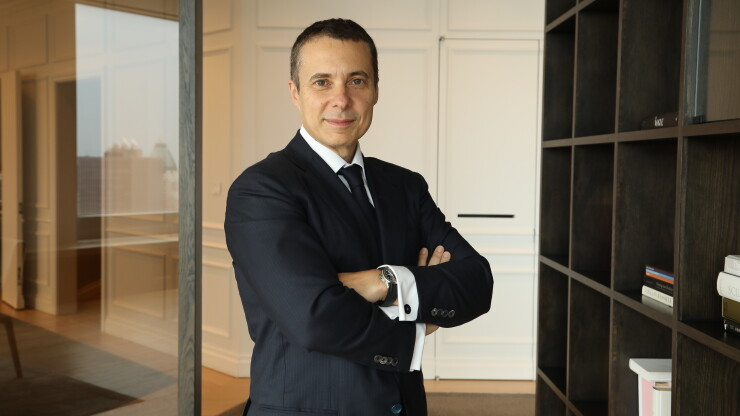
Citigroup has named Brian Saluzzo as Chief Information Officer, recruiting an executive whose recent career sat inside one of the world's largest software companies rather than a bank. Saluzzo joins from Google, where he spent nearly four years as a vice president of core developer engineering and product management, work that placed him at the center of how a hyperscaler builds and ships software at planetary scale. For a bank that has spent years untangling decades of accumulated technical debt, hiring from that environment is a statement about the kind of engineering culture Citi wants to import.
The choice fits a broader pattern we have tracked across financial services, where institutions increasingly reach into Big Tech for their most senior technology roles. Banks have concluded that the disciplines that made cloud providers fast and reliable, platform engineering, developer productivity, and ruthless standardization, are exactly what their sprawling estates need. Saluzzo embodies that bet, and his appointment suggests Citi wants its technology organization to operate less like a traditional bank IT shop and more like a product company.
Banking in the Blood
What makes Saluzzo an unusually good fit is that his Google tenure was bracketed by deep financial services experience. Earlier in his career he spent nearly nine years at American Express in senior technology leadership roles, including Technology Chief Operating Officer and executive vice president and unit CIO for Merchant and Network Services. Before that he held technology infrastructure leadership roles at Goldman Sachs. He is, in other words, not a technologist who needs to learn banking, but a banking technologist who went to learn how a hyperscaler operates and is now bringing those lessons back.
That combination is rarer and more valuable than either credential alone. Plenty of executives understand bank regulation and risk, and plenty understand modern software engineering, but few have operated at the most senior levels of both. The regulatory and operational constraints of a global systemically important bank are unforgiving, and an outsider with no financial services grounding often stumbles on them. Saluzzo arrives already fluent in the language of compliance, resilience, and scale that Citi's environment demands, which should shorten the time before he can actually move the organization.
The Mandate: Optimize and Scale AI
Saluzzo reports to Tim Ryan, Citi's head of technology and business enablement, and his mandate is twofold: optimize the bank's technology infrastructure and scale AI deployment across the organization. Those goals are linked. You cannot deploy AI at scale on top of brittle, fragmented infrastructure, and much of Citi's recent work has been about replacing exactly that kind of foundation. The AI ambition is concrete rather than aspirational, aimed at enhancing client experiences and strengthening operational capabilities, the two areas where banks see the clearest near-term return.
Ryan framed the appointment in terms of momentum, saying that Brian's arrival as CIO positions the firm well to accelerate that work and continue building for the future. The word accelerate is telling. Citi is not starting its transformation with this hire. It is trying to compound gains already made, and that changes what success looks like. Saluzzo's job is less about setting a new direction and more about increasing the velocity and reliability of a strategy that is already in motion, which is in many ways a harder leadership challenge than a clean-sheet reset.
Inheriting a Transformation Near Completion
The timing of the appointment is significant. Citi reports that roughly 90 percent of its transformation programs are now at target state, meaning Saluzzo inherits an estate that is far closer to modern than the one his predecessors confronted. That is both a gift and a trap. The gift is that the painful, unglamorous foundation work of consolidating systems and retiring legacy platforms is largely behind him. The trap is that the final ten percent of any transformation tends to contain the hardest, most entangled problems, the ones that resisted every earlier attempt to fix them.
There is also the matter of expectations. When a transformation is declared nearly complete, leadership and regulators alike start asking what the investment actually delivered. Saluzzo will be measured not on whether he modernized the plumbing, since that work is mostly done, but on whether the modernized foundation now produces tangible business value through AI and improved client experience. That is a more exposed position than running a multi-year rebuild, because the excuses that come with a long migration are no longer available.
What the Hire Signals for Financial Services
For the wider industry, Citi's choice reinforces a clear talent trend. The most coveted CIO profile in banking today blends regulatory fluency with hyperscaler-grade engineering leadership, and that combination is scarce enough to command intense competition. Institutions that cannot articulate a credible AI and modernization strategy will struggle to attract this caliber of leader, because executives like Saluzzo can choose between banks, technology firms, and startups. The hire is as much a recruiting signal as an operational one, telling the market that Citi is a place where serious technologists can do serious work.
We will watch how Saluzzo balances the two halves of his mandate, because optimization and AI scaling can pull in opposite directions. Optimization rewards consolidation, standardization, and caution, while aggressive AI deployment rewards experimentation and speed. Reconciling those impulses inside a heavily regulated global bank is the real test of the appointment. If Saluzzo can make Citi both more disciplined and more inventive at once, he will have proven that the hyperscaler playbook genuinely translates to banking. If not, he will join a long list of Big Tech transplants who found that financial services bends technology leaders more than they bend it.