The Map of AI Spending Is Redrawing
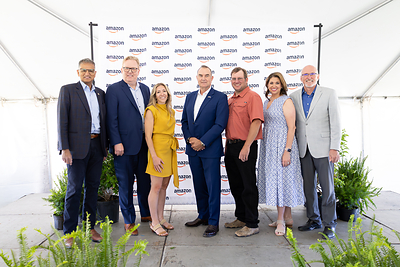
Amazon's announcement on June 15 that it has selected Montgomery County, Missouri, for a 10 billion dollar data center campus is a single project that captures a much larger shift. The hyperscalers' insatiable need for AI capacity is pushing them out of saturated, expensive coastal hubs and into lower-cost interior markets where land, power, and political goodwill are more abundant. Rural Missouri is not where most people picture the frontier of artificial intelligence, and that is precisely the point.
We have watched this geographic redistribution accelerate as the constraints on data center growth shift from talent and connectivity to power and physical space. When the binding constraint is electricity and acreage, the calculus favors places with available grid capacity and room to build, not the metros where AI research happens. A 10 billion dollar commitment to Montgomery County is a vote for that logic, and it will not be the last such vote cast in a state most national coverage rarely mentions.
The Real Currency Is Power
Buried in the announcement is the detail that matters most to anyone tracking this industry: Amazon said it will pay 100 percent of the electric service connection costs with no rate incentives. In an era when data centers are straining grids and igniting fights over who bears the cost of new generation and transmission, that commitment is both a competitive differentiator and a defensive move. The political backlash against data centers increasingly centers on the fear that ordinary ratepayers will subsidize hyperscaler electricity demand.
By absorbing connection costs and forgoing rate incentives, Amazon is trying to neutralize that objection before it forms. We see this as evidence that the social license to build is becoming as important as the permits. The communities courting these projects want jobs and tax revenue, but they are increasingly wary of the power burden, and the companies that win sites will be those that can credibly say residents will not foot the bill. Energy economics, not compute, is now the gating factor for expansion.
Buying Goodwill, Deliberately
The community package is extensive and clearly designed to build durable local support. Amazon committed more than 7 million dollars in contributions, including 3 million dollars for emergency dispatch services, over 1 million dollars for a community gathering space at the county fairgrounds, 3 million dollars in community programs, and a 150,000 dollar fund for local grants. The project is expected to generate hundreds of millions of dollars in property tax revenue over 25 years.
Governor Mike Kehoe framed it as regional opportunity, saying the announcement "represents new opportunities for Montgomery County and the surrounding region." Amazon's David Zapolsky struck the partnership note: "When you show up as a real partner, listen to the community, and invest for the long term, everyone benefits." We read the choreography as a maturing playbook. After years of friction over data center development, hyperscalers have learned that a generous, visible community investment is not charity; it is the cost of keeping the pipeline of sites open.
The Water Question Nobody Ignores Anymore
Power gets the headlines, but water is the quieter constraint, and Amazon addressed it directly. Through a partnership with Arable Labs to improve agricultural irrigation efficiency, the company projects 100 million gallons of annual water savings. Data centers consume significant water for cooling, and in agricultural regions that competition for water is politically sensitive. Pairing the campus with an irrigation-efficiency program is an attempt to show the project gives back more water than it takes.
Whether that math fully holds is a fair question, and one local stakeholders should press. But the strategic instinct is sound. We expect water stewardship to become a standard component of data center proposals, alongside the power commitments, because the alternative is organized local opposition that can delay or kill a project. The companies building at this scale are learning to anticipate every resource objection and arrive with a mitigation already in hand. Amazon's water pledge is a template others will copy.
A Long Bet on the Interior
Amazon already employs more than 10,000 people across Missouri facilities dating back to 2017, so this campus deepens an existing footprint rather than planting a flag in unfamiliar territory. The project is expected to create more than 400 full-time data center jobs plus thousands of construction jobs, figures that matter enormously in a rural county even if they are modest against the 10 billion dollar headline. The asymmetry between capital invested and permanent jobs created is inherent to data centers and worth keeping in view.
For technology and infrastructure leaders, the broader signal is what this says about where capacity will physically live over the next decade. The AI buildout is becoming a story about American geography: which states and counties can offer power, water, land, and a welcoming politics. Missouri is positioning itself aggressively, and Amazon's commitment validates that bet. We expect the competition among interior states for these campuses to intensify, with energy availability and community readiness as the decisive variables rather than proximity to traditional tech centers.
.png)