A Single Owner for Technology and Data
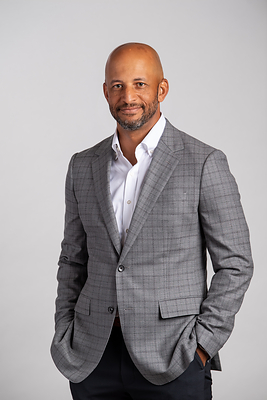
Ally Financial named Mark Mathewson as its Chief Information and Data Officer on July 13, with the appointment taking effect July 20. The title is the point. Rather than run a CIO for systems and a separate chief data officer for analytics, the nation's largest all-digital bank has chosen to place both under one executive who will lead the technology and data organization across every function and line of business. Ally, a top-25 U.S. financial holding company with roughly 197 billion dollars in assets and 9.5 million customers, is betting that the next phase of its transformation depends on treating engineering and data as a single problem rather than two adjacent ones.
We see the CIDO construct as a direct response to how AI actually works inside a bank. Models are only as good as the data pipelines feeding them, and data programs are only useful if engineering can operationalize them in products. Splitting those responsibilities across two leaders creates a seam, and seams are where AI initiatives stall. By handing Mathewson both, Ally removes the negotiation that usually happens when a chief data officer wants clean, governed data and a CIO is measured on shipping features. The trade-offs now resolve inside one organization, under one person accountable to the chief executive.
Who Ally Hired
Mathewson brings more than 25 years of financial services technology leadership, and the shape of his career is as relevant as its length. He spent 12 years at Capital One, most recently as divisional chief information officer for the retail and commercial banking businesses, overseeing teams spread across the United States, Mexico and India. Capital One is widely regarded as one of the most engineering-forward banks in the country, an early and aggressive mover to the public cloud, so a divisional CIO from that environment arrives fluent in running modern, distributed technology at scale rather than nursing legacy cores.
Before Capital One he spent another 12 years at Fannie Mae in senior technology roles spanning application development, IT governance and project portfolio management, and he began his career in technology consulting at Deloitte with a stint at an early internet startup. He holds a bachelor's degree in computer information systems from James Madison University and an MBA from Georgetown. The pattern is a leader who has done both the disciplined governance work at a large mortgage institution and the fast-moving platform work at a cloud-native bank, which is a useful combination for an all-digital lender that has to be both quick and examinable.
What the Leadership Sees
Chief executive Michael Rhodes tied the hire to temperament as much as track record. "Mark is an incredibly respected technology leader in financial services, someone who blends rigor and discipline with curiosity and ambition that drives innovation," Rhodes said, describing the balance Ally wants at the top of its technology estate. For a bank whose entire proposition is that it has no branches, the technology organization is not a support function, it is the storefront, the back office and the product all at once, so the choice of who runs it is effectively a choice about the company's direction.
Mathewson, for his part, framed his arrival around the institution's culture. "Ally has built something genuinely rare in financial services, driven by relentless customer obsession and commitment to developing" its people, he said in remarks accompanying the announcement. The language is telling. An incoming CIDO from Capital One choosing to emphasize customer obsession and talent development, rather than a specific technology agenda, suggests an early focus on the organization itself, on how the combined technology and data teams are structured, motivated and retained, before any splashy platform bets.
Why the Timing Matters
Ally is making this move at a moment when all-digital banks face a squeeze. Their cost advantage over branch-based rivals is real but no longer novel, and the differentiator is increasingly the intelligence layered on top: how well the bank prices risk, personalizes offers and automates service. Each of those depends on data that is clean, governed and accessible to models in real time. Consolidating technology and data under a single CIDO is a structural admission that this intelligence layer, not the absence of branches, is now where the competition is won or lost.
The effective date of July 20 gives Mathewson a compressed runway into the second half of the year, a period when banks are setting technology budgets for 2027. That timing lets him shape spending priorities almost immediately rather than inheriting a fixed plan. We would expect his first visible decisions to concern data infrastructure and governance, because those are the prerequisites for everything else, and because a leader who spent 12 years at Fannie Mae understands that unglamorous governance work is what keeps regulators comfortable while the flashier AI programs run.
The Broader Pattern in Banking Titles
Ally is not alone in collapsing technology titles this month. The same week, Texas Capital named a Chief Digital and Information Officer, and across the industry the standalone chief data officer role is quietly being absorbed into broader technology mandates. This is a reversal of the mid-2010s fashion, when banks proliferated C-suite technology titles to signal seriousness about digital and data as distinct disciplines. The AI era is pushing the pendulum back toward consolidation, because the disciplines have converged even if the org charts had not caught up.
For technology executives elsewhere, the lesson is about accountability under AI. When data quality, model governance and product delivery are owned by different leaders, no single person can be held responsible for whether an AI program actually works end to end. The CIDO and CDIO titles fix that by design. The risk is span of control: asking one executive to own everything from network reliability to data science is a heavy load, and the arrangement only works if that person can build and trust a strong second layer. Ally has bet that a leader who ran a three-country division at Capital One can carry it.