The Commitment
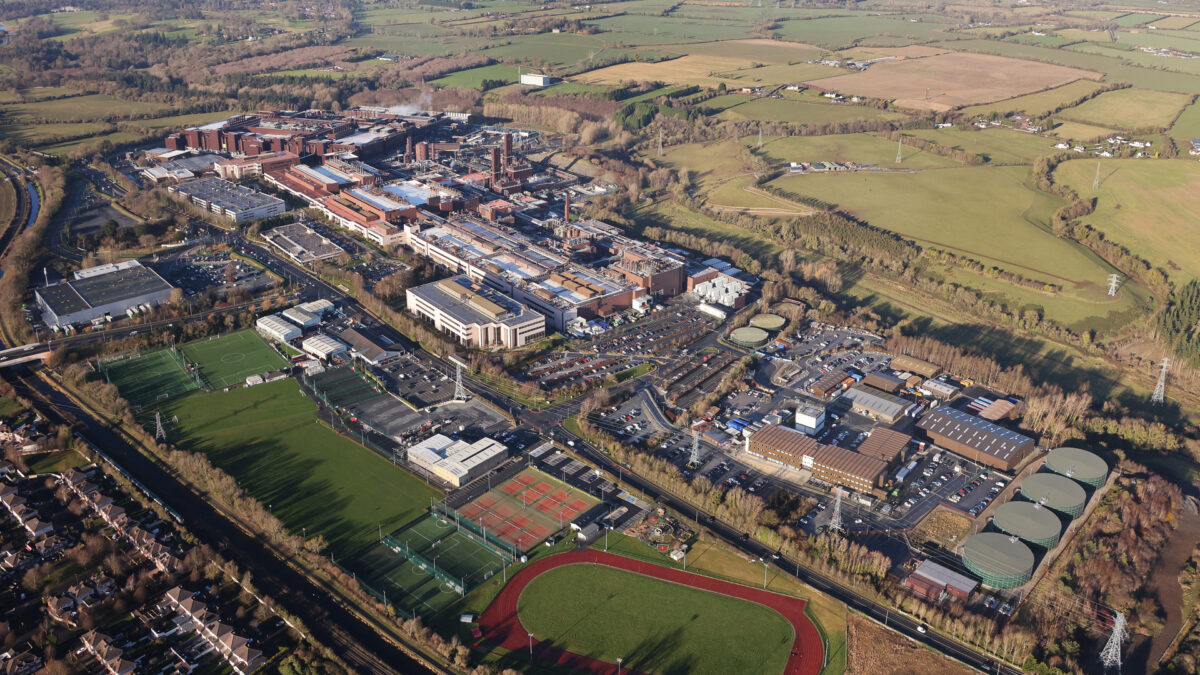
Intel announced a 5 billion euro capital investment, roughly 5.7 billion dollars, at its Leixlip campus in Ireland, marking the next phase of that site's expansion. The money will scale output of Intel Xeon 6 and next-generation Xeon processors built on the Intel 3 node, upgrade existing fabrication facilities and install leading-edge manufacturing equipment, including an expansion of the automated track system that links campus modules. Naga Chandrasekaran, Intel's chief technology and operations officer, called it a definitive commitment to maximize capacity at Leixlip.
The program is already underway, having started earlier in 2026, and is expected to be complete by the end of next year. It will create several hundred permanent high-tech jobs and thousands of construction and installation roles. Ireland's response was effusive: Taoiseach Micheal Martin called it a powerful vote of confidence in Ireland, and IDA Ireland chief executive Michael Lohan described Intel as one of the country's longest-standing and most strategically important investors. Intel has now put more than 30 billion euros into Ireland since arriving in 1989, and Leixlip employs around 4,900 people.
Why Xeon and Why Now
The investment targets server processors specifically, and the timing is deliberate. Global demand for AI and high-performance computing is driving an insatiable need for advanced silicon to power what Intel calls AI Factories. Xeon 6 and its successors are the data-center CPUs that sit alongside the GPUs and accelerators doing the heavy AI lifting, handling orchestration, general compute and the host workloads that every AI cluster still requires. Even in a world obsessed with GPUs, the server CPU remains essential, and demand for it is climbing with the buildout.
Choosing to expand Xeon capacity on the Intel 3 node also signals confidence in Intel's own process technology at a moment when that confidence has been contested. The company has spent years fighting the perception that it fell behind TSMC on leading-edge manufacturing. Committing billions to produce advanced server chips in-house, in Europe, is a statement that Intel intends to remain a manufacturer of consequence rather than ceding fabrication to Asian foundries. For customers weighing where their critical silicon comes from, a healthy Intel Foundry is a strategic asset, not just a supplier.
The Sovereignty Dimension
The location is not incidental. Concentrating advanced chipmaking in Ireland strengthens Europe's semiconductor supply chain and supports EU technology-sovereignty ambitions at a time when the continent is acutely aware of its dependence on foreign fabs. The pandemic-era chip shortages and subsequent geopolitical tension made clear that a region without domestic leading-edge manufacturing is exposed, and European policymakers have made reshoring chip capacity a strategic priority backed by subsidy programs.
Intel is positioning itself as the beneficiary and instrument of that policy. A large, advanced fab on European soil gives the region a measure of the resilience it has been seeking, and it gives Intel political goodwill and potential support in a market determined to reduce reliance on Asian supply. We see this as part of the same sovereign-technology wave reshaping cloud, AI infrastructure and even defense across Europe. Governments increasingly want the most strategically important production, whether compute, models or chips, to sit within their own borders and legal reach, and they are willing to pay for it.
The Turnaround Test
This investment lands amid a difficult stretch for Intel, which has been restructuring, cutting costs and fighting to prove its foundry strategy can compete. Against that backdrop, committing 5 billion euros to expand manufacturing is a meaningful signal of intent. A company merely managing decline does not pour billions into advanced capacity. The move suggests leadership believes there is real, growing demand for its server silicon and that its process technology is good enough to serve it competitively.
The risk is equally clear. Semiconductor fabs are enormous, long-payback bets, and Intel is making this one while still working to restore its competitive standing. If Xeon fails to hold share against rivals, or if the broader AI CPU demand it is banking on softens, the capacity could become an expensive burden rather than an engine. The company is betting that demand for advanced server chips will keep rising and that it can capture enough of it. For an enterprise buyer, the health of Intel Foundry matters, because a competitive second source for leading-edge chips is good for the whole market.
What It Means for Enterprise Buyers
For CIOs and infrastructure leaders, Intel's Irish expansion is a reminder that the compute they depend on rests on a fragile, geographically concentrated manufacturing base, and that where chips are made is becoming a strategic variable. A stronger, more diversified fabrication footprint, with advanced capacity in Europe as well as Asia and the United States, reduces the supply-chain risk that snarled procurement during the shortage years. A healthy Intel is part of that diversification, whatever one thinks of its recent execution.
The deeper point is that semiconductor manufacturing has re-entered the strategic conversation for technology leaders who spent a decade treating chips as a commodity abstracted away by the cloud. AI demand, geopolitics and supply-chain fragility have changed that. Understanding who makes your critical silicon, on what process, in which jurisdiction, is now part of serious infrastructure planning. Intel's bet on Leixlip is one company's answer to that environment. The broader signal is that the physical foundations of computing are strategic again, and worth the attention of anyone responsible for an enterprise's technology future.
Our Read
Intel's 5 billion euro Leixlip investment is simultaneously a vote of confidence in Ireland, a bet on rising demand for advanced server chips, and a test of whether the company's foundry ambitions are credible. The focus on Xeon 6 and the Intel 3 node ties the spend directly to the AI buildout, where server CPUs remain indispensable even as GPUs grab the headlines. The European location adds a sovereignty dividend that aligns Intel with the continent's strategic priorities and its subsidy appetite.
Whether it pays off depends on execution Intel has struggled to demonstrate consistently in recent years. But the direction is sound. AI demand needs silicon, Europe wants domestic capacity, and a competitive Intel benefits the entire market by keeping leading-edge manufacturing from consolidating entirely in Asia. We read this as a constructive move in a broader reshoring story that enterprise leaders should track, because the resilience of their compute supply chain increasingly depends on exactly these kinds of long-horizon bets being made and delivered.