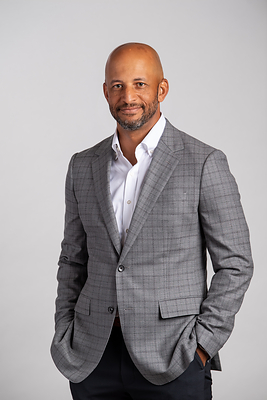
A New Seat at the Table
Meta created a Chief Data Officer role for the first time in its history and, on July 2, named Alex Schultz to fill it. The choice of person is as revealing as the choice to create the job. Schultz is not an outside data scientist parachuted in with a mandate; he is one of the company's longest-tenured executives, a Facebook employee since 2007 who has spent nearly two decades inside the business and served as Chief Marketing Officer since 2020. Moving a trusted insider into a brand-new C-suite seat tells you Meta views this less as a hiring gap to fill and more as a strategic function it intends to elevate permanently.
In the new role, Schultz will lead the company's global data operations, AI analytics and data infrastructure, with an explicit charter to improve data quality across the organization and strengthen what Meta calls its context layer. "My focus in this new role will be helping transform how Meta learns and makes decisions in the AI era," Schultz said. The framing, learning and decision-making rather than dashboards and reporting, positions data as an input to the company's operating intelligence rather than a byproduct of it. That is a meaningful reframing of what a data chief is for.
Why the CMO Became the Data Chief
At first glance, moving a marketing leader into a data role looks like a lateral curiosity. On closer inspection it is logical. Modern digital marketing at Meta's scale is one of the most data-intensive disciplines in the company, built on experimentation, measurement and attribution across billions of users. A CMO who has run that machine for six years understands the difference between data that is abundant and data that is trustworthy, and he has lived the consequences of decisions made on noisy inputs. That operational scar tissue is exactly what a first-ever data chief needs.
There is also a signal about seniority embedded in the choice. By elevating a proven executive rather than importing a specialist, Meta is telling the rest of the organization that the CDO carries real authority and is not a compliance-flavored side office. We have seen many companies stand up chief data officer roles that quietly wither because the incumbent lacked the political capital to change how other teams work. Schultz arrives with two decades of relationships and a direct line to the top, which is the single biggest predictor of whether a cross-cutting data mandate actually sticks.
The Money Behind the Move
The context that makes this appointment more than an org-chart footnote is Meta's spending. The company has raised its 2026 capital expenditure guidance to between 125 and 145 billion dollars, an extraordinary sum driven overwhelmingly by AI infrastructure. When a business is committing that much capital to compute, the return on it depends almost entirely on the quality of the data flowing through it. Expensive models trained and operated on inconsistent or poorly governed data produce expensive mistakes. A dedicated executive owning data quality is, in effect, a hedge on a nine-figure infrastructure bet.
Seen that way, the CDO role is a cost-discipline function as much as a strategy function. Someone has to be accountable for whether the data feeding Meta's models and its decisions is clean, consistent and available, and that accountability had previously been diffused across engineering and product teams. Concentrating it in one C-suite owner, at the same moment capital spending is peaking, suggests Meta has concluded that its constraint is no longer compute or talent but the reliability of its own information. That is a mature diagnosis, and one other AI-heavy companies would do well to examine in their own houses.
The Marketing Succession
Vacating the CMO chair triggered its own succession, and Meta filled it from within as well. Denise Moreno, a 17-year company veteran, steps up to Chief Marketing Officer. The symmetry is worth noting: both the outgoing and incoming occupants of the marketing role are long-tenured insiders, reinforcing that this reshuffle is an internal elevation of trusted leaders rather than a talent raid or a crisis response. Continuity, not disruption, is the theme, which is what you would expect when a company is redeploying its bench rather than repairing a failure.
For the marketing organization, the handoff from Schultz to Moreno also carries a subtle data dividend. The new data chief spent six years running marketing and understands its instrumentation intimately, which should make him a natural ally for his successor rather than a distant executive issuing governance edicts. If the CDO and CMO functions stay tightly coupled, Meta's marketing could become an early proving ground for whether a cleaner context layer actually produces better decisions, giving the new data office a visible internal customer from day one.
What Enterprise Leaders Should Take From It
The instructive lesson for CIOs and CDOs outside Meta is about sequencing and seniority. Many enterprises are pouring money into AI while their underlying data remains fragmented and ungoverned, and they staff the fix with mid-level data leaders who lack the standing to force change on powerful product teams. Meta's move inverts that. It elevated a heavyweight insider precisely when spending is at its peak, treating data quality as a board-level concern rather than a back-office chore. The message is that the data function's influence should scale with the size of the AI bet it underwrites.
We would be cautious about reading the specific title as a universal prescription, because not every company has an Alex Schultz to redeploy or a 125 billion dollar budget to protect. But the underlying logic travels. If your AI investment is material, someone senior needs unambiguous ownership of the data that determines whether that investment pays off, and that person needs the authority to change how other teams produce and handle data. Meta has now put a name and a C-suite title on that responsibility. The open question, which the next few quarters will answer, is whether a marketer-turned-data-chief can actually move the quality needle across an organization as sprawling as this one.