The operator returns
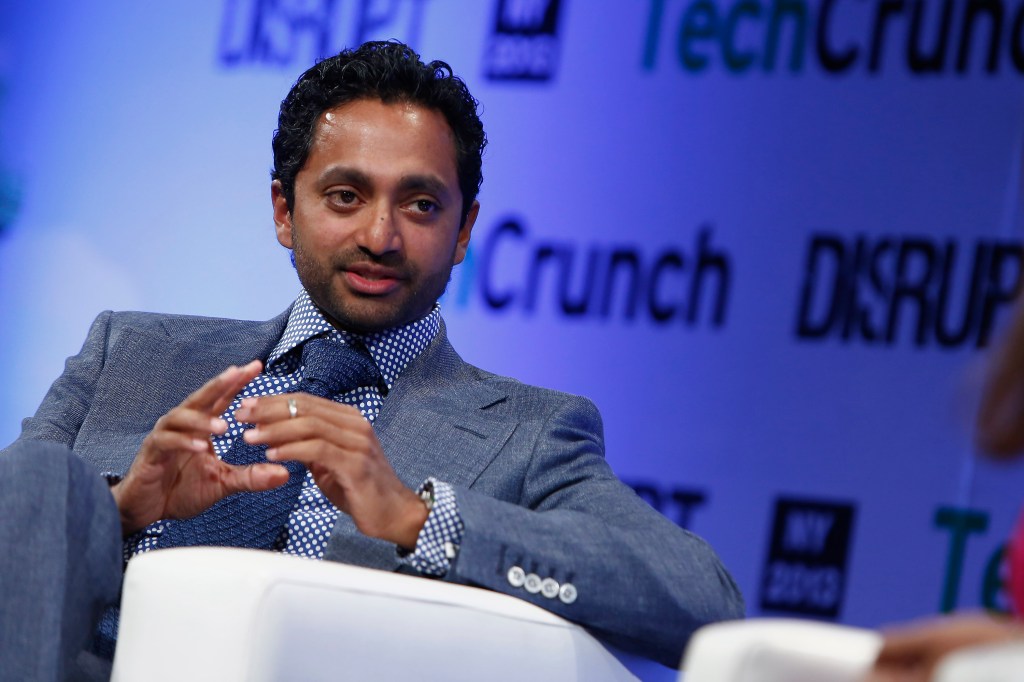
Chamath Palihapitiya has done many things since leaving Facebook: run a venture firm, front a wave of blank check deals, and host a podcast that turned market opinions into a following. What he had not done was take another full time operating job. That changed when he stepped off the board of 8090, the AI software company he founded in early 2024, to become its chief executive, a move announced alongside a 135 million dollar Series A led by Salesforce Ventures. In his words, he had been waiting for a moment like this to return, and concluded there was no decision to make except to be all in.
The framing is characteristically confident, but the substance underneath it is worth taking seriously. Investors who have watched the AI coding market fill with copilots and autonomous agents were still willing to write a nine figure check into a company betting on a different shape of product. Salesforce Ventures leading, with Craft Ventures, WndrCo, The Production Board and Launch alongside, is not a signal that the category is settled. It is a signal that the largest software vendors think the way enterprises actually buy and run software is still up for grabs, and that 8090's answer is credible enough to fund at scale.
What a software factory actually is
8090's product is what the company calls a Software Factory, a governed, multiplayer platform where teams of people and coordinated AI agents build and change enterprise software together. The distinction it draws is between generating code and delivering a working system. Alongside the platform, 8090 runs a delivery business that designs, builds, hosts and operates custom systems for large companies, particularly in regulated industries. The output is meant to be production software that someone is accountable for, not a scaffold a developer still has to finish.
That positioning is a deliberate rebuke to the prototype problem that has dogged AI coding. It is easy to get a model to produce something that demos well and hard to get something that survives contact with a compliance review, a security audit and a decade of maintenance. By wrapping agents in audit trails and human led oversight, 8090 is arguing that the hard part was never the code generation. The hard part is everything around it: the controls, the traceability, the operational ownership that lets a bank or an insurer put agent built software into production without inheriting a black box.
The bet against the copilot
The dominant model in AI assisted development has been the copilot, a tool that makes an individual engineer faster inside the editor. It is a genuine productivity gain and a large market. But it leaves the shape of software development untouched: humans still own the whole pipeline, and the assistant shaves time off discrete tasks. 8090's wager is that this is the timid version of the opportunity. If agents can be coordinated and governed well enough, the unit of work stops being the keystroke and becomes the feature, or the system.
We are skeptical of any claim that developers are about to be replaced, and 8090's own emphasis on human led oversight suggests it is too. The more defensible reading is that the company is selling outcomes rather than acceleration. An enterprise that buys a copilot still has to staff, manage and maintain a full engineering effort. An enterprise that buys a factory is buying the finished result, with the vendor absorbing the coordination. Whether that model holds up economically, against the messy reality of enterprise requirements, is the question the 135 million dollars is meant to answer.
Why Salesforce wrote the check
Salesforce Ventures leading the round is not incidental. Salesforce has spent the past two years repositioning itself around agents, from Agentforce in its own applications to a broader thesis that enterprises will run fleets of them. A company that can reliably produce and operate custom enterprise software with coordinated agents is both a validation of that thesis and a potential complement to it. The strategic logic is easier to see than the pure financial return, which is often how corporate venture arms end up leading rounds in adjacent infrastructure.
For 8090, the backing brings more than capital. It brings a distribution relationship with a vendor whose customers are exactly the regulated, complex enterprises the Software Factory is designed to serve. That said, corporate money carries its own gravity. A startup closely associated with one platform can find its addressable market quietly narrowed to that platform's orbit. The angel roster, which includes Palo Alto Networks chief executive Nikesh Arora and Quora's Adam D'Angelo, suggests 8090 is trying to keep its options broader than a single strategic patron would imply.
Regulated industries as the wedge
8090's explicit focus on regulated industries is the most telling part of its strategy. Banks, insurers and healthcare systems are the hardest customers to sell AI generated software to, because they carry the most exposure if it goes wrong. They are also the customers with the deepest backlogs of aging, custom systems that are expensive to maintain and risky to replace. If a governed factory can modernize those systems with a paper trail auditors accept, the willingness to pay is enormous, precisely because the alternative is so painful.
Leading with the hard segment is a defensible go to market choice. Win credibility where the bar is highest, and the easier segments follow. It is also a filter on the product itself. Governance, audit trails and operational reliability are not features you can bolt on later for a regulated buyer; they have to be foundational. By anchoring on that buyer from the start, 8090 forces its own platform to clear the toughest requirements first. The risk is that regulated sales cycles are long and reference driven, which means the 135 million dollars may need to fund a lot of patience before it funds a lot of revenue.
The governance question that decides it
Everything about 8090's pitch reduces to a single question: can coordinated agents produce software that a regulated enterprise will trust in production, with enough traceability to satisfy an auditor and enough reliability to operate for years? If the answer is yes, the company is selling something copilots cannot, a genuine shift in who does the building. If the answer is not yet, it is a well funded delivery shop with an agent flavored toolchain, which is a real business but a smaller one than the vision implies.
We will know within a few product cycles which it is. The tell will be reference customers in banking or insurance who put agent built systems into production and talk openly about it, not demos and design partners under embargo. Palihapitiya's return to an operating seat guarantees the effort will not lack for conviction or visibility. Conviction has never been the constraint in AI. The constraint is whether the governance is real, and on that, 135 million dollars buys a serious attempt but not an answer.