A departure at an inflection point
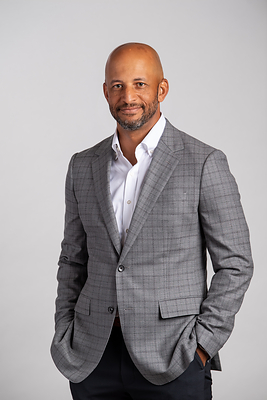
Phil Wiser is stepping down as chief technology officer of Paramount after more than seven years, one of the longer tenures in a media technology job that has become notoriously turbulent. The timing is what makes the move notable. Wiser's exit lands just as Paramount absorbs its acquisition of Warner Bros. Discovery, a transaction that emerged from a lengthy bidding war and is set to close in the third quarter of 2026. A technology leader is leaving precisely as the largest technical integration in the company's recent history begins.
Executive departures at inflection points always invite interpretation, and the honest reading is usually less dramatic than the speculation. A leader who has spent seven years building something may reasonably conclude that the next chapter, a multi year integration slog, is a job for someone else. Wiser is not disappearing into a rival; he plans to launch an advisory company, the classic move of an operator who wants to trade the grind of a single company for a portfolio of them. Still, the handoff leaves Paramount searching for a technology chief at the moment it can least afford ambiguity about who owns the roadmap.
The transformation he leaves behind
The substance of Wiser's tenure is more interesting than the timing of his exit. Under his leadership, Paramount moved more than 95 percent of its compute and data to cloud native infrastructure, a wholesale migration that many legacy media companies have attempted and few have finished at that scale. He also drove an enterprise wide deployment of Oracle Fusion cloud applications, standardizing the back office systems that a sprawling entertainment company runs on. Those are not glamorous projects, but they are the ones that determine whether a company can move quickly a decade later.
For a media business, that foundation is strategically consequential. The economics of streaming, content production and distribution increasingly depend on how cheaply and flexibly a company can run its infrastructure. A CTO who leaves behind a mostly cloud native estate and a standardized enterprise application layer hands his successor a platform to build on rather than a mess to untangle. The value of that work tends to be invisible until an acquisition forces two technology estates together, which is exactly the test Paramount is about to run.
AI ahead of the industry curve
Wiser framed his own legacy around artificial intelligence, and did so with some confidence. Paramount, he said, embraced AI capabilities across the workforce well ahead of industry norms, leaving the company well positioned for the current wave of disruption. Media has been one of the industries most visibly unsettled by generative AI, from production workflows to the existential debates about content and rights, and a technology organization that adopted early has a real head start on the ones still forming committees.
The claim is worth taking at face value while noting what it does not resolve. Adopting AI capabilities across a workforce is a genuine achievement, but the disruption Wiser references is only beginning, and the hard questions, about rights, about the economics of AI generated content, about how much of the creative process to automate, will be answered on his successor's watch, not his. Leaving a company well positioned is a fair summary of infrastructure and tooling. Whether that position translates into advantage depends on decisions still to be made, by leaders still to be named.
The integration challenge for his successor
Whoever inherits the CTO role walks into a defined and difficult agenda. Paramount is consolidating three streaming services, Paramount Plus, Pluto TV and BET Plus, into a unified platform, a project that is technically demanding and commercially urgent in equal measure. Layered on top is the integration of Warner Bros. Discovery, which brings its own technology estate, its own streaming assets and its own accumulated decisions to reconcile. Merging two large media technology organizations is among the least forgiving jobs in enterprise IT.
The absence of a named successor sharpens the concern. Big integrations reward continuity and punish drift, and a leadership vacuum at the top of the technology organization during the opening phase of a merger is a risk in itself. The work Wiser leaves behind, the cloud native base and the standardized applications, makes the task more tractable than it would otherwise be. But making a task tractable is not the same as making it easy, and the person who takes it on will be judged on an integration whose hardest choices arrive early. Paramount's next move, filling the seat quickly and credibly, will say a great deal about how seriously it takes the technical stakes of its own deal.
What a media CTO job looks like now
Wiser's tenure is a useful marker of how much the media technology role has changed. Seven years ago the job was largely about digital distribution and keeping streaming platforms running. Today it spans cloud economics, enterprise application strategy, workforce wide AI adoption and the technical due diligence of multi billion dollar acquisitions. The remit has expanded from running the pipes to shaping the strategy, and the tenure of the people in the seat has generally shortened as the pressure has grown.
That expansion is why the role has become so hard to fill and to hold. The modern media CTO has to be fluent in the traditional concerns of reliability and cost while also being credible on AI and mergers and acquisitions, a combination that few executives possess and fewer still want to sustain for years. Wiser's more than seven years is, in that light, an outlier worth noting. The norm is churn, and the churn reflects a job whose scope keeps growing faster than any one person's appetite to own all of it.
The advisory move and what it signals
Wiser's stated plan, to launch an advisory company, is a familiar trajectory for a senior operator, but it carries a signal worth reading. Executives who have finished a large transformation and see the next phase as execution rather than creation often conclude that their comparative advantage lies in advising many companies at once rather than running one. The advisory path lets a leader monetize accumulated judgment without re signing for another multi year tour of duty. It is a rational choice, and an increasingly common one at the top of enterprise technology.
For Paramount, the departure closes a chapter and opens a question. The company inherits a modernized foundation and a leadership gap at the same moment, and the market will watch how it resolves the second without squandering the first. For the broader industry, Wiser's move is one more data point in a pattern of long tenured transformation leaders stepping back just as their work is about to be stress tested by integration. The people who build the platform and the people who merge it are, more and more, not the same people. Paramount is about to demonstrate whether that handoff can be made cleanly.