Why a Transport Hub Retailer Picked AI Headsets Over More Self-Checkout
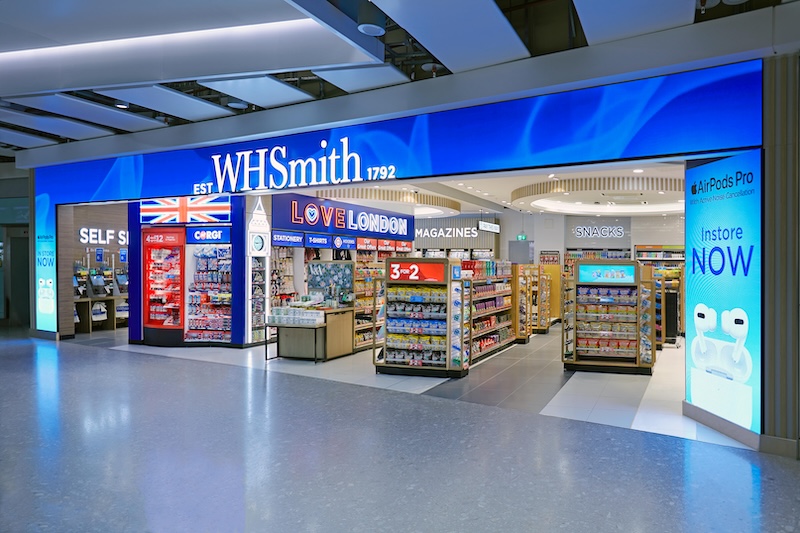
Most retail AI investment headlines go to checkout automation, personalization engines or agentic shopping. WHSmith's latest rollout is none of those. The travel retailer is expanding x-hoppers, an AI-powered communication platform from Wildix built around wireless headsets, a web app and a smart assistant, to more than 300 UK stores after a pilot that began at Manchester Piccadilly station in late 2025. The first 32 priority locations are live now, including WHSmith's flagship Heathrow Terminal 5 store.
The choice says something about where WHSmith sees its actual bottleneck. Travel retail stores face a different operating problem than typical high street shops: unpredictable footfall spikes tied to flight and train schedules, time-pressured customers, and staff who need to react to store conditions, like a fridge temperature alert, in seconds rather than minutes. Checkout speed matters less if a customer cannot find help fast enough to decide what to buy before their gate closes.
The Pilot Numbers Behind the Rollout Decision
The Manchester Piccadilly pilot generated the kind of operational data that makes a rollout decision easy to justify internally. More than 43,000 smart notifications reached staff headsets during the pilot, covering store alerts, fridge and freezer monitoring, scheduled team updates and customer QR code alerts. That volume, at a single busy transport location, suggests the platform handled a meaningful share of the micro-coordination that previously relied on staff walking the floor or shouting across a store.
Customers generated their own data point, too: almost 1,000 help requests came through QR codes during the same pilot window. WHSmith Director of Operations Karl Stakes framed the need plainly, saying colleagues need to be able to help customers quickly, especially when stores are busy. The QR code volume is evidence that customers will use a self-service help channel when it is visible and simple, rather than waiting to flag down a staff member who may be occupied elsewhere in the store.
What a 22 Percent Sales Uplift Actually Implies
WHSmith reports a sales uplift of up to 22% in key categories since installing x-hoppers, compared with before installation. That is a large enough number to warrant scrutiny rather than acceptance at face value, but the underlying mechanism is plausible: faster staff response to customer requests and better-monitored stock conditions, like refrigerated goods, directly reduce the two most common causes of a lost sale in a convenience-format store, an unanswered question and an empty or spoiled shelf.
The category specificity matters too. An uplift concentrated in key categories rather than store-wide suggests the gain is tied to categories where staff assistance or stock freshness drives purchase decisions, food and drink most plausibly, rather than a blanket halo effect from better store operations generally. For a CTO evaluating a similar investment, that distinction separates a platform that fixes a specific operational weak point from one that simply correlates with a generally improving store.
The Delivery Driver Detail Most Retailers Would Have Missed
The most underrated feature in this rollout is that the same QR code system customers use for help requests also lets delivery drivers contact store teams directly, reducing drop-off delays. Most retail communication platforms are designed around either customer-facing or staff-facing workflows, rarely both, and almost never extended to include external logistics partners as a third user group with their own time-sensitive need to reach someone inside the store quickly.
Folding delivery coordination into the same system that handles customer help requests and fridge monitoring alerts is a sign of thoughtful platform design rather than feature bloat. A driver waiting at a loading dock for someone to notice them is a hidden cost that rarely shows up in a retailer's own operational metrics, because it is absorbed by the courier's schedule rather than the store's. Solving it anyway, through infrastructure built for a different purpose, is the kind of efficiency gain that is easy to overlook in a business case and hard for a competitor to replicate quickly without the same deliberate, cross-functional design work behind it.
Why Travel Retail Locations Were the Proving Ground
WHSmith's choice of Manchester Piccadilly for the pilot and Heathrow Terminal 5 as the flagship rollout site was not incidental. Both are among the busiest, highest-pressure retail environments WHSmith operates, with footfall patterns dictated by transport schedules rather than typical retail hours. Proving a communication platform works under those conditions is a stronger validation than testing it in a quiet suburban branch, where staff have more slack time to compensate for any gaps in the technology.
That sequencing choice is worth copying for any retailer piloting new store technology. Testing in the hardest environment first front-loads the risk of a failed pilot, but it also means a successful result carries more weight when making the case for a 300-store rollout. A platform that performs at Heathrow Terminal 5 during a holiday travel surge has already passed a harder test than most retail locations will ever present.
The Budget Case This Makes for Store Communication Technology
Store communication platforms rarely get the budget attention that checkout or ecommerce technology does, because the return on investment is harder to isolate. WHSmith's rollout gives other retail technology leaders a template for making that case internally: run the pilot in the most demanding location available, track both staff-side notification volume and customer-side engagement, like the QR code requests, and tie the result to a specific sales metric in the categories most likely to be affected.
The broader lesson is that in-store operational technology, alongside the customer-facing AI and agentic commerce infrastructure getting most of the attention, is still delivering measurable returns when deployed well. WHSmith's 300-store commitment, backed by a documented pilot with real notification volumes and a sales uplift figure, is a reminder that the unglamorous layer of retail technology, keeping staff informed and customers served quickly, still moves revenue when it works, and still deserves a seat at the table when next year's technology budget gets built.