Two Hours That Showed the Real Cost of Downtime
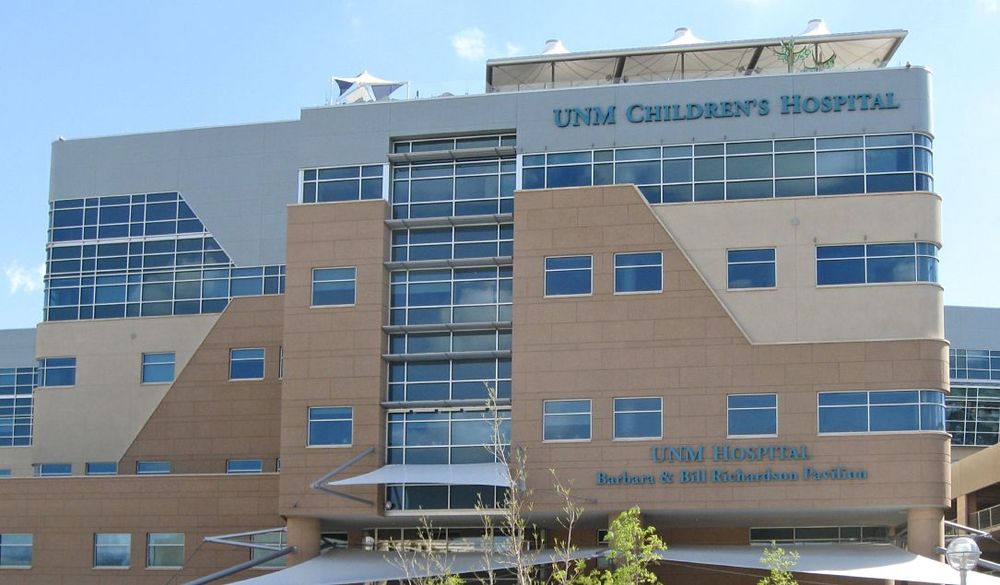
On Monday, the University of New Mexico Health System's IT team detected a cyberattack and moved fast enough to send a phone alert to employees telling them to power off and unplug every desktop and disconnect mobile devices from hospital Wi-Fi. Ambulances were diverted for roughly two hours to hospitals in Albuquerque and Santa Fe while the system assessed what it was dealing with. Outpatient surgeries and appointments scheduled for the rest of Monday were suspended outright.
The Health System began bringing systems back online late Monday afternoon and confirmed appointments would resume as scheduled on Tuesday. Two hours of ambulance diversion sounds brief next to incidents that take entire hospital networks offline for weeks, but it is long enough to matter for a trauma system that cannot simply wait for triage. UNM operates the state's only burn unit, its only children's hospital, and its only Level 1 trauma center, which means the diversion window had nowhere soft to land.
A Campus-Wide Shutdown, Not Just a Hospital Incident
A university spokesperson confirmed the threat was affecting the entire University of New Mexico Health Sciences Center, not just the hospital system that is one part of it. Classes at the School of Medicine, the College of Nursing, the College of Pharmacy, and the College of Population Health were canceled Tuesday, including online and remote sections. Academic and research units closed for the day, and nonessential Health Sciences Center employees were told to stay home.
That scope is the part worth sitting with. A ransomware incident that starts in a hospital's clinical network rarely respects the organizational boundary between patient care and the academic mission sitting on the same infrastructure. For any CIO overseeing a combined health system and university campus, or any PE-backed operator running a medical education or training business alongside clinical operations, this is the architecture question: does an incident in one domain have a clean firebreak before it reaches the other, or does it all go down together.
BYOD Is New, and That Is the Scary Part
The spokesperson declined to confirm whether the incident was ransomware, citing an active law enforcement investigation. That did not stop a group calling itself BYOD from claiming the attack Monday evening, asserting it had compromised 36,000 machines across UNM's main campus and hospital and stolen data on students, patients, and employees. None of those figures are independently verified, and claims on a leak site exist to pressure a victim into paying, not to inform the public accurately.
What makes this claim harder to evaluate than a claim from an established group is that BYOD only emerged last month. Researchers have little history to draw on, no established pattern of follow-through on data leaks, and no reliable baseline for how much of its stated victim count tends to be real. Security teams across healthcare are now forced to treat an unknown quantity as a credible threat simply because it says it struck a hospital, which is precisely the asymmetry that makes ransomware extortion effective.
Why Safety-Net Hospitals Make Such Attractive Targets
UNM Health System serves a large share of New Mexico's uninsured population and runs infrastructure the state has no real backup for. A burn unit, a children's hospital, and the only Level 1 trauma center in the state cannot simply redirect to a comparable facility the way a routine appointment can, because there is no equivalent facility within reasonable distance to redirect to. That lack of redundancy is exactly what gives an attacker leverage, because the operational pressure to restore service quickly is far higher than at a hospital with regional alternatives nearby, and attackers who study their targets know it.
Ransomware operators have learned this lesson as clearly as any security researcher studying their behavior has. Safety-net and academic medical centers carry the dual burden of being underfunded relative to their clinical importance and uniquely hard to take offline without visible, immediate public harm. That combination has made hospitals a disproportionately common target throughout 2026, and nothing about how quickly BYOD claimed credit here suggests the underlying incentive structure driving these attacks is changing anytime soon.
This Is the Second State Hospital System This Year
UNM's incident follows the University of Mississippi Medical Center shutdown in March, the other major state academic hospital system to go down from a cyberattack in 2026. The same week as UNM's attack, Columbia, South Carolina faced a separate ransomware incident that took down dozens of city systems, underscoring that public-sector and public-health infrastructure is absorbing a steady drumbeat of these incidents rather than isolated shocks that each warrant their own one-time explanation.
The pattern across these cases is consistent: state-funded institutions running decades-old infrastructure investment gaps, serving populations with few practical alternatives, and operating under public disclosure rules that make every incident visible almost immediately once it happens. That combination makes these organizations easier to target precisely because the underlying investment gaps are difficult to close quickly, and attackers who track public-sector breach disclosures for a living have clearly noticed the same pattern we have.
What Healthcare and Public-Sector CIOs Should Take From This
Another incident like this will happen again this year somewhere in the country, which makes the useful question less about prevention alone and more about readiness. The decision facing healthcare and public-sector technology leaders is whether incident response plans account for the full blast radius this case revealed, spanning clinical operations, academic calendars, and ambulance routing simultaneously, rather than treating hospital cybersecurity as a clinical-systems problem with a clean boundary drawn neatly around it.
We would also flag the BYOD angle specifically: when a new, unverified group claims credit for an attack on critical infrastructure, the right response is neither to dismiss the claim nor to treat it as confirmed fact. It is to assume the worst case is plausible enough to act on while publicly declining to validate numbers the group has every incentive to inflate. UNM's measured, limited public statements so far are a reasonable template for that balance.