From pilot to population coverage
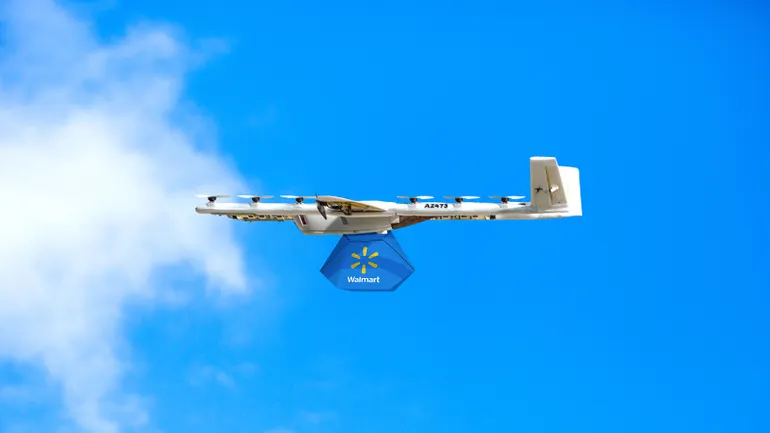
Walmart and Wing began drone delivery operations in Florida's Greater Orlando area from two Walmart locations in Apopka and Clermont. The initial launch already covers more than 50,000 homes, businesses, and apartment buildings in Central Florida, a scale that moves this well past the single-store demonstration projects that defined earlier drone delivery experiments. Greg Cathey, Walmart's senior vice president of e-commerce fulfillment transformation, said working with Wing lets Walmart bring Orlando customers a wide assortment of everyday items through one of the fastest and most innovative delivery options available.
Deliveries arrive in as fast as 30 minutes, with packages lowered by tether once the drone reaches its destination rather than requiring a landing. Wing is expanding to three additional Walmart stores in Ocoee, Clermont, and Haines City in the coming weeks, and the current flight speed of up to 60 miles per hour is what makes the 30-minute window plausible across a coverage radius this wide. That combination, speed plus tether-based delivery without a landing zone, is what separates a workable suburban drone network from the more constrained urban rooftop pilots other companies have run.
The payload number is the constraint that matters
Current payload capacity sits at up to 2.5 pounds per flight, with a planned increase to five pounds. That ceiling defines the category mix drone delivery can realistically serve today: convenience items, small grocery baskets, over-the-counter health products, and single-item replenishment, not a full weekly shop or bulky goods. Retail technology leaders evaluating whether drone delivery is a genuine channel or a marketing exercise should anchor on that number rather than the delivery time. A 30-minute delivery window is only valuable if the basket size matches what a household actually needs in that moment, and 2.5 pounds narrows that use case considerably.
The planned move to five pounds roughly doubles the addressable basket and is the threshold at which drone delivery starts overlapping meaningfully with the low end of traditional last-mile grocery delivery rather than sitting purely in the convenience niche. Any retailer sizing up a drone delivery investment should model the unit economics at both payload tiers separately, since the addressable order value, and therefore the revenue per flight, shifts substantially between them.
270 stores by 2027 is an infrastructure commitment, not a pilot extension
The partnership's stated goal of covering more than 270 Walmart locations by 2027, with additional markets including New Orleans, Philadelphia, Phoenix, San Diego, the San Francisco Bay Area, Salt Lake City, and Memphis, signals this has moved past pilot status internally at Walmart. Reaching that store count in roughly eighteen months requires committed capital for drone fleets, airspace coordination with the FAA across multiple metro areas, and store-level operational changes to support launch and staging, none of which a company signs up for on a whim. This is Walmart building physical delivery infrastructure the way it has historically built distribution centers: methodically, market by market, with a public multi-year target attached.
The market selection pattern is also worth noting. Orlando, Phoenix, and San Diego share Sun Belt geography with fewer weather disruptions to flight operations than northern markets, while Philadelphia and the Bay Area bring urban density that will stress-test the model differently. A retailer building its own logistics roadmap should read the sequencing as deliberate: prove the model in favorable conditions first, then expand into markets that test different constraints, rather than launching everywhere simultaneously.
Why Walmart is betting on a partner instead of building in-house
Wing, an Alphabet company, brings years of drone delivery operating experience and existing regulatory relationships that would take a retailer years to replicate independently. Walmart's decision to partner rather than build its own drone fleet mirrors its broader logistics strategy of using specialized partners for capability it does not need to own outright, while keeping the customer relationship, store footprint, and fulfillment orchestration in-house. That is the correct build versus buy call for most retailers evaluating drone delivery: the regulatory and flight-operations expertise required is not a core competency worth building from scratch when a capable partner already exists.
The dependency risk cuts the other way, though. A retailer scaling to 270 stores on a single drone partner is making a multi-year bet on that partner's continued investment, regulatory standing, and operational reliability. Any CTO weighing a similar partnership should build contractual protections and a credible fallback plan for coverage gaps, because unwinding a drone delivery partnership at that scale would be far more disruptive than unwinding a software vendor relationship.
The competitive read for grocery and general merchandise
Walmart is not alone in pursuing autonomous last-mile delivery; DoorDash has been expanding its own drone and robot delivery programs for grocery orders. What distinguishes Walmart's approach is the tight coupling to its own store footprint rather than a third-party marketplace model, which gives Walmart more control over the customer experience and the margin structure, but also means the payoff is entirely tied to Walmart's own store density in each new market. Retailers without Walmart's store count per metro area do not have an equivalent path to replicate this model without a delivery marketplace partner.
For competitors watching from the sidelines, the relevant signal is not the drone technology itself but the pace of commitment. Walmart moved from a two-store Florida launch to a public 270-store, multi-year target in the same announcement. That is a company treating drone delivery as core infrastructure rather than an innovation lab experiment, and competitors that continue to treat it as the latter risk ceding an entire delivery category before they have even finished their own pilot phase.