The Anatomy of a Worm That Feeds Itself
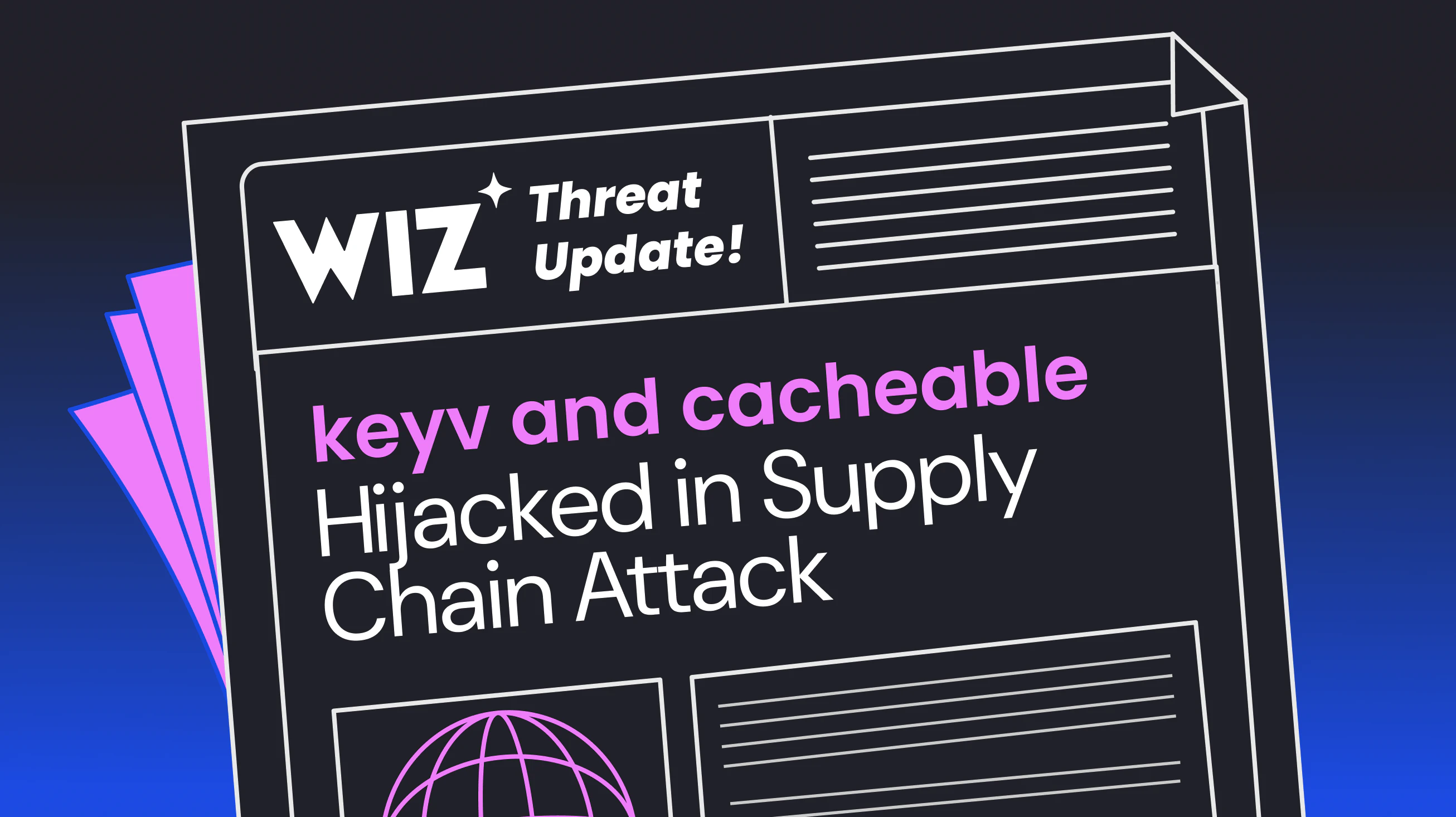
Microsoft's security research team published the technical breakdown on August 4, and the mechanics explain why this worm spread so fast. ChainDrop starts with one compromised GitHub maintainer account, according to Wiz's analysis of the keyv and cacheable namespaces. From there, a heavily obfuscated Bun-based JavaScript payload executes automatically through npm's preinstall lifecycle hook, before a developer's install even finishes. The payload steals that developer's npm publishing token, then uses it to look up every package the stolen identity can publish to.
It downloads the latest tarball for each of those packages, inserts its own malware and setup loader, adds the same preinstall hook, bumps the patch version, and republishes. Microsoft counted more than 400 affected packages across unrelated publishers within days. Security Boulevard's weekly breach roundup put the count at 2,234 malicious versions across 444 packages by August 7, which means the worm kept multiplying for the better part of a week before enough of the ecosystem noticed and responded.
Why This One Targets Your AI Coding Tools
What separates ChainDrop from earlier npm worms is the target list. Wiz found the payload now authenticates against Claude, OpenAI, and Codex credentials in addition to the usual npm, GitHub, AWS, Kubernetes, and HashiCorp Vault tokens, an expansion of roughly 70 percent over prior campaigns in the same malware family. Microsoft confirmed the worm also attempts to install persistence directly into Claude Code hooks and VS Code's tasks.json file, meaning a compromised developer machine can keep re-executing the payload every time that developer opens their editor or runs an AI coding assistant.
The worm exfiltrates stolen data over attacker-controlled HTTPS endpoints, with a GitHub fallback channel if the primary route is blocked. It also pulls command-and-control domains from an Ethereum smart contract, a dead man's switch that lets operators rotate infrastructure without touching the malware binary itself. Researchers found an intimidation string embedded in the worm's initial commits, warning defenders that blocking its API key would crash production servers for unrelated third-party clients, a bluff aimed squarely at slowing incident response.
The Pattern Nobody Wants to Admit
ChainDrop is not an isolated event. Unit 42's tracking of npm supply chain attacks in 2026 shows a TanStack-adjacent compromise in May that touched 520 million cumulative downloads, a wave against antv packages that same month publishing 639 malicious versions across 323 packages in roughly one hour, a Red Hat-maintained package compromise in June affecting around 80,000 weekly downloads, and five trojanized AsyncAPI packages in July. ChainDrop is the same family, evolving each time to steal more and hide better.
For a CTO, the uncomfortable read is that npm's trust model, where a single maintainer credential can cascade into hundreds of downstream packages within hours, has now failed publicly five times in one year against some of the most widely depended-upon libraries in the JavaScript ecosystem. Waiting for the ecosystem to fix this at the registry level is not a plan. It is a bet against your own supply chain that keeps losing.
What Microsoft Is Telling Customers to Do
Microsoft's guidance is specific rather than aspirational. Update the npm CLI to version 12, which changes how lifecycle scripts execute by default. Review dependency trees for any of the flagged package names and versions. Rotate credentials, but do it from a clean host, since rotating from a compromised machine just hands the worm your new secrets. Rebuild affected projects from known-good baselines rather than assuming a patch alone removes the malware, and enable Defender-class protections that can catch preinstall script abuse in real time. Microsoft's own researchers, Ravikant Tiwari, Sagar Patil, and Suriyaraj Natarajan, published the indicators of compromise alongside the guidance so security teams could hunt for them directly.
Most enterprises already own the tooling to execute all five of those steps today. The gap is usually a trigger that fires fast enough and a dependency inventory current enough to act within the hours that matter, before a worm like this republishes itself across a dependency tree a second and third time. Treat this incident as a live test of that response time, then measure how long it actually took your team to move from disclosure to a completed credential rotation.
The Build vs Buy Question for Dependency Risk
Software composition analysis tools exist precisely for this scenario, and most enterprises already pay for one. The question worth asking this week is whether that tool alerts on preinstall and postinstall script changes specifically, because ChainDrop was novel malware with no CVE to match against when it started spreading. A tool that only flags disclosed vulnerabilities will miss the next worm just as it missed this one for several days, and that gap is exactly where the damage accumulates before anyone notices. Ask your vendor to show you the alert history for lifecycle-script anomalies over the past ninety days as a baseline for how well the tool actually performs outside of marketing claims.
If your current vendor cannot answer that question with a specific feature name, treat it as a renewal conversation rather than a shrug. The build-versus-buy calculus here favors buying, but only from the subset of vendors that treat lifecycle-script behavior as a first-class signal rather than an afterthought bolted onto a CVE scanner. Ask for a live demonstration against a sample preinstall hook before the next contract renewal, and make the answer part of the scorecard alongside price and integration effort. Vendors that cannot show this in a live session are telling you something important about where their engineering priorities actually sit.
What We'd Tell a CTO Monday Morning
Pull a list of every package your CI/CD pipeline installs that touches the keyv, cacheable, flat-cache, or cache-manager namespaces, and check versions against Microsoft's disclosure. Then go further and audit whether your build pipeline allows preinstall and postinstall scripts to run at all, and if it does, confirm whether that is a deliberate decision or an inherited default nobody has revisited in years. Most teams find it is the latter once they actually go looking.
The credential-theft angle deserves its own action item. If your engineers use Claude Code or similar AI coding tools, treat those credentials as a named target for supply chain malware going forward. Rotate them on the same schedule you rotate cloud and source-control credentials, and raise the priority of AI tool access to match the infrastructure it now touches. This is the kind of gap that looks small right up until it is the one an attacker used.