What Vusion actually bought
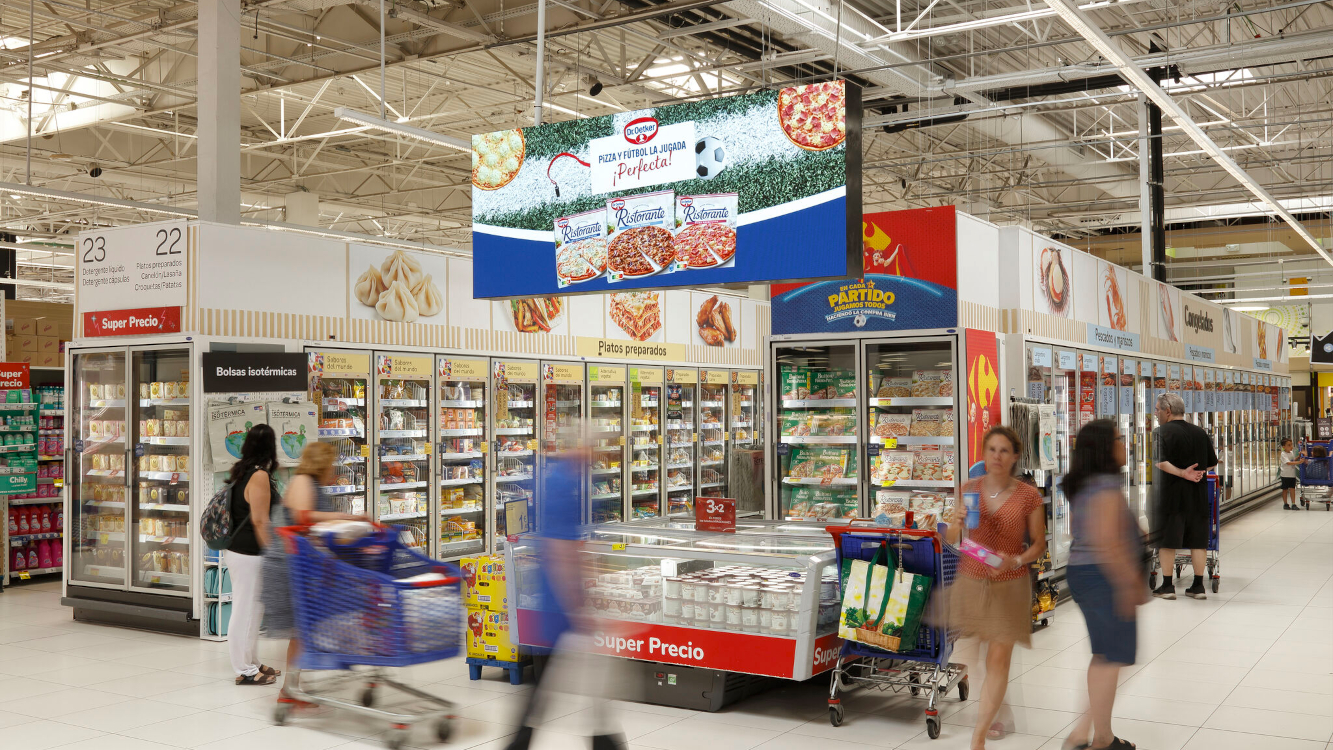
On 27 July, Vusion announced an agreement to acquire In-Store Media, a Barcelona-based company that builds and monetizes in-store retail media networks. ISM generated roughly 120 million euros of revenue in 2025 and runs advertising campaigns across 90 retail banners and more than 1,600 brands in nine countries spanning EMEA, the Americas, and Asia-Pacific. Its portfolio covers more than fifty print and digital media formats, from shelf-edge placements to in-aisle screens. Vusion frames the purchase as the missing commercial layer for its connected-store platform, which already manages the electronic shelf labels, smart rails, and store cameras that ISM's campaigns can run against.
The strategic logic is blunt. Vusion, formerly SES-imagotag, sells the hardware and cloud software that digitize physical stores for more than 350 retail groups. That estate creates a large surface of digital screens and sensors, but hardware alone does not attract advertiser budgets. ISM contributes the media sales team, campaign execution capability, and standing brand relationships that turn installed screens into sellable inventory. Vusion expects the deal to close toward the end of 2026, financed largely with debt and subject to regulatory approval. Management positioned it as accelerating retail media into a core pillar of its connected-store vision.
The numbers underneath the deal
Vusion timed the acquisition alongside a strong first-half print. Adjusted revenue reached 839 million euros in the six months to June, up 29 percent year over year and 37 percent at constant exchange rates and tariffs. IFRS revenue came in at 820 million euros, up 34 percent. The company also crossed what chairman and chief executive Thierry Gadou called a symbolic milestone: more than half a billion labels now managed through its VusionCloud platform. Full-year guidance was confirmed at 15 to 20 percent adjusted revenue growth, with a targeted improvement of more than 100 basis points in adjusted EBITDA margin.
The more revealing line sits inside value-added services. VAS revenue hit 125 million euros in the half, up 39 percent, and the recurring slice of it grew 73 percent to 61 million euros. That recurring software and services base is what makes an advertising acquisition financeable, because it gives Vusion predictable margin to service acquisition debt. ISM's 120 million euros of revenue would roughly double the size of Vusion's higher-margin services business at a stroke. The company guided VAS growth of around 40 percent for the full year, and retail media is now central to hitting that number.
Why the hardware vendor is moving up the stack
This is a build-versus-buy decision playing out in public. Vusion could have tried to build a media sales organization internally, hiring advertising talent and negotiating brand relationships from scratch. It chose to buy an operator with 1,600 brand relationships and campaign machinery already running in nine markets. For a hardware company, that is the faster path to the recurring, high-margin revenue that its investors want, and it avoids years spent learning a commercial discipline that sits far outside sensor manufacturing. Vusion did not disclose the acquisition price, and the debt-financed structure suggests it values speed to scale over balance-sheet caution.
The broader pattern matters for anyone running store technology. Retail media has been dominated by the digital estates of Amazon, Walmart, and the grocers, where onsite and offsite advertising is trivial to monetize. Physical in-store media has lagged because measurement and campaign execution were manual and fragmented. Vusion is betting that whoever controls the in-store digital hardware is best positioned to also sell the advertising that runs on it, closing the loop between shelf-edge exposure and purchase. That thesis only holds if the hardware and the media sales teams actually integrate rather than operate as two companies under one logo.
What this means for retail CIOs
If you have deployed or are evaluating electronic shelf labels, this deal reframes the business case. The classic justification for ESL rollouts was operational: dynamic pricing, labor savings, and price accuracy. Vusion is arguing that the same hardware doubles as media inventory that can generate incremental margin from brand budgets. That changes the return-on-investment math and the internal ownership question, because in-store media revenue typically sits with merchandising or a retail media team rather than with store operations or IT. CIOs signing hardware contracts should now ask explicitly whether the platform can feed a media sales workflow and how campaign data flows back into planograms.
There is also a vendor concentration risk to weigh. Committing to Vusion for both the digital store infrastructure and the retail media monetization layer is convenient, but it deepens dependence on a single supplier for two distinct capabilities. Retailers that already run separate retail media platforms will need to decide whether an integrated stack from the hardware vendor beats stitching together best-of-breed components. The answer depends on how open Vusion keeps the platform, whether ISM's campaign tooling supports third-party measurement, and how cleanly the combined offering exports data to the retailer's own systems rather than locking it inside VusionCloud.
The integration risk that decides this
Acquiring an advertising business is easy relative to operating one inside a hardware company. Media sales runs on relationships, creative services, and quarterly advertiser commitments, a rhythm that has little in common with manufacturing and deploying shelf hardware. The people, incentives, and sales cycles are different, and integrations of this kind frequently stall when the acquiring engineering culture underestimates the commercial one. Vusion has said management expects the transaction to close by year end, which means the real work of merging teams and systems only starts in 2027. The first proof point will be whether ISM's advertisers can be sold campaigns that run natively on Vusion-managed screens.
There is a regulatory gate as well. A deal that consolidates in-store media across nine countries, adding a large advertising operator to a dominant shelf-label supplier, invites scrutiny in Europe in particular. Approval is not guaranteed on the current timeline, and any remedies could reshape the economics. Retailers mid-deployment have no reason to pause their plans, though they should build optionality into contracts so that a delayed or restructured close does not strand their roadmap. The prudent read is to treat the retail media capability as promising upside rather than a committed feature until the acquisition actually clears and the combined platform ships.
The read
Vusion is executing a coherent strategy: own the digital surfaces inside the store, then own the advertising that runs across them. The financials give it room to try, with recurring services growing fast enough to service the debt behind the deal. For the retail media category, it is a signal that in-store advertising is finally getting the campaign infrastructure that made onsite digital media a multibillion-dollar business. The retailers who deployed connected-store hardware for operational reasons now hold an asset that a well-run media business can monetize on their behalf.
The caution is that strategy on a slide is not the same as an integrated product in a store. The gap between managing half a billion shelf labels and selling half a billion euros of advertising is a commercial and organizational one, and it is where deals like this succeed or quietly disappoint. Retail leaders evaluating the combined offering should demand evidence of live campaigns, open measurement, and clean data portability before treating Vusion as their retail media platform. Watch the 2027 execution, not the 2026 announcement, to judge whether the hardware vendor genuinely became a media company.