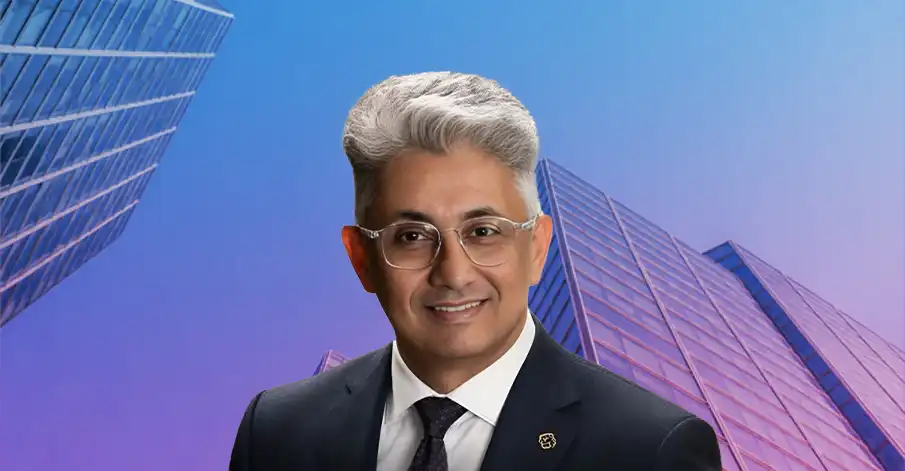
A CIO hire built for omnichannel scale
Vijay Sales, one of India's larger consumer electronics retailers, said on July 31 that it has appointed Ranjit Satyanath as chief information officer. He takes charge of the company's technology and digital initiatives as the retailer expands its omnichannel business across the country. In the role, Satyanath oversees digital transformation, enterprise technology strategy, and IT operations, with a specific charge to advance omnichannel retail capabilities, upgrade the technology infrastructure, and improve both customer-facing and business-facing platforms. For a retailer competing against pure-play e-commerce and other physical chains, a dedicated CIO with this scope is a statement about where leadership believes the next phase of growth comes from.
The appointment fits a pattern we have tracked across retail: the CIO role is being elevated from operational IT steward to a strategic seat that owns the customer journey across stores, web, and app. Electronics retail in particular is unforgiving, with thin margins, price-sensitive shoppers who compare across channels in real time, and inventory that depreciates quickly. Winning requires tight integration between physical stores and digital channels so that pricing, availability, and fulfillment stay consistent everywhere. Vijay Sales bringing in a senior technologist to own that integration end to end suggests it understands the problem is architectural, not cosmetic, and cannot be solved with a bolt-on app.
From the Taj group to the shop floor
What makes Satyanath's profile interesting is where he comes from. Before Vijay Sales, he served as senior vice president of IT and digital at The Indian Hotels Company, the Tata-owned operator of the Taj brand, where he managed enterprise technology platforms including SAP, property management systems, point-of-sale, CRM, web, martech, analytics, and AI initiatives across a global hospitality footprint. Hospitality and retail share a core problem: both live or die on the quality of the customer relationship and the systems that manage it. A CIO who has built CRM, martech, and analytics stacks for a premium hotel group brings hard-won experience in personalization and loyalty that maps directly onto modern retail.
The crossover is not accidental. Hospitality has spent years refining the technology of knowing the customer, anticipating needs, and delivering consistent service across properties. Retail is trying to do the same across channels. The systems overlap heavily, including CRM, loyalty, point-of-sale, and the analytics layer that ties them together. Satyanath's experience running these platforms for a brand where customer experience is the entire value proposition is a credible foundation for building the same discipline in electronics retail, where the customer relationship has historically been more transactional. We would expect loyalty and personalization to feature early in his agenda given that background.
Three decades across three industries
Satyanath brings more than thirty years of technology leadership spanning retail, hospitality, and banking, and the retail portion of that history is directly relevant. He previously served as chief technology officer at Hippo Homes, head of technology operations at Croma, the electronics retail chain operated by Infiniti Retail, and in senior technology roles at Crossword Book Stores and Shoppers Stop. He also held a chief manager position at ICICI Bank. That Croma tenure is especially notable, since it means he has already run technology operations inside Indian electronics retail, the exact category Vijay Sales competes in, and understands its operational realities firsthand.
For technology leaders, the value of a multi-industry resume is worth examining honestly. Breadth across retail, hospitality, and banking can be a genuine asset, because each sector has solved problems the others are still wrestling with, and a leader who has seen banking's rigor around data and security, hospitality's discipline around customer experience, and retail's obsession with inventory velocity can synthesize the best of each. The risk with cross-industry hires is shallow context in any one domain. Satyanath mitigates that risk by having spent significant time inside retail specifically, including the electronics segment, so this reads as a leader returning to a familiar category with broadened perspective.
The omnichannel execution problem
The hard part of Satyanath's mandate is omnichannel, and it is harder than the word suggests. True omnichannel retail requires a single view of inventory across stores and warehouses, consistent pricing and promotions across channels, order orchestration that lets customers buy online and pick up in store or return anywhere, and a data layer that stitches the customer's behavior together no matter where they shop. Most retailers claim omnichannel capability and deliver a fragmented reality where the app, the website, and the store run on disconnected systems. Closing that gap is expensive, slow, and organizationally painful because it forces store operations and digital teams to share systems and data they have historically owned separately.
This is where a CIO with real infrastructure experience earns the title. The unglamorous work of integrating point-of-sale, e-commerce, inventory, and CRM into a coherent architecture is what actually enables the customer-facing features that marketing wants to announce. Satyanath's explicit charge to upgrade infrastructure alongside advancing omnichannel capability suggests Vijay Sales understands the sequencing: you cannot deliver a seamless customer experience on top of fragmented back-end systems. We would watch whether the early work focuses on that foundational integration rather than on visible front-end features, because the retailers that get omnichannel right almost always fix the plumbing before they redecorate the storefront.
What the hire says about retail technology
Zooming out, the appointment reflects a maturing view of technology leadership in physical retail. For years, brick-and-mortar retailers treated IT as a support function and ceded the digital narrative to e-commerce natives. The retailers now competing effectively are those that recognized their store network is an asset in an omnichannel world, and that unlocking it requires senior technology leadership with a mandate to integrate rather than to keep the lights on. Vijay Sales seating a CIO with this pedigree on the technology strategy is part of that shift, and it mirrors moves we have seen across retail globally as chains fight to keep their physical footprint relevant against online rivals.
For CIOs watching from other markets, the lesson is about talent sourcing and mandate. Some of the most valuable retail technology leaders come from adjacent industries that solved customer-experience and data problems earlier, and the best of them pair that breadth with genuine retail operating experience. Just as important is the mandate: a CIO hired to advance omnichannel and modernize infrastructure needs authority over the systems and the organizational will to force integration across siloed teams. Vijay Sales has made the hire and defined the scope. The execution over the next few years will determine whether it becomes a competitive edge or another well-intentioned reorganization.