A deputy CEO adds the CIO title
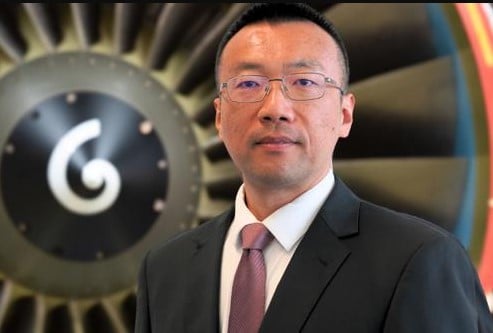
SR Technics confirmed on July 31 that XiaoLei Guo, known as Kevin, will become chief information officer effective August 1, 2026, while continuing in senior leadership at the maintenance, repair, and overhaul provider. Guo joined the company in 2025 as deputy chief executive and now takes on IT strategy across the organization, with the mandate centered on digitalization, artificial intelligence, and high-quality IT service delivery in support of operational performance and business growth. He brings more than 20 years of aerospace leadership, most recently as a vice president at HNA Aviation Technic, where his portfolio spanned technical services, production planning, aircraft painting, and IT operations. The appointment expands an existing executive's role rather than importing a new face.
The structural signal here is worth naming plainly. SR Technics chose to hand its technology agenda to a leader who already runs parts of the business, not to a career CIO recruited from another airline or an outside technology firm. In an MRO operation, where uptime, parts logistics, and regulatory documentation drive the economics, technology exists to serve the shop floor. Placing IT under an executive who understands hangar operations tightens the link between systems and the work they support. The risk is equally clear. A business-first CIO can under-invest in the unglamorous technology foundations, security, data architecture, and platform modernization, that do not show up on a quarterly operations dashboard.
Why an MRO puts operations at the center of IT
Aircraft maintenance is a documentation business as much as a mechanical one. Every part swapped, every inspection signed off, and every airworthiness directive closed generates records that regulators can audit years later. That reality shapes what an MRO needs from technology: reliable systems of record, traceability across the supply chain, and tooling that speeds turnaround without cutting corners on compliance. A CIO who has lived inside technical services and production planning knows exactly where the paperwork bottlenecks sit and which digitalization projects would actually shorten a maintenance check. That operational fluency is the strongest argument for handing the seat to Guo.
The AI mandate sharpens the question. SR Technics named artificial intelligence explicitly, and the highest-value AI in MRO tends to be unglamorous: predictive parts demand, defect detection from inspection imagery, and scheduling optimization that squeezes more availability out of the same hangar capacity. Those wins require clean operational data and tight integration with existing maintenance systems, which favors a leader who knows the workflows. The failure mode is chasing generative AI showpieces that impress a boardroom while the real gains sit in undramatic process automation. We would want Guo's first AI roadmap to lead with maintenance throughput, not with a chatbot.
The org-design bet: business leader or career technologist
The decision every enterprise faces here is whether IT leadership should sit with someone fluent in the business or someone fluent in technology. Both models work, and both fail differently. A business-first CIO aligns technology spend to operational priorities and rarely funds vanity architecture, but can miss the deep technical risks that only a career technologist smells early. A technology-first CIO builds durable platforms and strong security posture, but can drift into projects the operation never asked for. SR Technics picked proximity to operations, which suits a company whose competitive edge is turnaround time and reliability rather than software product innovation.
The tell in the coming year is who Guo hires beneath him. A business-leader CIO succeeds by surrounding himself with strong technical lieutenants: a head of security, a data platform owner, and an enterprise architect who can veto shortcuts. If Guo builds that bench, the model holds and SR Technics gets operational alignment plus technical depth. If he runs a thin technology organization and treats IT as a support function, the digitalization and AI ambitions will stall against brittle infrastructure. Enterprises copying this structure should judge it by the strength of the second layer, because that is where a business-first CIO either compensates for or exposes the model's weakness.
What the appointment says about IT's seat at the table
There is a status signal in making a deputy chief executive the CIO. It places technology leadership at the very top of the org chart rather than two or three layers down, which usually means IT will get funded and heard in strategy discussions. Many CIOs spend years fighting to be treated as business leaders. Guo arrives already holding that standing, which removes a common source of friction between technology and the rest of the C-suite. For digitalization programs that need cross-functional cooperation, a CIO with executive weight can clear organizational roadblocks faster than a functional IT head ever could.
The concentration of roles carries its own hazard. Loading IT strategy onto an executive who already carries a broad remit risks stretching attention across too many priorities, and technology programs suffer when the person accountable for them is pulled into a dozen other decisions. The healthiest version of this setup gives Guo a strong deputy who owns day-to-day technology execution while he sets direction and secures budget. Enterprises watching this move should ask whether their own combined-role executives have the bandwidth to do justice to technology, or whether the title is real authority attached to part-time attention. The distinction determines whether the model delivers.
What to watch after August 1
The first thing to watch is whether SR Technics publishes concrete digitalization targets or lets the mandate stay abstract. Language about high-quality IT service delivery and operational performance is easy to announce and hard to measure. A credible sign of intent would be named programs with timelines: a maintenance system modernization, a defined AI use case with a throughput target, or a security uplift with an audit milestone. Absent specifics, the appointment risks reading as a title expansion rather than a funded strategy. Vendors and partners in the MRO technology space should press for those specifics before assuming a wave of new spend.
The second thing to watch is retention and hiring in the technology organization. Because Guo comes from the business rather than a long IT tenure at SR Technics, his credibility with the existing engineering and IT teams will be tested early. If experienced technology staff read the appointment as a signal that IT is subordinate to operations, attrition can follow. If Guo invests visibly in the function and hires senior technical leaders, he builds the trust the mandate needs. For enterprise leaders, the lesson is that placing a business executive over IT is a bet that pays off only when it is paired with genuine investment in the technology bench.