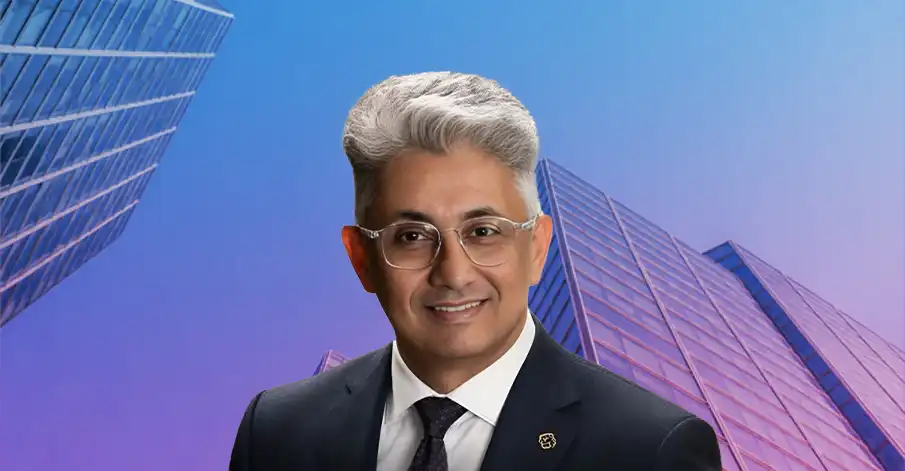
Temenos unwinds a combined product and technology seat
Temenos confirmed on July 29 that it will split the combined chief product and technology officer role that Barb Morgan held. Morgan is stepping down. In her place, the Swiss core banking vendor named Cormac Flanagan chief product officer and Tony Coleman chief technology officer, both effective August 3, 2026. Sriraman Ganesan takes the global head of product engineering role on the same date. The company positioned the reshuffle as an acceleration of its FY-28 strategic plan across core banking, digital, payments, and wealth, with AI-powered capabilities named as a priority. For a vendor whose software runs inside thousands of banks, a leadership reset at the product and technology layer carries real weight.
The timing lines up with a wider executive turnover. Incoming chief financial officer Daniel Schmucki, appointed in April, joins on the same August 3 date, so Temenos effectively refreshes its product, technology, and finance leadership in a single week. Chief executive Takis Spiliopoulos said the three product and technology leaders "bring deep domain expertise across core banking, wealth, digital and payments, combined with a strong understanding of the needs of our clients." That client framing matters. Temenos sells multi-year platform commitments, and buyers watch leadership stability as a proxy for roadmap continuity. A clean, coordinated handoff reads better to a nervous banking CIO than a string of ad hoc departures.
Tony Coleman returns for a third tour, the only outside hire
Coleman is the sole external appointment among the three, and his return is a homecoming. He began his career at Temenos in 1995, spent roughly 15 years climbing through the engineering ranks, and ultimately became chief architect before leaving. This marks his third stint with the company. Rehiring a former chief architect into the CTO seat is a specific kind of bet: Temenos wants someone who already knows the internals of its core banking stack rather than an outsider who needs a year to learn where the bodies are buried. For a codebase with decades of accreted complexity, institutional memory is a genuine asset.
There is a counterweight to that logic. A leader steeped in the existing architecture can defend it past its usefulness, and core banking platforms carry technical debt that eventually demands an outsider's willingness to cut. Coleman's mandate names AI-powered capabilities and the FY-28 roadmap, which points toward modernization rather than preservation. We read the choice as Temenos prioritizing execution speed over a clean-sheet rethink. Banks evaluating the platform should ask their account teams a direct question: does the new CTO plan to re-platform core services for AI workloads, or to bolt AI onto the current architecture? The answer shapes your own multi-year roadmap.
Flanagan and Ganesan fill out the product and engineering bench
Cormac Flanagan takes the chief product officer title with more than 30 years in core banking, including senior product roles at Temenos and at rival Finastra. Splitting product away from technology hands Flanagan sole ownership of what the platform should do, while Coleman owns how it gets built. Sriraman Ganesan, with around 25 years at Temenos spanning implementation, client support, and product, moves into global head of product engineering. That pairing puts two long-tenured insiders alongside one returning veteran, which tilts the whole leadership layer toward continuity. For an incumbent vendor defending a large installed base, continuity is often the product feature clients value most.
The Finastra line on Flanagan's resume is worth a second look. Finastra is Temenos's most direct competitor in core banking, and hiring product leadership from a rival brings competitive intelligence on deal patterns, feature gaps, and where banks are defecting. Buyers can use that. If your bank is weighing Temenos against Finastra, expect the sales conversation to sharpen now that a former Finastra product leader sets the Temenos roadmap. The flip side is that a leader shaped by two incumbents may frame the market through an incumbent lens, underweighting the neobank-era vendors chasing the same core banking budgets with cloud-native stacks.
Why a vendor reshuffle lands on the banking CIO's desk
Enterprise buyers tend to treat vendor leadership changes as gossip. For core banking, that instinct is wrong. The person running technology at Temenos effectively co-owns the risk profile of every bank that runs the platform, because their decisions on architecture, release cadence, and AI integration flow downstream into your production environment. When the CTO seat turns over, your roadmap dependencies turn over with it. A banking CIO who has budgeted three years of platform upgrades around a specific delivery plan now has a new executive who can accelerate, delay, or redirect that plan. Tracking who holds the seat is basic vendor risk management.
The coordinated nature of this change is the reassuring part. Temenos did not lose its product and technology chief to a surprise resignation and scramble for a replacement. It planned a split, named three leaders and a CFO on the same effective date, and tied the announcement to a stated FY-28 plan. That choreography signals board-level intent rather than crisis response. We would still press the vendor for specifics. Ask for the updated roadmap in writing, ask which named executive owns each committed feature, and ask how the AI-powered capabilities map to your compliance obligations. Reassuring optics do not substitute for contractual clarity.
The org-design lesson: one product-and-tech chief or two
The most transferable part of this story is the structural decision. Temenos ran product and technology under a single executive, Barb Morgan, and has now separated them. Many enterprises face the same choice, especially after a period of consolidation where one leader absorbed both mandates during a cost-cutting cycle. Combining the roles buys coordination and a single throat to choke. Separating them buys depth, because product strategy and engineering delivery are genuinely different disciplines that reward specialized attention. Temenos, at its scale and with an AI roadmap to fund, decided the coordination tax of two leaders is worth paying for the added focus.
The reader's takeaway is to treat the combined product-and-technology role as a phase rather than a permanent structure. It works when the scope is small enough for one person to hold both, or when a transition demands a single decision-maker. As the AI roadmap grows and engineering complexity compounds, the combined seat becomes a bottleneck, and the smart move is to split it before the incumbent burns out or the roadmap stalls. Temenos is telling us where that inflection point sits for a company of its size. If your product-and-tech chief is quietly drowning, this is your signal to plan the split now.
What to watch as FY-28 meets the AI roadmap
The stated prize is Temenos's FY-28 strategic plan, and the new leadership will be measured against it. The near-term tell is how quickly Coleman and Flanagan publish a concrete AI roadmap that names specific capabilities, delivery dates, and the deployment model for banks that cannot send data to a public cloud. Core banking clients in regulated markets need on-premises or sovereign options, and a credible AI story has to answer where inference runs and how model governance is documented. Watch the first analyst day or client conference after August 3 for whether the new team ships specifics or recycles the prior roadmap under new names.
The second tell is retention below the executive layer. Leadership splits often trigger departures among directors and principal engineers who backed the outgoing chief or expected the promotion themselves. If Temenos loses senior architects in the two quarters after this change, the continuity thesis weakens no matter how experienced the three named leaders are. For banks on the platform, the practical move is to keep your Temenos relationship manager close through the transition, document every roadmap commitment, and build a contingency for slippage. Leadership resets create a window where vendor promises are most fluid, and disciplined buyers use that window to lock terms.