A chief AI officer trades the title for an SVP seat
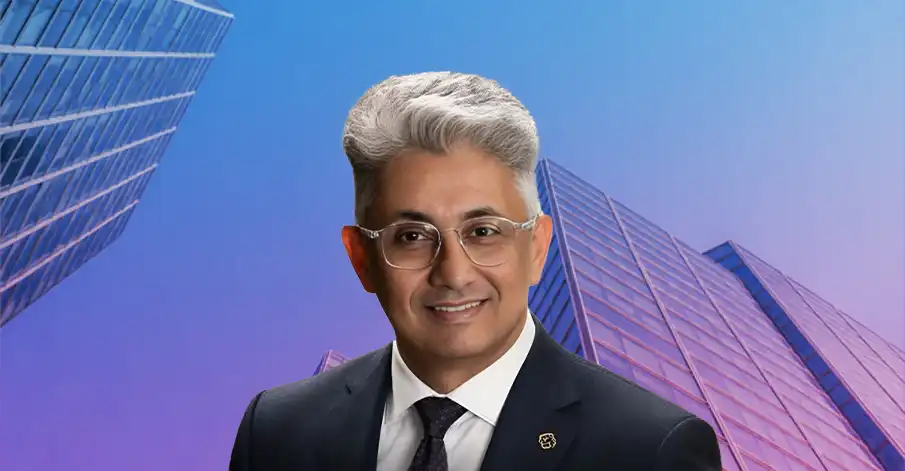
Edwards Lifesciences has hired Parminder Bhatia as senior vice president of artificial intelligence, a move surfaced in leadership tracking during the week of July 31. Bhatia arrives from GE HealthCare, where he served as chief AI officer and directed the company's AI strategy for medical devices and imaging, including its work on foundation models and generative AI. At Edwards, the structural-heart device maker, he will steer enterprise AI capabilities, governance frameworks, and operational models with the stated aim of accelerating innovation and improving patient outcomes. The headline talent story is real. The more interesting story sits in the title, because Bhatia moved from chief AI officer to senior vice president of AI.
That change in nominal rank is a deliberate organizational choice, and it runs against the prevailing trend. IBM's 2026 CEO study reported that a large majority of organizations now have a chief AI officer, up sharply from a year earlier, as companies race to plant an AI flag at the C-suite. Edwards took the opposite path and folded senior AI leadership into a functional SVP role reporting into the operating structure. We read that as a company deciding AI is a capability to embed rather than a banner to hoist. For a regulated medical-device maker, that instinct has merit, and it is worth understanding before you copy the chief AI officer trend into your own org.
The resume Edwards actually bought
Bhatia's value to Edwards is the specific combination on his resume. He led AI at GE HealthCare, a company that ships FDA-regulated diagnostic and imaging products, so he has operated where model errors carry clinical and legal consequences. Before that he worked on healthcare and generative AI at Amazon and held machine-learning roles at Microsoft, giving him exposure to frontier model development at hyperscaler scale. That pairing is rare. Most AI leaders have either deep research and cloud-scale experience or regulated-industry deployment experience, and few have both. Edwards bought a leader who can speak to data scientists and to regulatory affairs in the same meeting, which is exactly the profile a medical-device AI program needs.
The regulated-device context defines the job. In cardiovascular and structural-heart products, AI shows up in imaging analysis, procedural planning, patient risk stratification, and manufacturing quality. Each use case runs into device regulation, clinical validation, and the reality that a false output can influence a treatment decision. Bhatia's GE HealthCare tenure was spent inside that constraint, which means Edwards is not asking him to learn the hard part on the job. For enterprises in any regulated sector, the lesson is to weight deployment-under-regulation experience heavily when hiring AI leaders, because the modeling talent is abundant while the judgment to ship it safely inside compliance boundaries is scarce.
Why the title matters more than it looks
The choice between a chief AI officer and a senior vice president of AI is a real governance decision, not semantics. A chief AI officer at the top table owns AI strategy across the enterprise, commands a budget, and can force cross-functional alignment by executive fiat. A senior vice president of AI inside a function has narrower formal authority and has to win influence through the operating structure. Edwards chose the second model, which suggests it wants AI leadership close to where products get built and shipped rather than sitting in a strategy office. For a company whose value is medical devices, embedding AI leadership in the operating core is a defensible bet.
The tradeoff is authority. AI programs frequently stall on data access, platform investment, and cross-team cooperation, and a leader without C-suite rank can find those doors harder to open. If Edwards wants Bhatia to reshape how the company uses AI end to end, an SVP title may under-power the mandate, and the risk is that he gets treated as the head of a function instead of a driver of enterprise change. The counter is that a strong operator with the right executive sponsor can move faster inside the business than a figurehead with a grand title and thin support. Executive sponsorship, more than the title, decides whether the mandate carries real power.
The talent war for healthcare AI leaders is real
Bhatia's move does not sit in isolation. Within the same month he also joined the board of Helio Genomics, a cancer-diagnostics company using AI-driven multiomics and liquid biopsy, a sign of how much demand there is for leaders who understand both AI and regulated healthcare. When one executive is simultaneously recruited into an operating role at a device maker and a board seat at a diagnostics firm, it tells you the supply of proven healthcare AI leadership is tight. Edwards moving to lock in Bhatia now, rather than waiting, reads as a competitive response to that scarcity.
On his Helio appointment, Bhatia framed the value of the technology directly, saying the company's approach shows "how AI powered multiomics and liquid biopsy can advance early cancer detection." That statement concerns a different company, and it reflects the lens Edwards is buying: a leader who thinks about AI in terms of clinical outcomes rather than model benchmarks. For CxOs hiring in this space, the practical takeaway is that the leaders you want are already being pursued for boards and operating roles at once. If you plan to build serious AI capability in a regulated industry, assume the short list is being courted elsewhere and move with intent.
The build-versus-buy question underneath the hire
Hiring a senior AI leader is itself a build-versus-buy decision about capability. Edwards could have leaned on external partners and consultancies to bolt AI onto its products, or it could invest in owning the capability internally under experienced leadership. Bringing in a leader of Bhatia's background signals the second choice: Edwards wants AI to be a durable in-house muscle governed by someone who has done it inside a regulated device business. For a company whose products carry patient risk, owning the governance and the operational models internally reduces dependence on vendors who may not grasp the clinical stakes. That is a strategically sound reason to pay up for senior talent.
The decision the reader owns is the same one Edwards just made. If AI is becoming core to your products or operations, leadership for it belongs inside the company, and the question is only what rank and mandate you attach. If AI is a supporting capability, a partner-led model with lighter internal leadership can be enough. Edwards is telling us it views AI as core to the future of its devices, which is why it hired a leader with frontier-model and regulatory depth rather than a generalist. Match the seniority of your AI hire to how central AI actually is to your value, and resist planting a chief AI officer flag you cannot back with a real mandate.