The announcement, in numbers
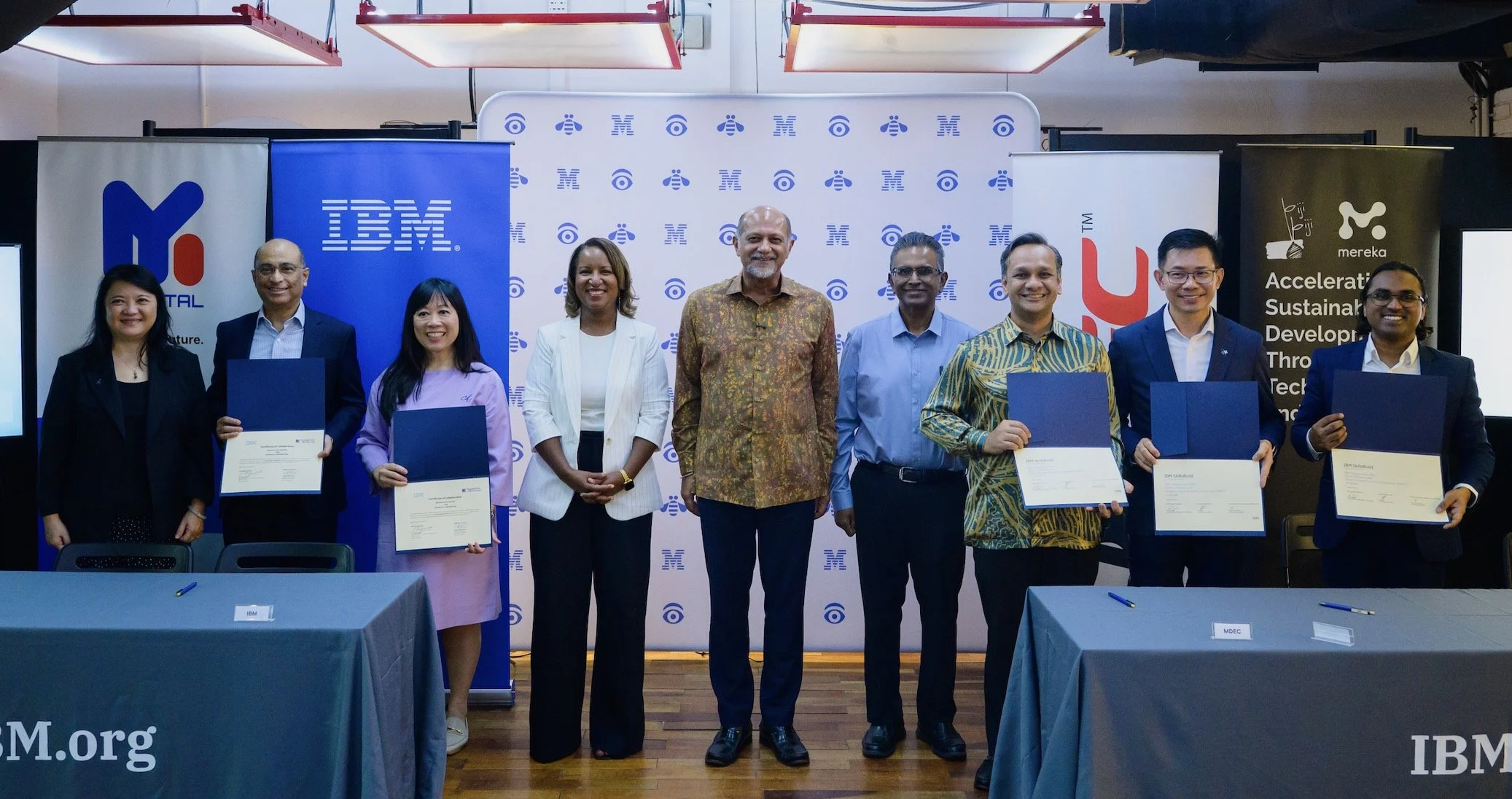
IBM Malaysia and the Biji-biji Initiative, a Malaysian social-impact organization, have committed to delivering free AI and digital-skills training to 41,000 learners across the country by the end of 2026. The program runs on two tracks. The first covers AI fundamentals for high school students, combining theory with industry applications, and is supported by the Malaysia Digital Economy Corporation. The second targets learners in technical and vocational education and adult workforce participants, teaching agentic AI, software development, and web development. Biji-biji brings the community reach, having worked with more than 836,000 people and supported over 130 projects since 2013, while IBM brings the platform.
That platform is IBM SkillsBuild, which offers more than 1,000 courses in 20 languages spanning AI, cybersecurity, data analysis, cloud, sustainability, and workplace skills, with IBM-branded digital credentials for completion. The government fingerprints are visible throughout. Ts. Dr. Azmir Yunus, head of secretariat at the National TVET Council of Malaysia, framed the effort around keeping skills development responsive to industry needs in high-growth areas like artificial intelligence. An industry symposium is planned to connect the trained talent with IBM clients and employers, which is where the free training quietly reveals its commercial logic.
Free is a distribution strategy, not charity
There is nothing cynical about calling this what it is: a well-run corporate skilling program that will produce real capability for people who would not otherwise access it. But technology leaders should read the structure rather than the press release. The training feeds IBM's stated global goal of skilling 30 million people by 2030, including two million in AI by the end of 2026. Numbers at that scale are not philanthropy line items. They are a distribution strategy for a platform, a credential, and eventually a set of purchasing preferences among the people and institutions that emerge from the program fluent in one vendor's tools and terminology.
This is the same playbook the major cloud providers ran with certification programs, and it worked because it aligns genuine public benefit with durable commercial advantage. A learner who earns an IBM credential in agentic AI is more likely to reach for IBM tooling, recommend it to an employer, and value the certification an employer then hires against. Multiply that across 41,000 people in a single national market and you are not just closing a skills gap. You are shaping which platform the next cohort of Malaysian developers, analysts, and administrators treats as the default. The training is free precisely because the downstream position is valuable.
Why national skilling gets outsourced to vendors
The more revealing part is the government's role. The Malaysia Digital Economy Corporation and the National TVET Council are not passive beneficiaries here; they are active partners routing a national workforce priority through a private vendor's platform. That happens because governments face a hard constraint: AI capability is moving faster than any public curriculum body can author, accredit, and update courseware. Vendors already have the content, the delivery infrastructure, and the credential machinery running at global scale. Partnering is faster and cheaper than building, so national skilling agendas increasingly get delivered on corporate rails, with the state supplying reach, legitimacy, and target numbers.
For enterprise leaders, especially those running operations in Southeast Asia, this reshapes where talent comes from and what it arrives knowing. The pipeline feeding your future hires is being tuned by whichever vendors win these government partnerships. That is worth tracking deliberately rather than discovering at the interview stage. If your regional stack diverges from the platforms these programs certify against, you inherit a retraining cost on every junior hire. If it aligns, you get a stream of pre-credentialed candidates at effectively zero acquisition cost, subsidized by a vendor and a government both motivated to keep the funnel full.
The dependency question buyers should ask
Credential ecosystems create soft lock-in, and soft lock-in is the kind that never shows up in a procurement review because no one signed a contract for it. When a national talent pool is trained and certified on one vendor's platform, switching costs accumulate in a place the finance team never models: the labor market itself. Hiring against a different stack means either paying to retrain or paying a premium for the scarcer skills you actually need. That cost is real even though it never appears as a line item, and it compounds as each free-training cohort deepens the local concentration around a single vendor's tools and vocabulary.
None of this argues against participating, and for Malaysian learners the program is an unambiguous opportunity worth taking. The argument is for clear eyes among the enterprises that will hire the graduates and the vendors that compete with IBM for the same talent. If you are a rival platform, ceding national skilling programs cedes the pipeline, and no amount of later marketing recovers a workforce already fluent in someone else's tooling. If you are a buyer, factor credential concentration into your regional talent strategy. The most consequential AI decisions are not always the ones with a purchase order attached.
What to do with this
Treat vendor-led national skilling as a strategic signal, not background noise. Map which platforms are winning the government training partnerships in every market where you hire at scale, because those partnerships are a leading indicator of what your local talent pool will know two years out. Where the certified stack aligns with yours, lean in: sponsor cohorts, recruit from them, and let a vendor and a government subsidize your pipeline. Where it diverges, budget the retraining honestly and decide whether the divergence is worth defending. The worst outcome is being surprised by a talent market that quietly standardized on tools you do not use.
For technology leaders building their own internal academies, IBM's model is also a blueprint worth studying on the merits. The combination of a broad course library, localized delivery, portable credentials, and an employer-connection event is an effective engine for turning training into hiring. You do not need IBM's global scale to borrow the structure. The lesson from 41,000 free seats in Malaysia is that skilling programs are never only about skills. They are about who owns the relationship with the talent afterward, and that relationship is worth far more than the cost of the courses that create it.