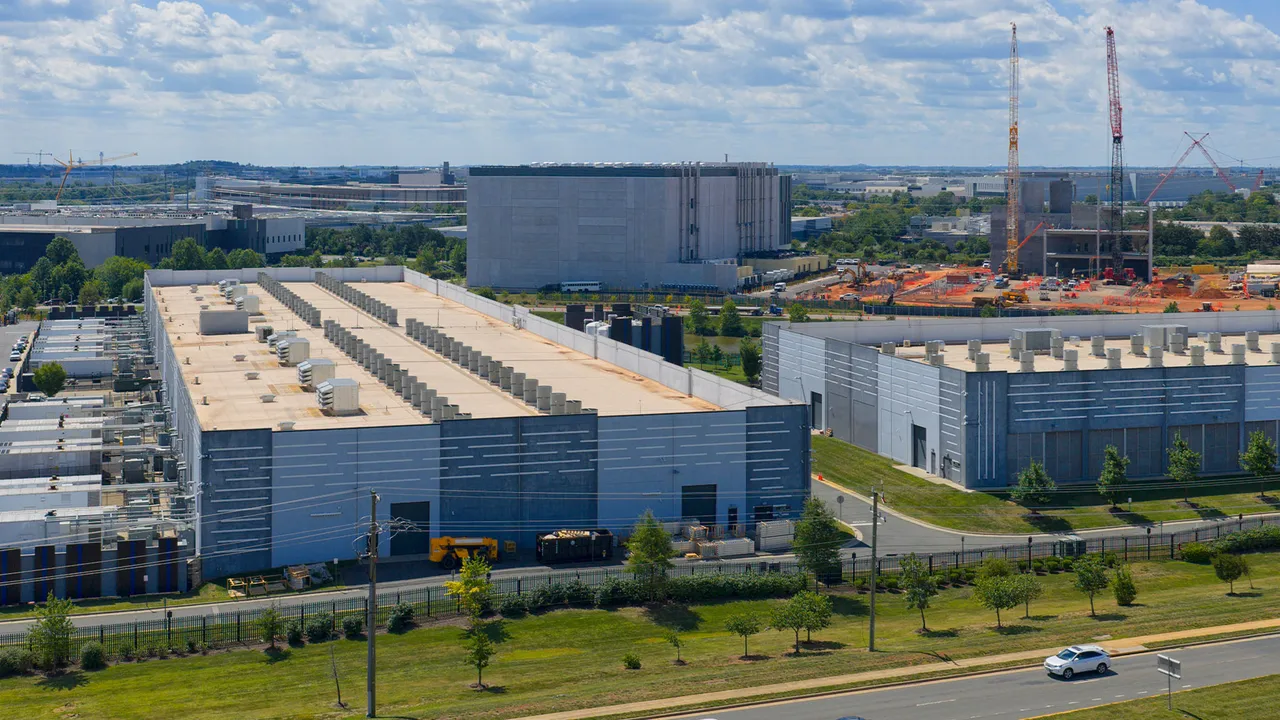
A First in the Nation, and It Lands in Data Center Alley
On June 22 Virginia legislators advanced a two-year, $205 billion budget, and buried inside it is a provision that the rest of the industry should read closely. For the first time anywhere in the country, a state has created a standalone tax on the electricity that data centers consume. The rate is 1.1 cents per kilowatt hour, it takes effect on July 1, 2026, and it runs through the middle of 2028 under the current budget language. That it happened in Virginia is the part that matters. Northern Virginia is the largest data center market on the planet, the place the industry simply calls Data Center Alley, and it carries a meaningful share of the world's internet traffic.
We have watched localities pick fights with data centers for years, mostly over zoning, water, and noise. This is different in kind. A statewide consumption tax pegged to power draw is a direct charge on the one input that defines the AI buildout, and it arrives just as hyperscaler load is exploding. The signal to CIOs and infrastructure leaders is unambiguous: the era in which compute capacity was treated as a pure economic gift to a region, to be courted with incentives and few obligations, is closing. Power is now a taxable base, and Virginia just proved a state can reach it.
The Math at Hyperscale Is Not Trivial
At 1.1 cents per kilowatt hour, the per unit number sounds almost rounding error small. It is not, once you run it against the load profiles that modern AI campuses carry. A 500 megawatt facility running flat out would owe on the order of $48 million a year. A full one gigawatt campus, the size that has become the new unit of ambition for the largest operators, would face roughly $100 million annually before any refunds or credits. For a state, that compounds quickly: legislative documents estimate the tax will raise about $600 million a year, or close to $1.2 billion across the two-year window, all of it flowing to Virginia's general fund.
Crucially, the tax reaches behind-the-meter generation, the natural gas turbines and on-site plants that operators have been racing to build to escape grid interconnection queues. That design choice closes the most obvious loophole. An operator cannot simply generate its own power and declare itself outside the system. Whether the electrons come from Dominion, a competitive retail provider, or a turbine the operator owns on its own land, the consumption is taxed. For finance teams modeling total cost of ownership for new capacity, that is a structural change to the equation, not a footnote.
A Compromise That Left Both Chambers Unsatisfied
The tax is the product of a deadlock, not a clean policy victory. The House of Delegates had pushed for environmental standards on the industry. The Senate had wanted to end the sales and use tax exemption that data centers have long enjoyed. The final budget delivered neither. Instead it kept the sales tax exemption intact and layered the new power tax on top, a horse trade that let negotiators break a budget impasse without forcing the industry to give up its biggest existing break. The result is a structure where new revenue offsets, rather than erases, the subsidies that attracted these facilities in the first place.
That nuance is easy to miss and important to keep. As Mark Christie, the former FERC chairman, put it, data centers "still keep the existing tax subsidies from the state, they are just offset by this new energy consumption tax." The net effect for operators is a smaller incentive, not its disappearance. For policymakers in other states, the appeal of this model is obvious: it raises real money while preserving the political cover of still calling your state business friendly. We expect that framing to travel.
Why the Rest of the Country Is Watching
Virginia is the proof of concept other legislatures have been waiting for. The economics of data center incentives have grown politically toxic in a year when residential electricity bills are rising and voters increasingly blame AI buildouts for the strain on the grid. A consumption tax gives lawmakers a way to capture value from facilities that consume enormous power while employing relatively few people once construction ends. Rob Gramlich, president of Grid Strategies, noted that "it is not typical to exclude data centers or data storage from industrial rate classes," a reminder that the industry has long enjoyed unusually favorable treatment that is now under review.
For enterprise leaders, the strategic takeaway is to treat power taxation as a live variable in site selection, not a regional curiosity. If Virginia, the market everyone else benchmarks against, can impose a per kilowatt hour levy, Texas, Ohio, Georgia, and the other emerging hubs can too. We would advise capacity planners to start pricing a plausible 1 to 1.5 cent per kilowatt hour tax into long range models across multiple states, and to revisit the assumption that behind-the-meter generation is a clean escape hatch. The cheapest power on paper may no longer be the cheapest power on the bill.
What Operators Should Do Now
The immediate action is contractual and financial. Operators with existing Virginia capacity should confirm how the new tax flows through their power purchase agreements and whether any pass-through provisions exist with customers. Colocation providers in particular will need to decide quickly whether they absorb the charge or itemize it for tenants, because a $48 million annual line on a 500 megawatt site is too large to quietly eat. Tenants signing new leases should ask explicitly how the tax is allocated, since the answer could move effective rates by a noticeable margin.
The longer game is governance and lobbying. The Virginia tax sunsets before July 2028 under current language, which means it is up for renewal, and renewal is leverage. Operators that engage early, on transparency, on grid investment, on local benefit, will have a stronger hand than those who simply fight the rate. We have argued before that the industry's biggest political vulnerability is the perception that it takes power and gives little back. A consumption tax is one answer to that perception. The smarter operators will treat it less as a threat to litigate and more as the new price of operating in the markets that matter most.