A Title That Makes a Statement
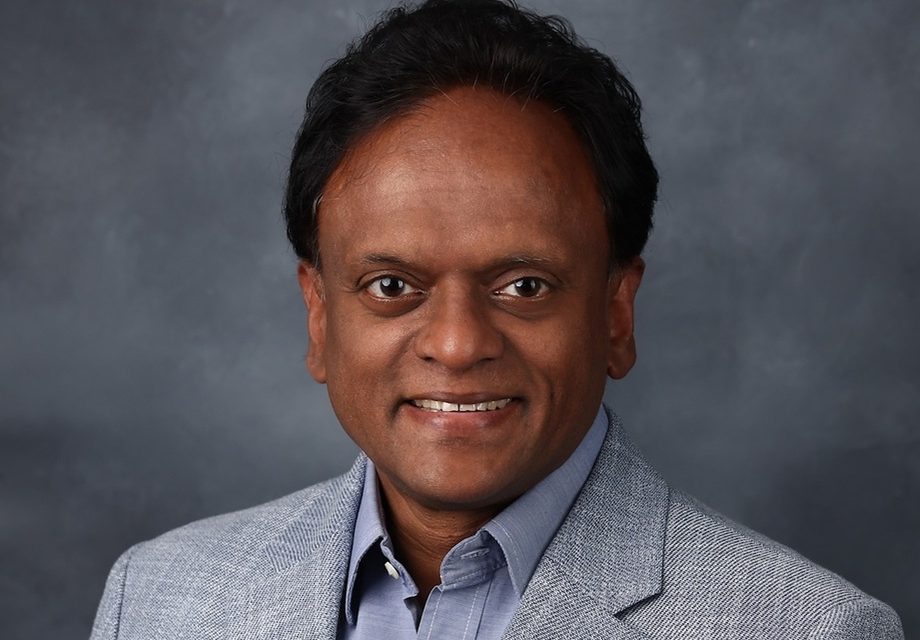
Vanguard, one of the world's largest asset managers, has named Mani Iyer as its Chief AI and Technology Officer. The appointment, reported on June 19, is notable less for the individual, though his resume is substantial, than for the shape of the role itself. By fusing artificial intelligence and core technology into a single executive mandate, Vanguard is making an organizational statement about how it believes AI should be governed: not as a separate discipline with its own leader and its own fiefdom, but as an integral property of the engineering function.
That choice runs against a strong current. Over the past two years, a wave of enterprises created standalone Chief AI Officer positions, often reporting outside the technology organization, to signal seriousness and accelerate adoption. Vanguard's structure implies a different diagnosis. If AI lives in its own box, the reasoning goes, it risks becoming a layer of experiments disconnected from the platforms that actually run the business. Putting engineering and AI under one leader is a bet that the two must move together or not at all.
The Background Behind the Appointment
Iyer arrives with a profile built for exactly this kind of combined role. He most recently served as senior vice president and global head of infrastructure, data, AI technology, and developer platforms at PayPal, a mandate that already blended the domains Vanguard is now uniting under one title. Before PayPal, he held senior positions at Wells Fargo and JPMorgan Chase, where he led large-scale technology, infrastructure, and data organizations. That is more than two decades operating at the intersection of platform engineering and data at institutions where reliability is non-negotiable.
The financial services pedigree matters for a firm like Vanguard. Asset management runs on trust, regulatory rigor, and systems that cannot fail quietly. An executive who has run infrastructure and data at scale inside heavily regulated banks understands that deploying AI here is not a greenfield exercise. It means threading new capabilities through decades of accumulated systems, controls, and obligations. Iyer's history suggests Vanguard wanted someone fluent in both the ambition of AI and the discipline of running platforms that millions of investors depend on every day.
Convergence as the Operating Thesis
Vanguard's leadership has been explicit about the thinking. Nitin Tandon, the firm's managing director and global chief information officer, described the next phase of transformation as the convergence of engineering and AI, where intelligence is built directly into the platforms rather than added afterward. That single sentence is the strategy. It rejects the notion of AI as a feature to be sprinkled on finished products and reframes it as a foundational property that shapes how platforms are architected from the start.
We find this framing more durable than the alternative. Bolt-on AI, models wrapped around existing workflows without changing the underlying systems, tends to produce impressive demonstrations and disappointing operations. Embedded AI, by contrast, requires the harder work of rebuilding platforms so intelligence is native to them, but it is also where compounding value lives. By elevating a single leader to own both the engineering substrate and the AI ambition, Vanguard is structurally aligning the organization behind the harder, more durable path. The title is not cosmetic; it encodes a theory of how transformation actually sticks.
A Signal About the Chief AI Officer Debate
The appointment lands in the middle of a live debate about whether the standalone Chief AI Officer role makes sense. Proponents argue a dedicated executive gives AI the sponsorship and focus it needs to escape pilot purgatory. Skeptics counter that separating AI from engineering creates a coordination tax and a governance gap, with the AI office writing strategy the platform teams must then somehow implement. Vanguard has effectively cast its vote by collapsing the distinction, betting that unity of command beats specialization of title.
This does not mean the standalone model is wrong everywhere. In organizations where technology leadership is already stretched or where AI adoption needs an independent champion to break through inertia, a dedicated officer can be the right catalyst. But Vanguard's move is a useful counterexample for boards weighing the question. The right structure depends on whether an enterprise sees AI as a program to be launched or a property to be engineered. Vanguard has clearly chosen the latter, and its combined title is the organizational expression of that belief.
What Enterprise Leaders Should Take From It
For CIOs and boards wrestling with their own AI operating models, the lesson is not that Vanguard's structure is universally correct, but that the structure itself is a strategic decision worth deliberating rather than defaulting. Where AI reports, who owns the platforms it runs on, and whether intelligence is treated as a bolt-on or a foundation will shape outcomes as much as any model choice or vendor selection. Getting the reporting lines right is quiet, unglamorous work that determines whether ambition translates into shipped capability.
The broader trend is the maturation of AI leadership from novelty toward integration. Early in the current cycle, the mere existence of an AI executive signaled progress. Now the question is sharper: is that leadership positioned to change how the enterprise actually builds software, or merely to advise from the side? Vanguard's answer, embedding AI authority inside the engineering mandate, reflects a company moving past the symbolic phase. For peers still deciding, it is a data point that the most consequential AI decision may be an organizational one, made on a chart rather than in a lab.