ERP Stops Recording and Starts Acting
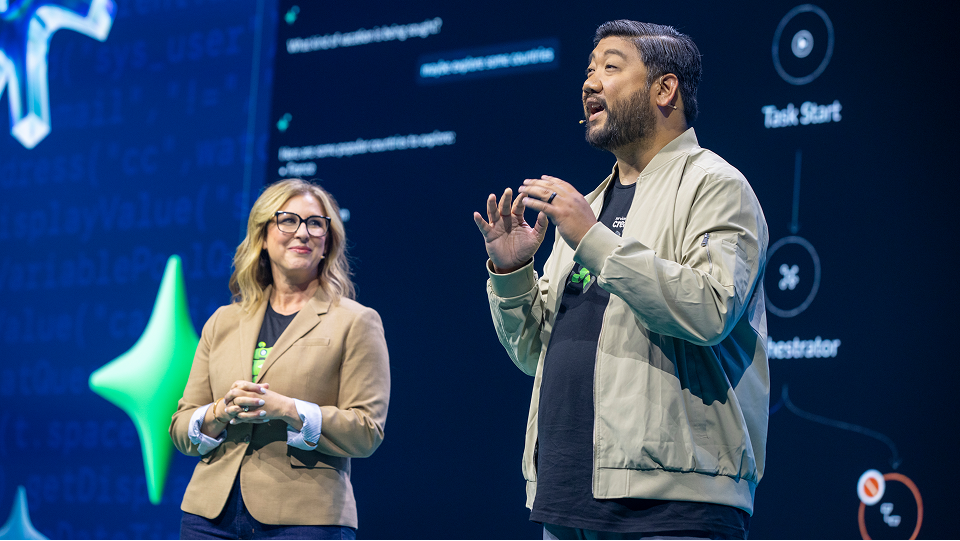
SAP's keynote question at Sapphire, asking whether it will even be a software company in the future, sounded like vendor theater until you read the rollout schedule. Starting in June 2026, SAP begins shipping Joule Studio 2.0 to its first customers, with general availability targeted for the second half of the year. The package is substantial: more than 200 specialized agents orchestrated by over 50 domain assistants spanning finance, supply chain, procurement, human capital and customer experience. CEO Christian Klein has wrapped this in the language of the Autonomous Enterprise, a vision in which agents do not merely advise workers but execute the business processes themselves.
For the millions of organizations whose operations still run through SAP, this is the most consequential repositioning since the move to S/4HANA. The pitch is that ERP shifts from a system of record, faithfully logging what already happened, to a system of action that closes the books, reconciles invoices and reroutes supply chains without waiting for a human to click. We have heard autonomous promises before, so the question for CIOs is not whether the demo dazzles but whether the agents hold up against the messy, exception heavy reality of an actual enterprise close.
Plain Language In, Working Software Out
The most genuinely new piece is the development model. Rather than a faster agent builder, Joule Studio 2.0 lets a user describe a business outcome in plain language and watch the platform generate a full artifact suite: a product requirements document, technical specifications, code scaffolding, an evaluation harness and multi agent orchestration. SAP has wired in an embedded n8n environment and a Vercel integration for front end work, with runtime sandboxing and SAP HANA Cloud persistent memory underneath. This is SAP trying to collapse the gap between business intent and deployed software, a gap that has historically swallowed entire consulting budgets.
The early testimonials are striking if you take them at face value. Vanitha Ponnusamy of Sony said Joule Studio generated an end to end solution in 10 to 15 minutes, replacing three to four days of manual development and coordination. Accenture's Suraj Gahalyan reported that across 48 diverse scenarios the tool delivered high quality code with only a handful of cases needing minor refinement. We would caution that curated reference accounts are not the same as a fleet wide track record, but the direction of travel, from months of integration work toward minutes, is exactly what overstretched IT organizations have been asking for.
Governance and Migration Are the Real Gates
SAP is not naive about trust. The company anchors the Autonomous Suite on a stack built around business data, agent development and agent governance, arguing that grounding agents in the underlying processes, data and controls is what makes their outputs accurate, compliant and secure. That framing matters because the IBM research landing the same month shows governance, not capability, is where most AI deployments wobble. An ERP vendor that can credibly demonstrate observability and control over 200 agents touching the general ledger has a stronger enterprise story than one shipping raw autonomy.
The commercial mechanics are designed to remove friction. SAP has stood up a 100 million euro fund for partners to help customers deploy and extend assistants, and is offering free design time access, including AI assisted development under fair use limits, through the end of 2026. It is also pushing agent led migration tooling that promises effort reductions north of 35 percent for customers still moving off legacy ERP. That last point is the quiet strategic core: every migration SAP accelerates is a customer locked into its agentic future rather than shopping the platform war elsewhere.
What CIOs Should Do Before H2
Our advice to SAP customers is to treat the June rollout as a controlled experiment, not a mandate. The free design time window through year end is an invitation to stand up a small, well scoped agent in a non critical process, measure it honestly against the Sony style claims, and stress test the governance tooling before any agent goes near a regulated workflow. The platforms competing for this layer, from Oracle and Microsoft to Salesforce and ServiceNow, are all making similar promises, and the differentiator will be which vendor's agents prove trustworthy in production rather than on stage.
The strategic warning is the one CIOs keep hearing and keep deferring: ERP modernization, data architecture, governance and AI strategy can no longer be run as separate programs. Organizations that treat their S/4HANA migration and their agent strategy as discrete workstreams will likely find themselves redesigning one to fit the other, at far greater cost. SAP's June launch forces the question onto the agenda. The companies that answer it deliberately will shape their own autonomous enterprise rather than inherit whatever the vendor ships by default.