The promotion
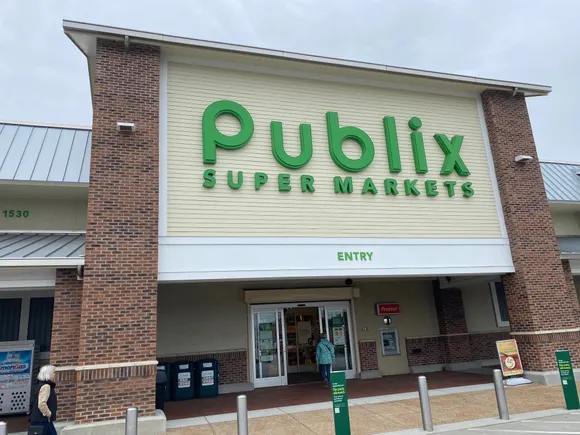
Publix promoted Laurie Douglas, its senior vice president and chief information officer since 2006, to executive vice president and chief information and digital officer, effective January 1, 2027. Douglas took on leadership of the company's digital, mobile, and omnichannel capabilities back in 2019, so this promotion formalizes a scope she has already been expanding for years rather than handing her a genuinely new mandate overnight, which is itself a sign of deliberate, low-drama succession planning.
Publix is the largest employee-owned supermarket chain in the United States, with more than 200,000 associates and no public shareholders pushing for a faster leadership shakeup. That ownership structure matters here: Publix can plan multi-year executive transitions on its own timeline rather than reacting to activist pressure or quarterly earnings scrutiny, and this reshuffle reads like a company using that freedom deliberately rather than a company caught off guard by departures.
The retirements behind the reshuffle
The timing traces back to a cluster of long-tenured retirements. Steve Wellslager, vice president of IS Technology and Security, retired at the end of August after 38 years with the company. Renee Kelly, vice president of IS Application Development, plans to retire at the end of 2026. Mike Smith, senior vice president of industrial operations, plans to retire at the end of 2026 after 43 years. Losing that much institutional knowledge at once is exactly the scenario most succession plans are built to survive.
Rather than running three separate searches to backfill each departure individually, Publix used the moment to restructure reporting lines across technology, industrial operations, and finance simultaneously. That is a materially different approach than most companies take, where each retirement triggers its own isolated replacement hire with no broader structural rethink of how the functions underneath should be organized going forward.
Consolidating development, omnichannel, data, and AI
The most structurally interesting move is Erik Katenkamp's promotion to senior vice president of IS development, omnichannel, data and AI, a title that combines four functions that are frequently split across separate leaders at retailers of this size. Katenkamp, a more than 30-year Publix veteran, inherits a scope that treats application development, digital channel experience, data infrastructure, and AI initiatives as one coordinated function rather than four competing priorities fighting for budget and attention.
That consolidation mirrors a pattern showing up across retail more broadly this year, where companies are deciding that AI and data capabilities cannot sit in a silo separate from the development teams that actually ship customer-facing features. Four additional vice presidents of IS development, Vlad Ali, Christian Bain, Steve Brooks, and Sunil Singh, along with a vice president of IT services and engineering, Mark Roberts, round out the technology promotions announced alongside Douglas and Katenkamp.
Operations and finance moved in lockstep
The reshuffle was not confined to technology. Mike Lester moved from vice president of distribution and transportation to senior vice president of industrial operations, succeeding the retiring Mike Smith, while James Sadler stepped up from director to vice president of transportation and maintenance. On the finance side, Doug Stalbaum, who joined Publix in 2019 as a director of business analysis, was promoted to senior vice president of finance.
Coordinating promotions across technology, operations, and finance in the same announcement signals Publix treated this as one integrated succession event rather than three unrelated department reshuffles that happened to land in the same year. For a company this size, that level of coordination across functions typically requires years of internal succession mapping well before any retirement is formally announced to the broader organization.
Why this is a useful benchmark for other large private retailers
Most of the retail leadership coverage enterprise technology leaders see focuses on public companies facing investor pressure to move fast on digital and AI. Publix offers a different data point: a private, employee-owned retailer with the balance sheet and patience to promote almost entirely from within, elevating people who have spent 20 to 40 years inside the company rather than running external searches for every open seat.
That internal-promotion model trades the fresh outside perspective an external hire might bring for continuity and institutional memory, a tradeoff that works best when the company's technology strategy is evolving steadily rather than needing a sharp break from its past approach. CIOs at other large private or family-controlled retailers evaluating their own succession pipelines should look at how deliberately Publix sequenced this across six roles, not just at who got promoted.
The AI angle worth watching
Folding data and AI into Katenkamp's development and omnichannel mandate, rather than creating a standalone chief AI officer title, is itself a statement about how Publix wants AI initiatives to be governed internally. It keeps AI accountable to the same leader responsible for shipping digital features and maintaining omnichannel systems, which tends to force more realistic prioritization than a separate AI function that can chase pilots disconnected from what the core technology organization can actually support in production.
Enterprise technology leaders debating whether to stand up a standalone chief AI officer role or fold AI responsibility into an existing technology leadership position now have one more data point from a large, operationally disciplined retailer that chose the latter. Whether that structure holds as Publix's AI ambitions grow past pilot stage is worth revisiting again once Katenkamp's expanded mandate has had a full year to prove out in production.